 Free
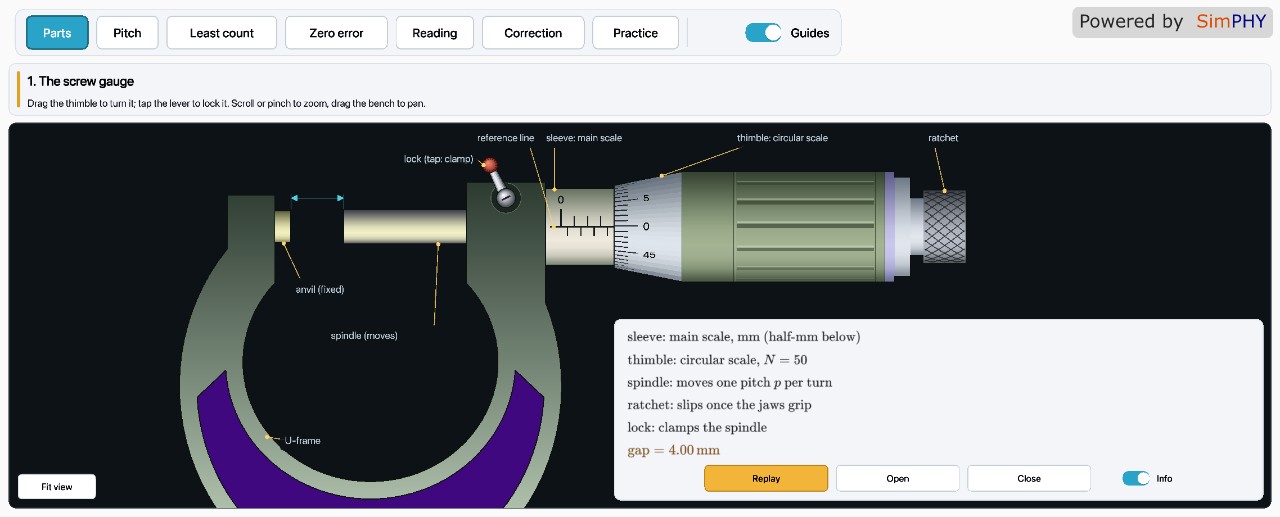
Screw Gauge in Steps
Experimental PhysicsExplore a micrometer’s pitch, least count, zero error and readings thr...
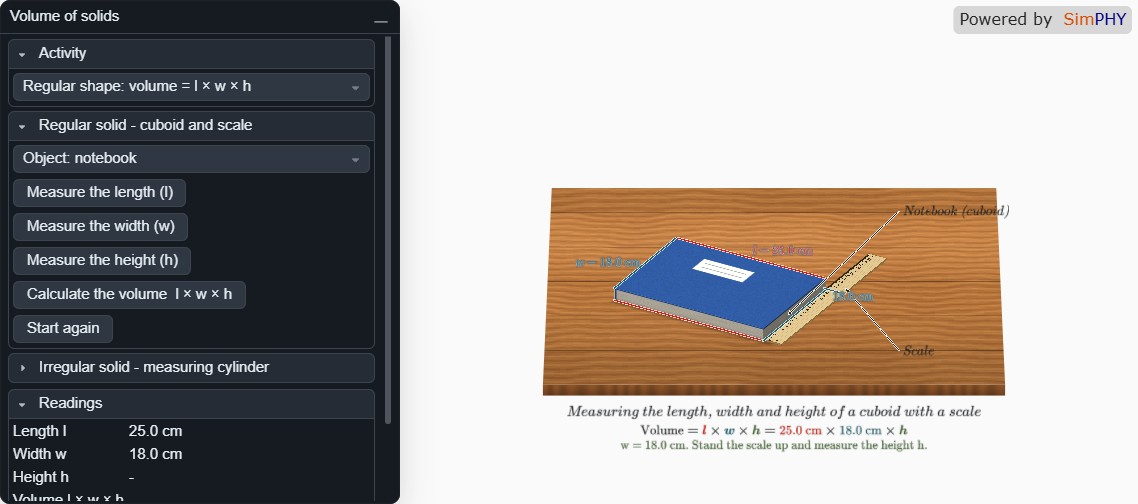
Measure cuboid volume with length × width × height and determine irregular solid volume by water displacement.
Students can measure the dimensions of regular solid objects such as a notebook, shoe box or dice using a scale that reads to the nearest millimetre. By multiplying length, width and height they calculate the volume using the formula V = l × w × h and see the numerical result displayed on the screen.
For irregular solids, a measuring cylinder is filled with water to a known level. When a stone attached to a thread is lowered into the cylinder, the water rises. The simulation shows the initial and final water volumes, allowing students to compute the displaced volume, which equals the stone’s volume. This demonstrates the principle of water displacement.
Learners can compare the calculated volumes of different objects, explore how measurement precision affects results, and reinforce the concepts of volume, units (cm³ or mL) and the relationship between geometry and fluid displacement.
Free
Explore a micrometer’s pitch, least count, zero error and readings thr...
 Free
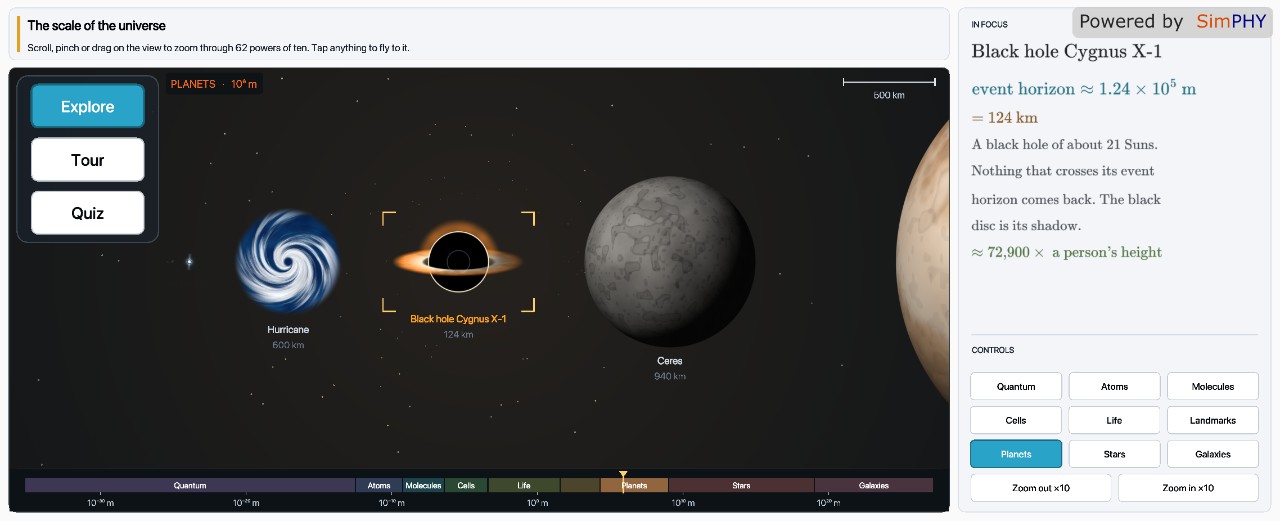
Zoom from the Planck length to the observable universe, compare sizes...
 Free
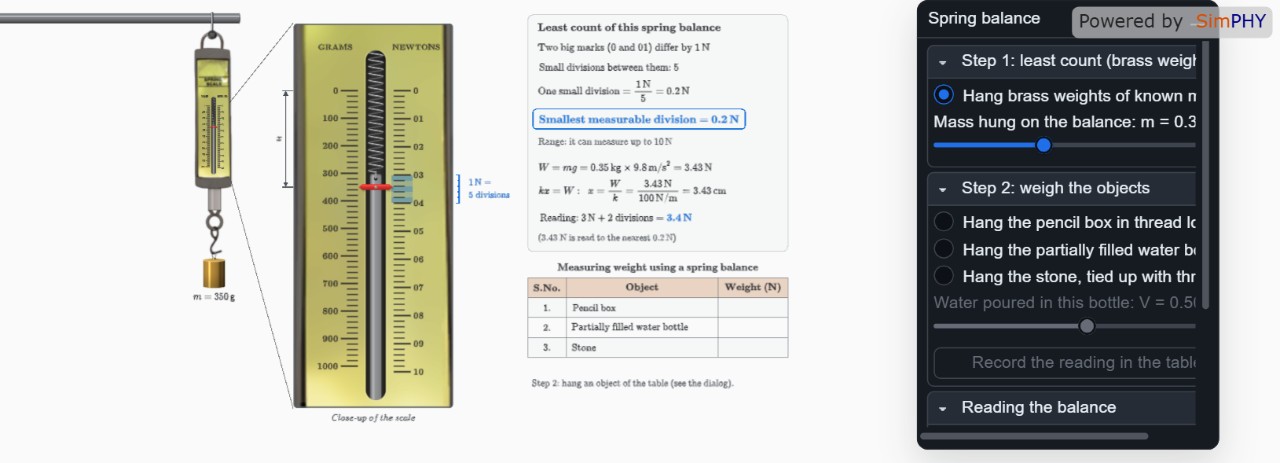
Explore how a spring balance reads weight, determine its least count (...
 Free
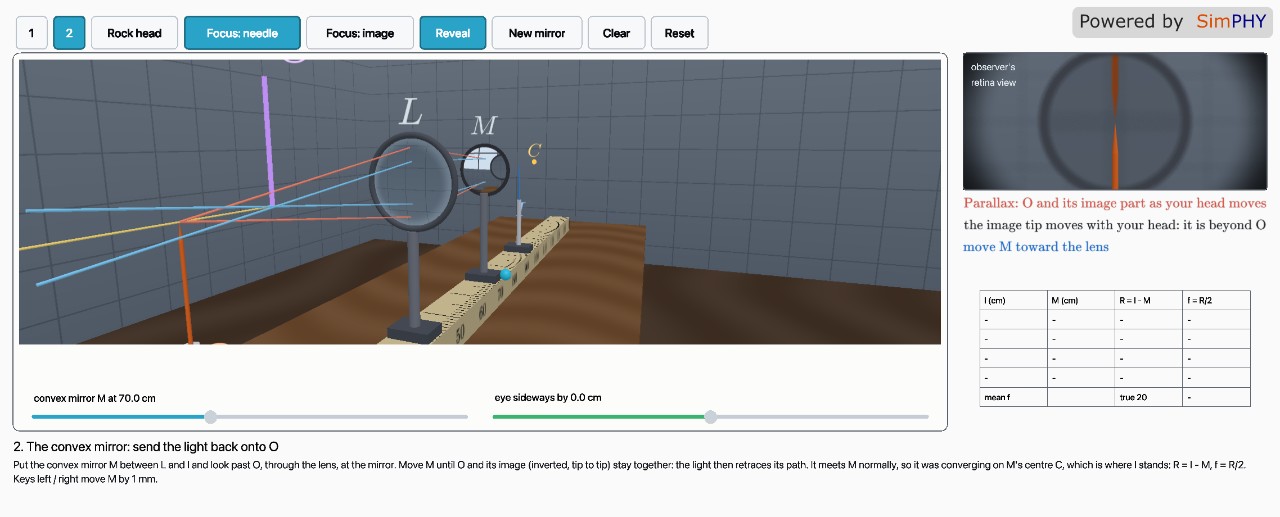
Measure a convex mirror’s focal length on an optical bench using a con...
 Free
Fire a cannon by setting angle and speed to hit targets in 11 levels,...
 Free
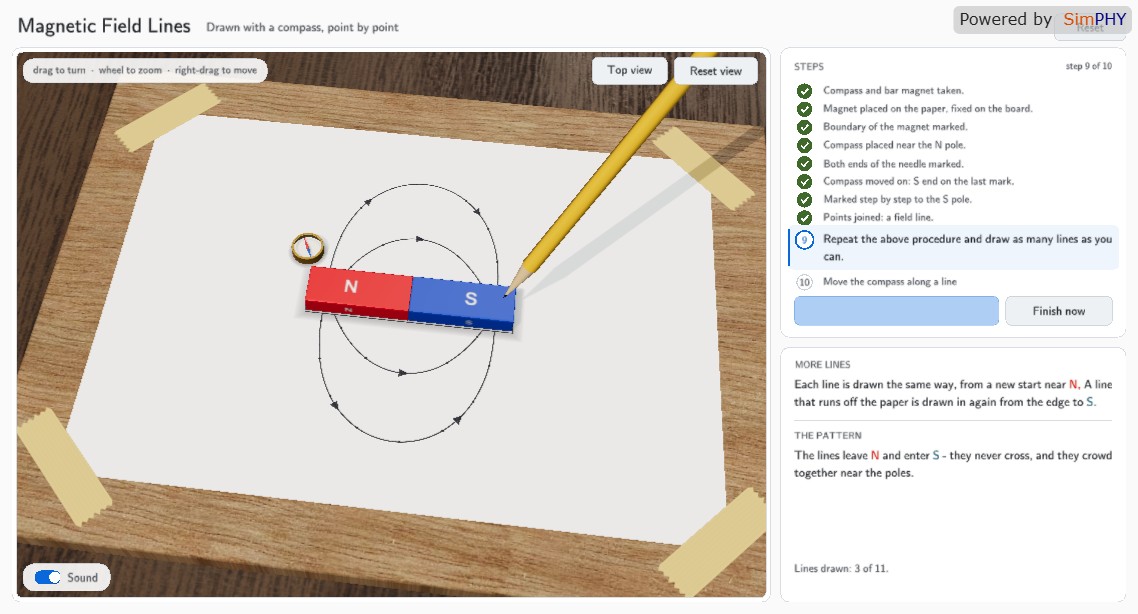
Draw magnetic field lines of a bar magnet with a compass, following NC...