 Free
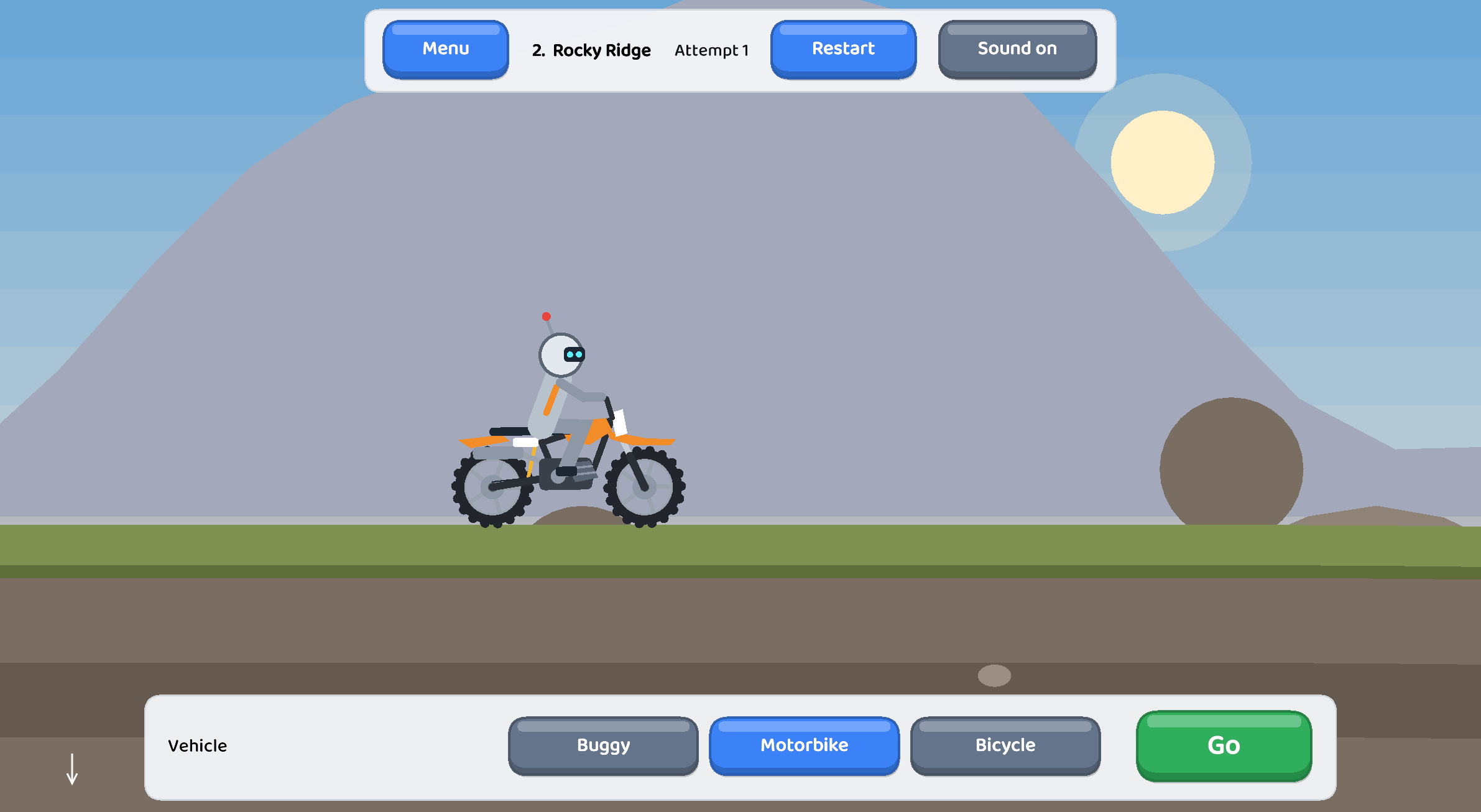
Ridge Rover: Hill‑Driving Physics Challenge
Motion in a PlaneDrive a buggy, motorbike or bicycle over terrain, exploring gravity an...
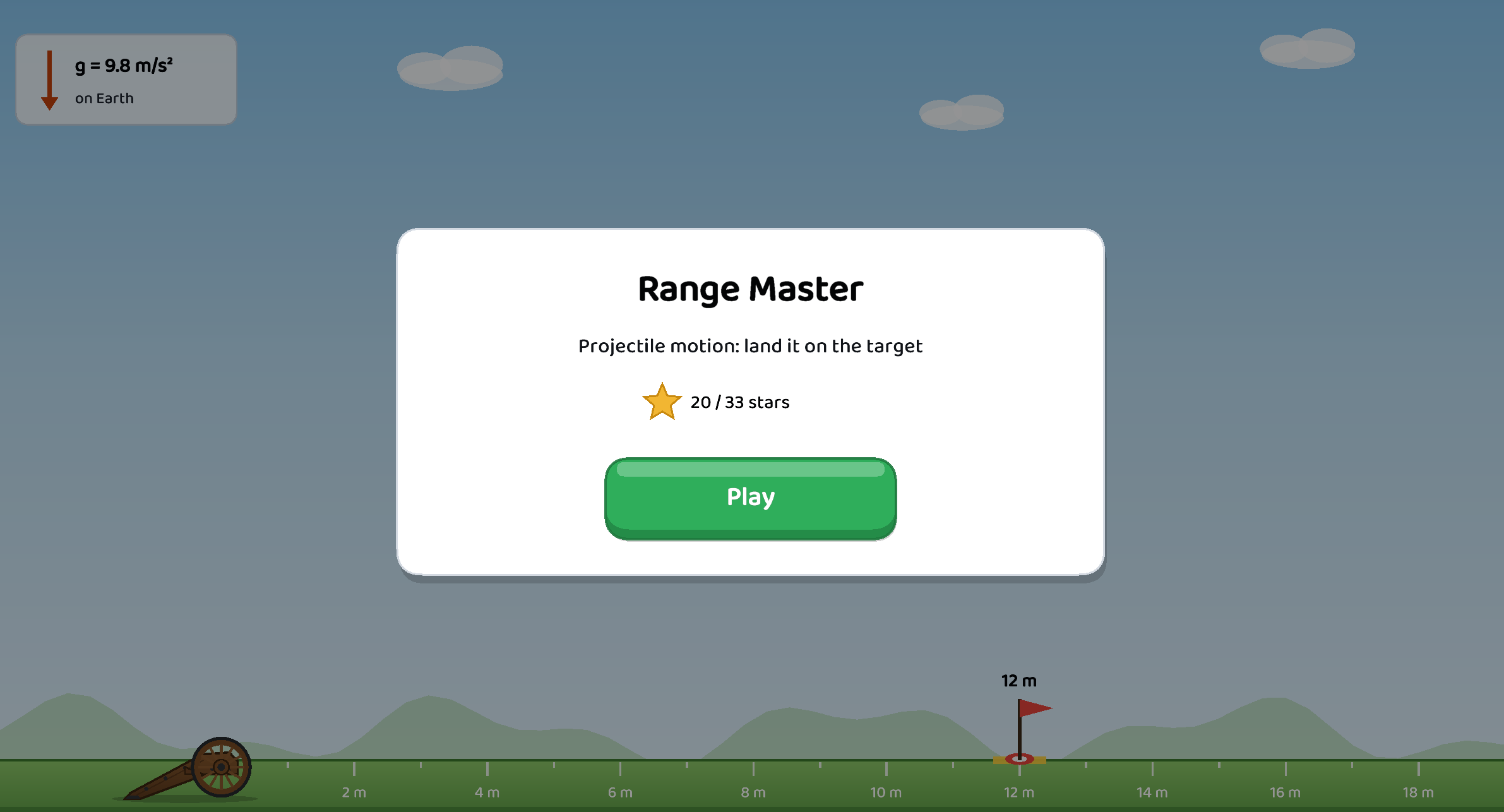
Fire a cannon by setting angle and speed to hit targets in 11 levels, testing projectile range formulas.
This simulation models ideal projectile motion with no air resistance. The horizontal velocity stays constant while the vertical velocity changes linearly under the acceleration of gravity, which is displayed on screen. Strobe dots appear every 0.1 s to visualise the motion, and a velocity graph shows the constant vx and linearly decreasing vy.
Students can adjust the launch angle, the initial speed, or both using the setup bar, then press Go. Across eleven progressively challenging levels they explore the range formula R = v² sin 2θ / g, the symmetry of complementary angles, the 45° optimum, the effect of speed, launches from heights or cliffs, trajectories over walls, and motion on inclined planes. One level even places the cannon on the Moon to highlight the role of gravity.
By predicting outcomes with the given equations and comparing the result to the ghost of the previous shot, learners develop intuition for how angle, speed, height and gravity influence range. The activity reinforces concepts of kinematics, vector components, and the practical use of trigonometric relationships in physics.
Free
Drive a buggy, motorbike or bicycle over terrain, exploring gravity an...
 Free
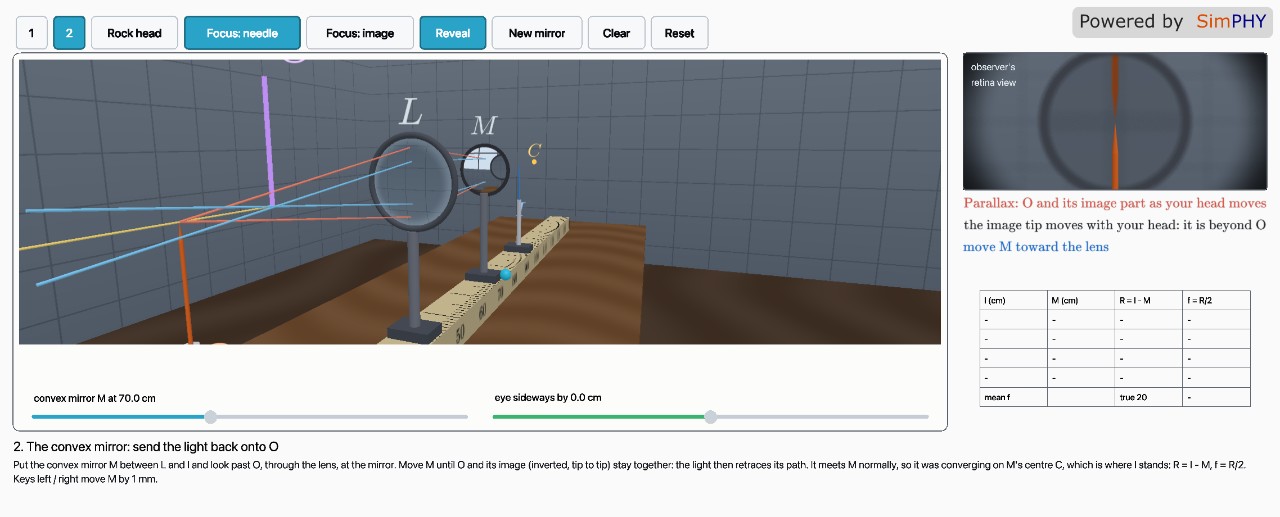
Measure a convex mirror’s focal length on an optical bench using a con...
 Free
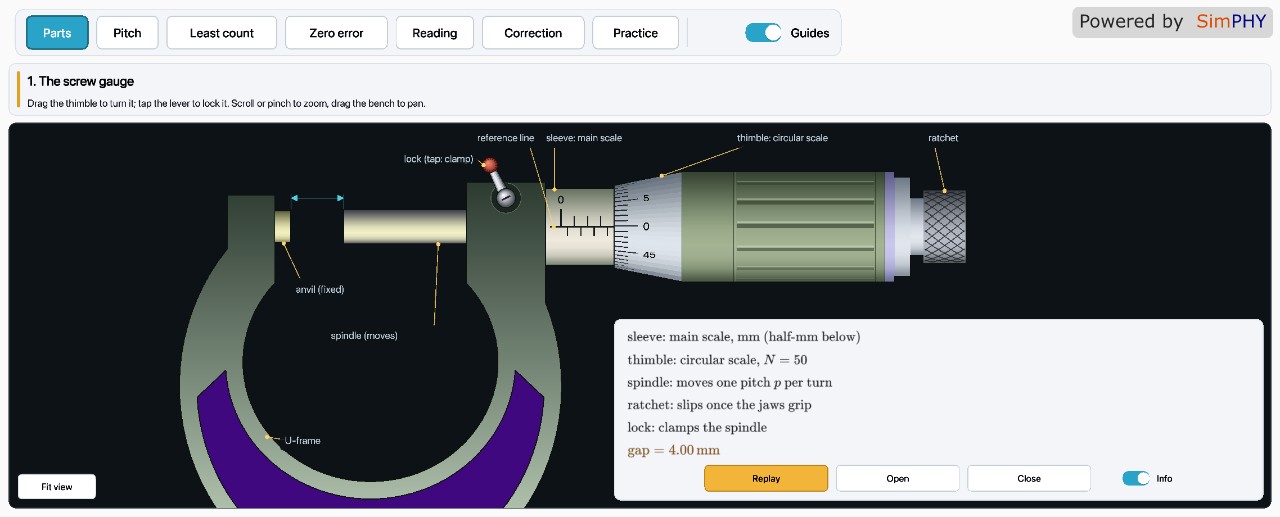
Explore a micrometer’s pitch, least count, zero error and readings thr...
 Free
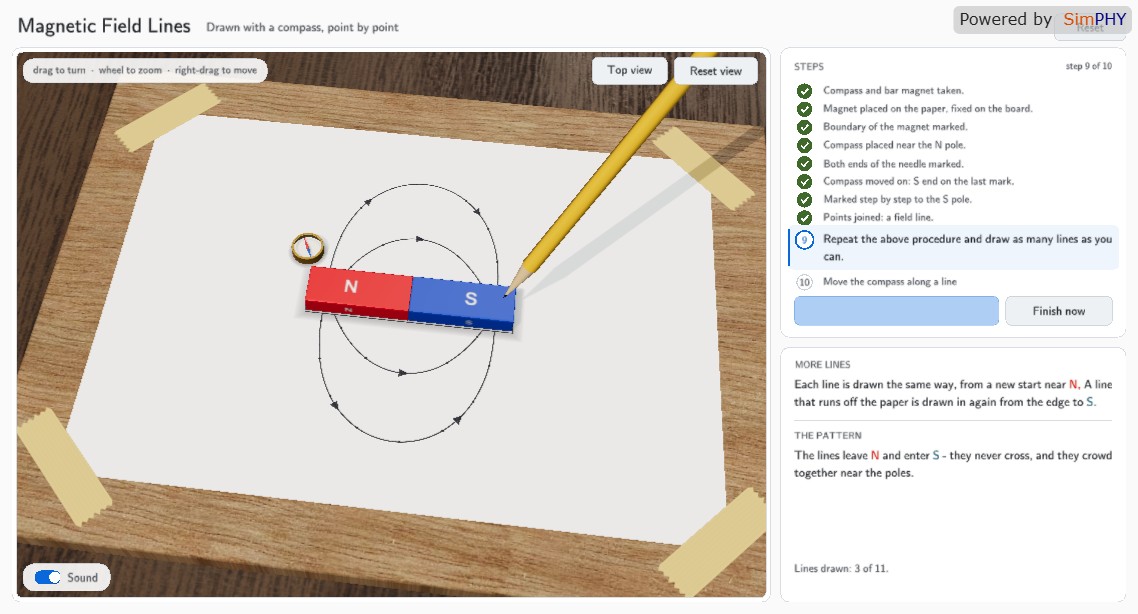
Draw magnetic field lines of a bar magnet with a compass, following NC...
 Free
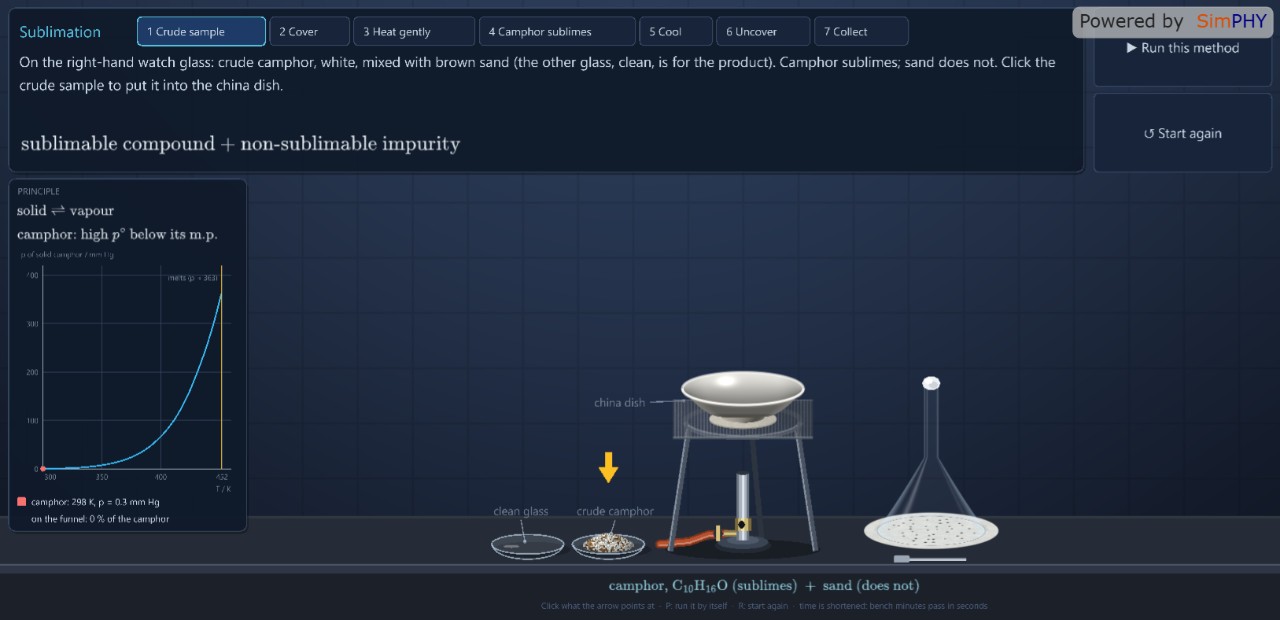
Watch camphor sublimate, condense on a surface, and leave sand behind,...
 Free
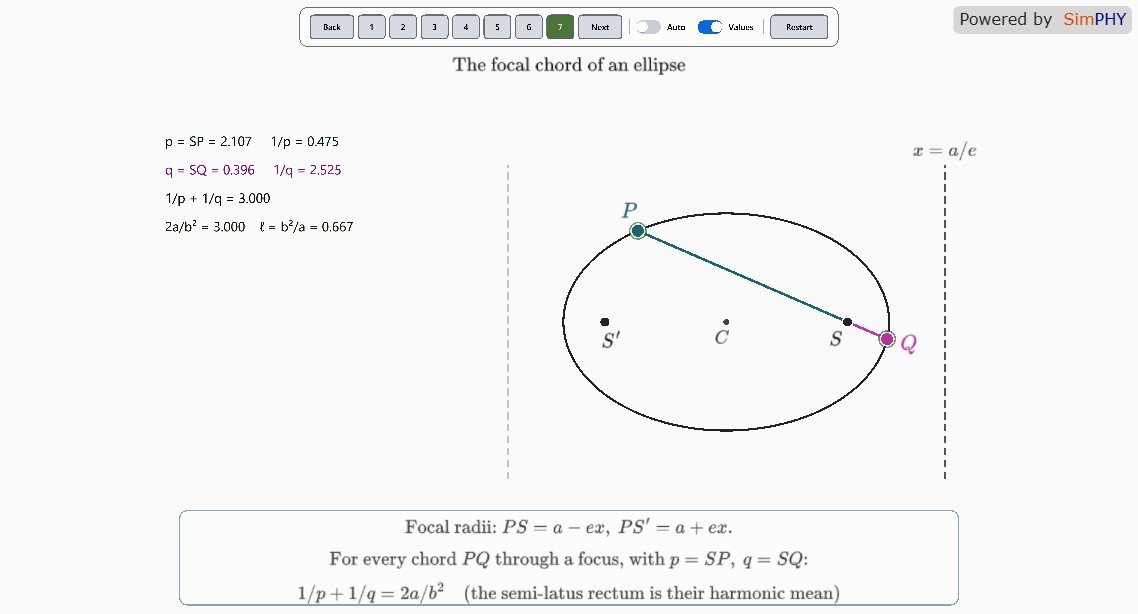
Explore the harmonic‑mean relationship of focal chord endpoints in an...