 Free
Piano Sound Wave Simulator
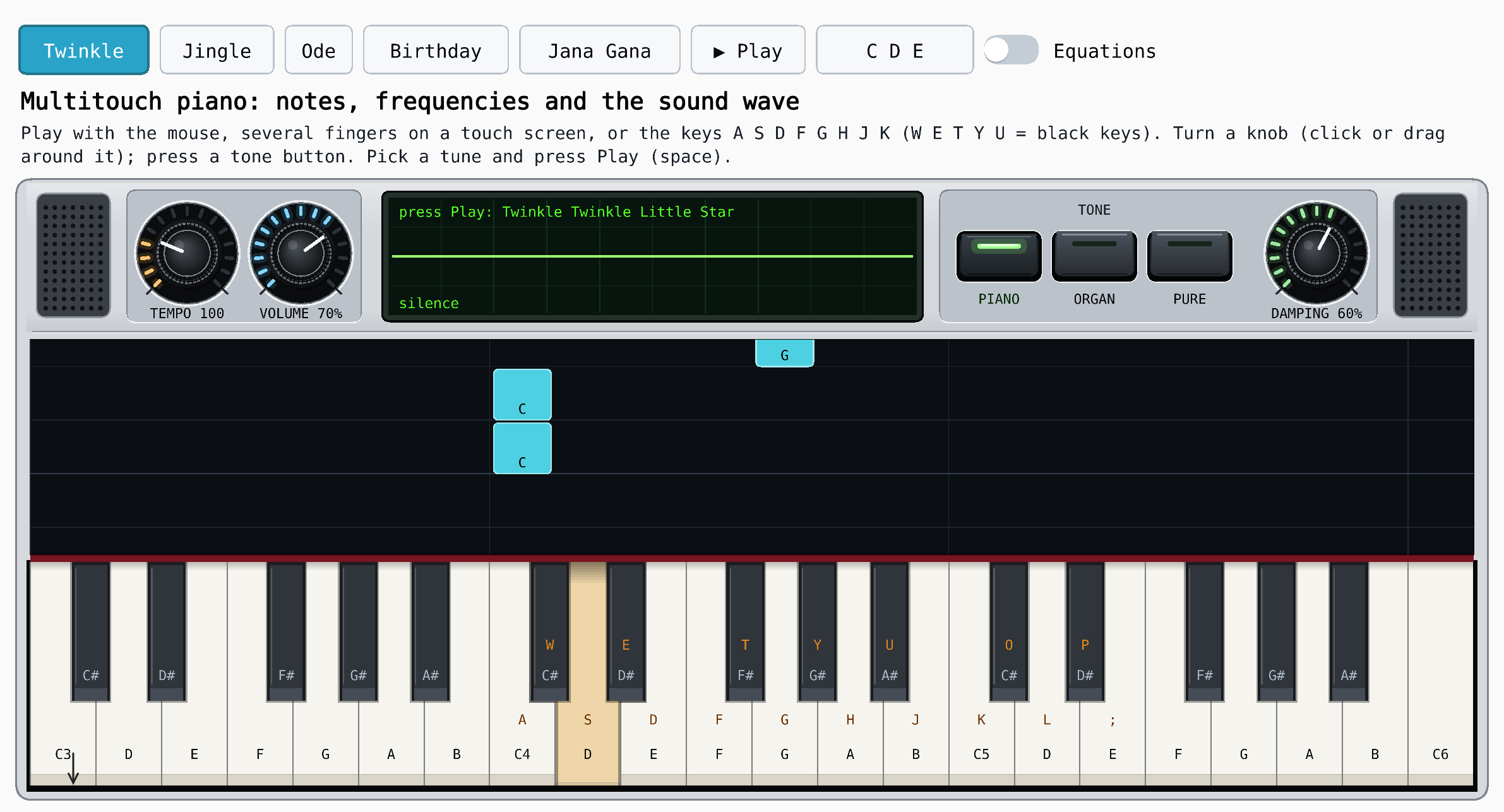
Sound WavesPlay a virtual piano, view the sound wave on an oscilloscope, and see...
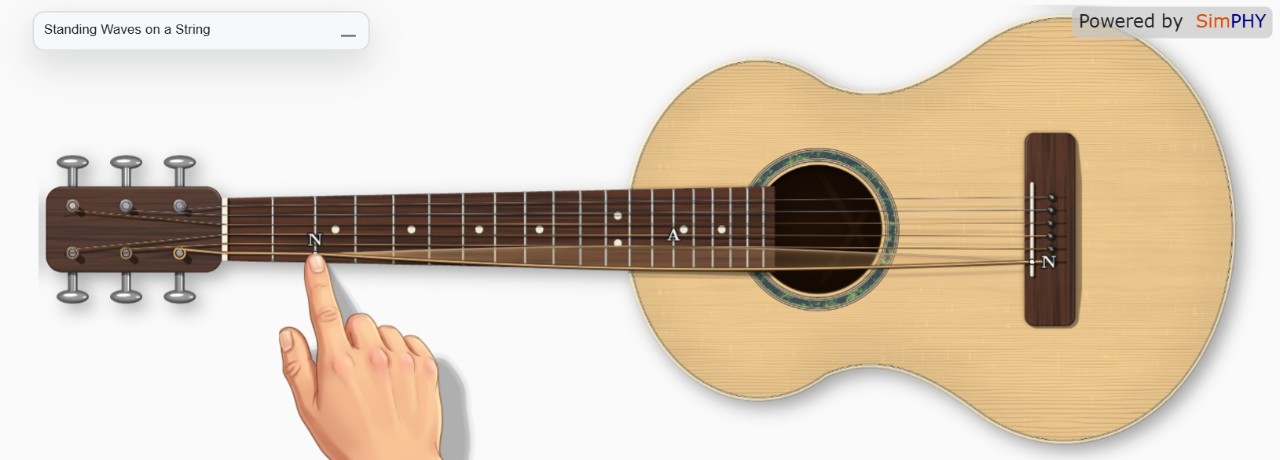
Explore standing wave patterns on a guitar string by choosing string, fret and harmonic, and hear the tone.
A guitar string fixed at both ends supports standing waves when it is plucked. The vibration forms nodes at the fixed points and a whole number of half‑wavelengths fits the vibrating length, described by L = nλ/2. The wave speed on the string depends on its tension and mass per unit length (v = √(T/μ)), linking tension, density, and frequency.
Students can select any of the six strings, move the finger along the fretboard, and choose a harmonic mode. The simulation marks nodes and antinodes, displays the vibrating length, wavelength, and calculated frequency, and plays the pure tone of the selected mode. Changing the fret alters the effective length, while changing the harmonic changes the number of half‑waves.
Through this interactive view, learners see how tension, string thickness, length, and harmonic number determine pitch, reinforcing concepts of wave speed, frequency, and the harmonic series used in musical acoustics.
Free
Play a virtual piano, view the sound wave on an oscilloscope, and see...
 Free
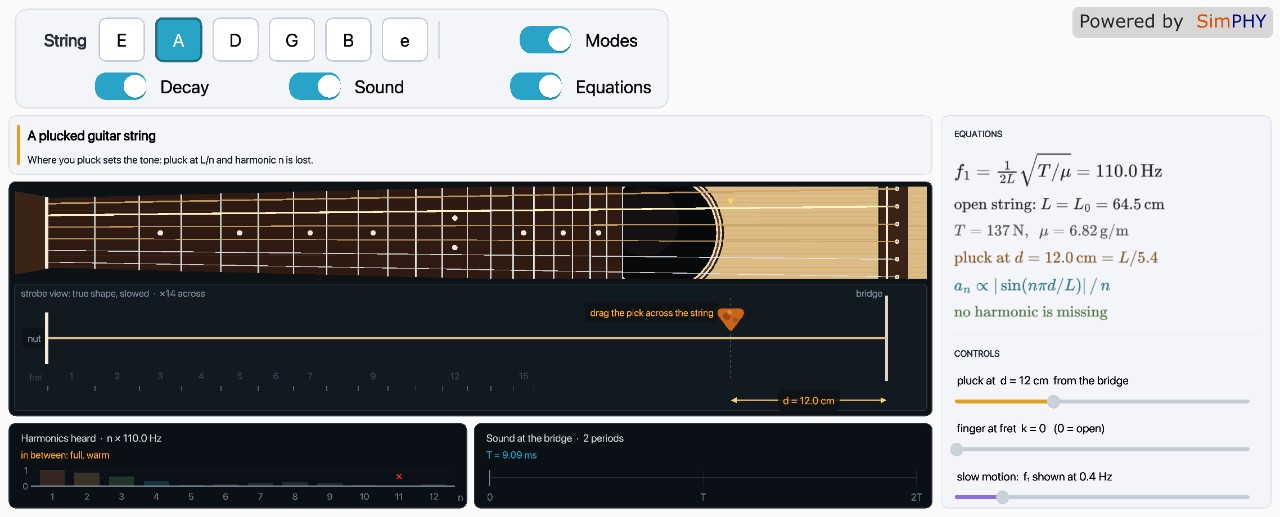
Explore how plucking position and fret choice affect the harmonic seri...
 Free
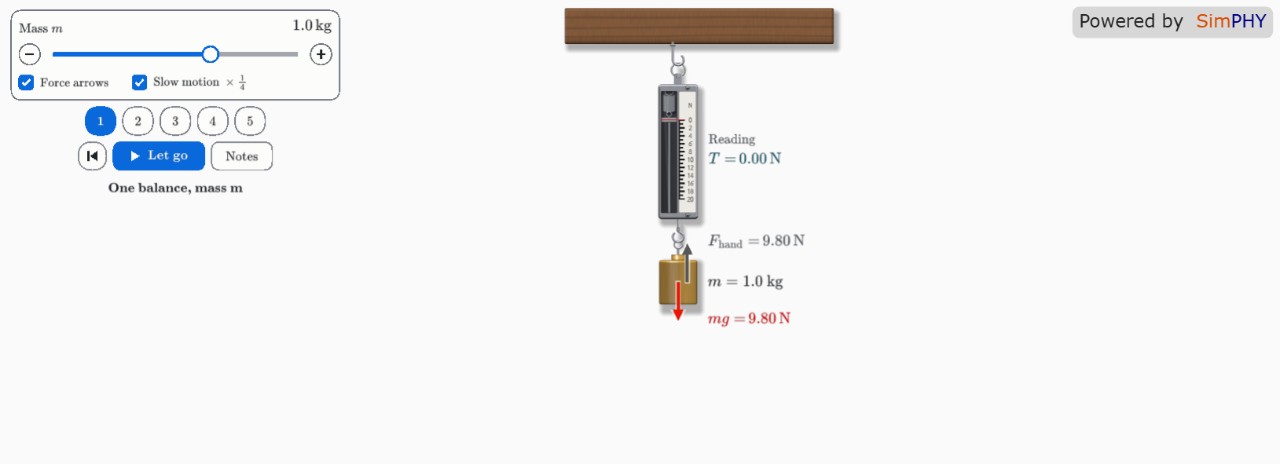
Explore five cases where a spring balance reads tension—from hanging m...
 Free
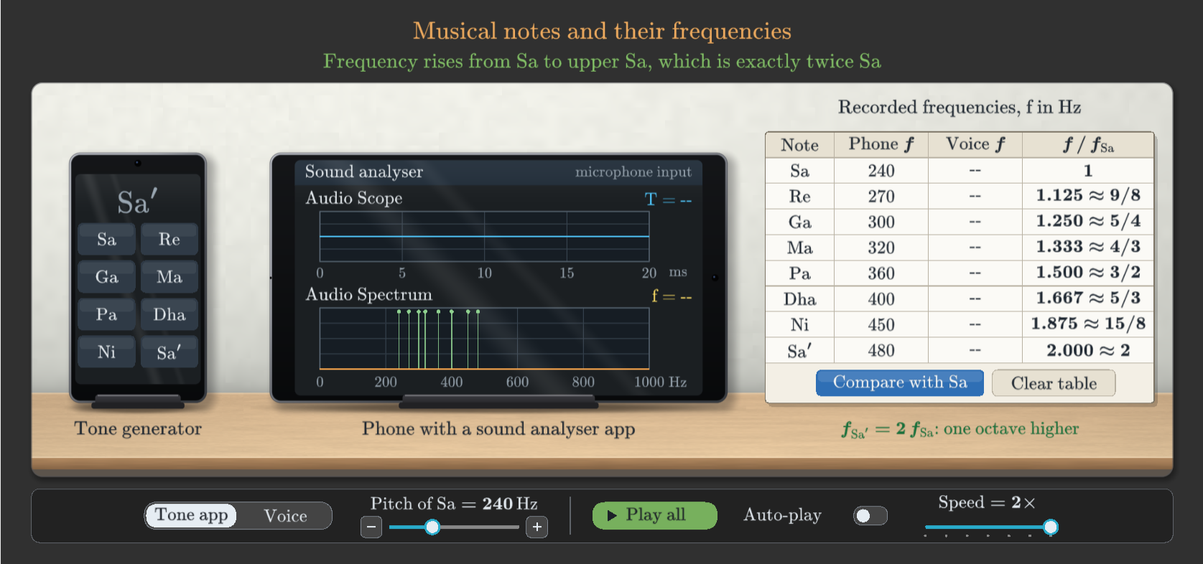
Play sargam notes, view their waveforms and spectra, and explore the f...
 Free
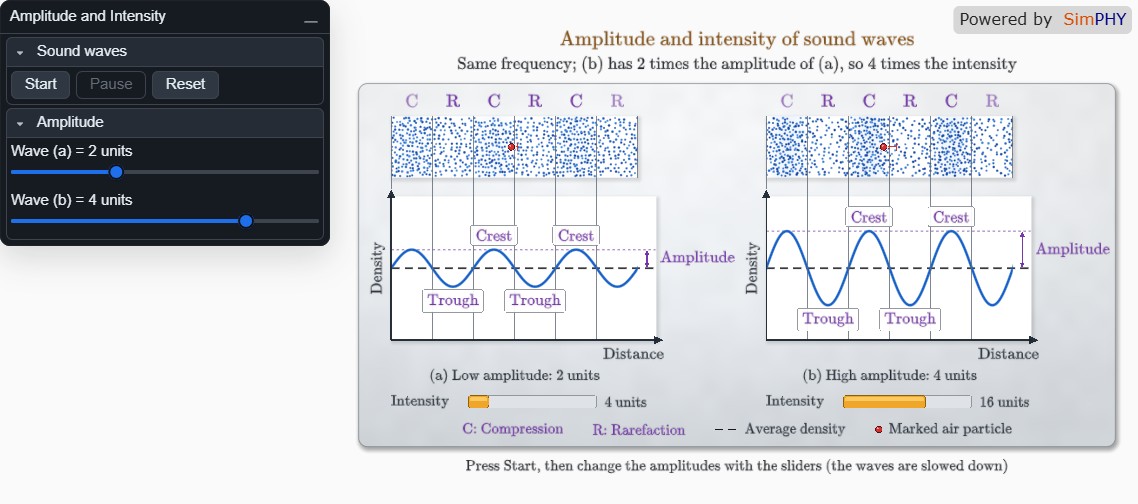
Adjust a sound wave’s amplitude to see density peaks and intensity ris...
 Free
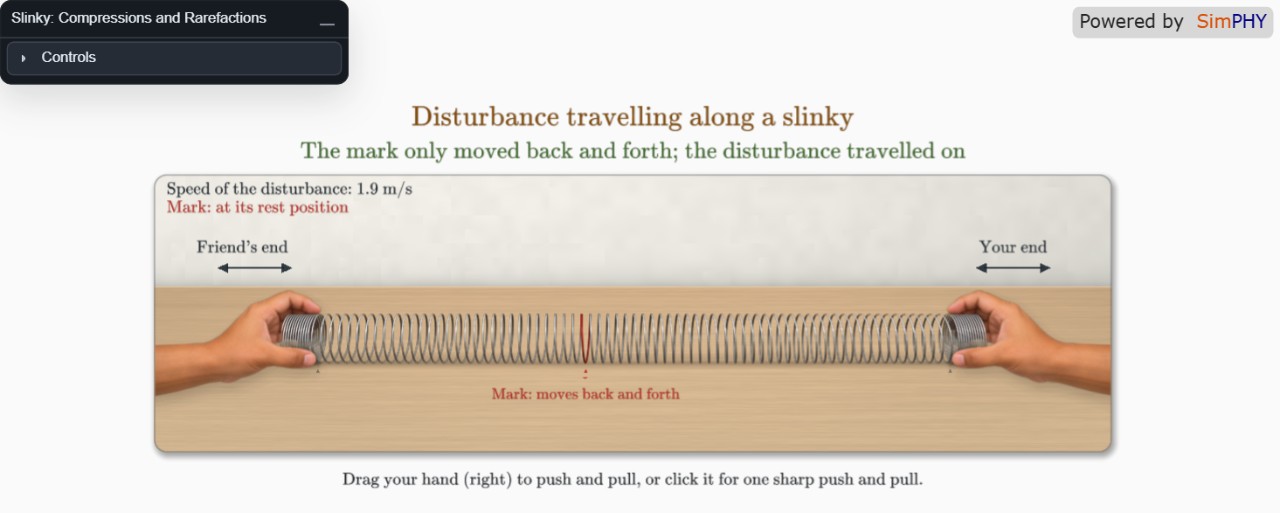
Push and pull a slinky to see longitudinal compressions and rarefactio...