 Free
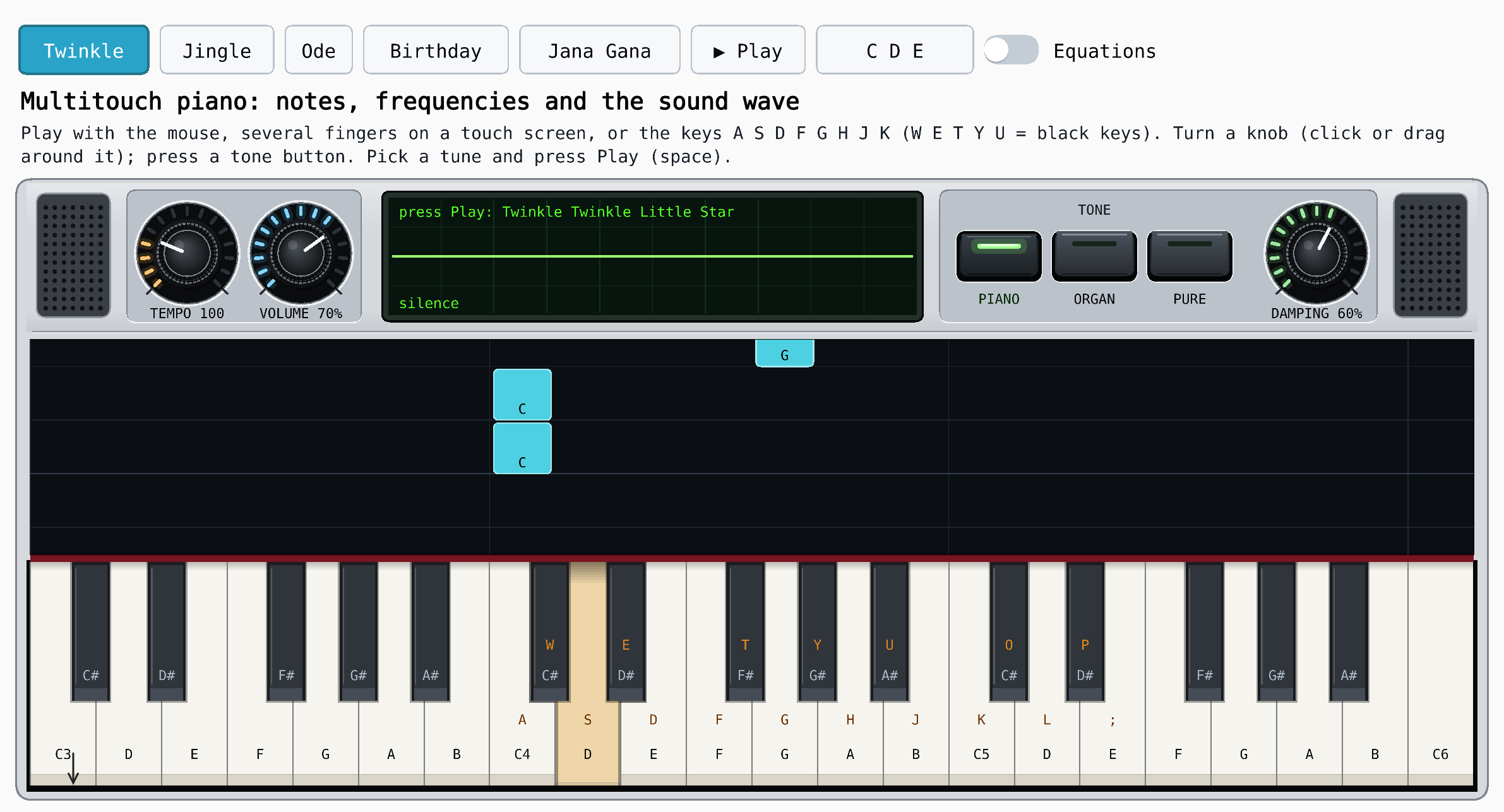
Piano Sound Wave Simulator
Sound WavesPlay a virtual piano, view the sound wave on an oscilloscope, and see...
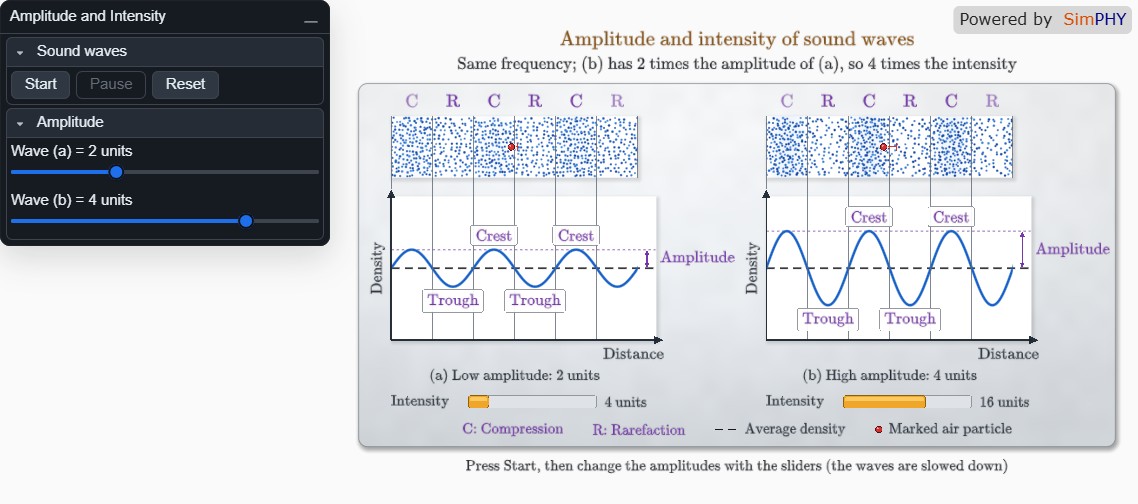
Adjust a sound wave’s amplitude to see density peaks and intensity rise, showing the extra energy it carries.
In a longitudinal sound wave the air density oscillates around its average value. The maximum change in density defines the wave’s amplitude; a larger amplitude means the compressions are more crowded and the rarefactions are more spread out. Because the energy transported by a wave is proportional to the square of its amplitude, the intensity – the power crossing a unit area – increases with amplitude.
The simulation shows two side‑by‑side sound waves that travel with the same frequency. Sliders let students increase the amplitude of each wave independently while the frequency remains fixed. As the amplitude grows, the density plot becomes taller, the particles swing farther, and the intensity bar lengthens, giving a visual link between amplitude, particle motion, and energy flow.
Students can observe that doubling the amplitude roughly quadruples the intensity, reinforcing the quantitative relationship I ∝ A². The activity connects the abstract formula for sound intensity with concrete visual cues, supporting the NCERT Grade 9 chapter on sound waves.
Free
Play a virtual piano, view the sound wave on an oscilloscope, and see...
 Free
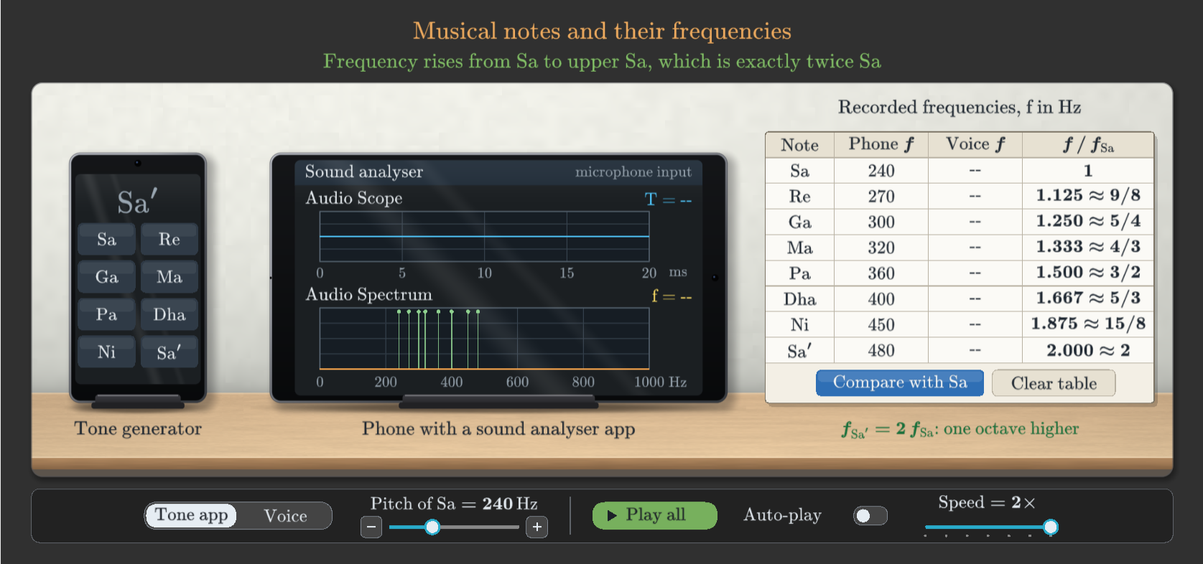
Play sargam notes, view their waveforms and spectra, and explore the f...
 Free
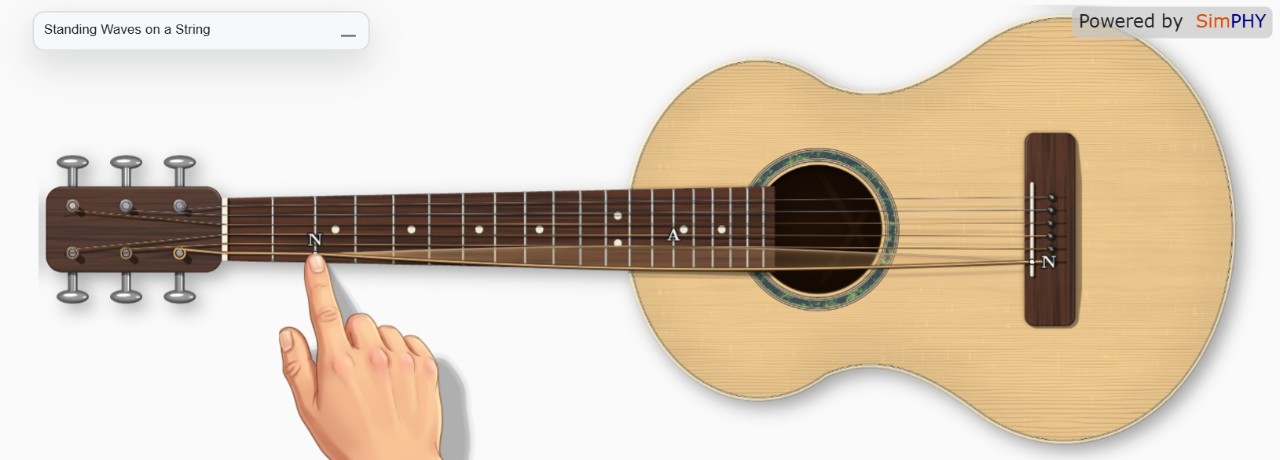
Explore standing wave patterns on a guitar string by choosing string,...
 Free
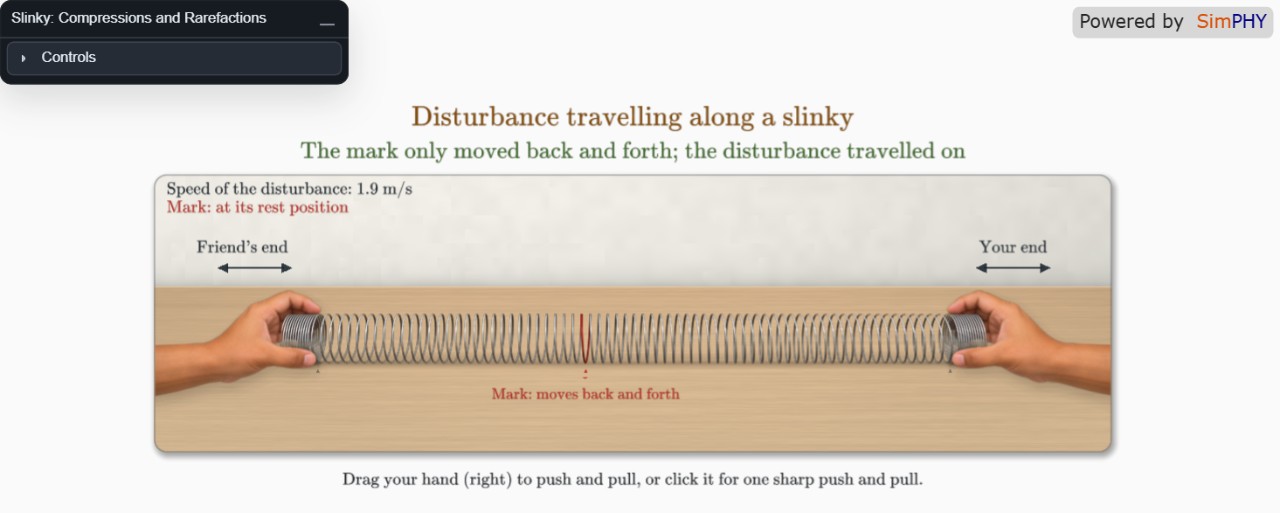
Push and pull a slinky to see longitudinal compressions and rarefactio...
 Free
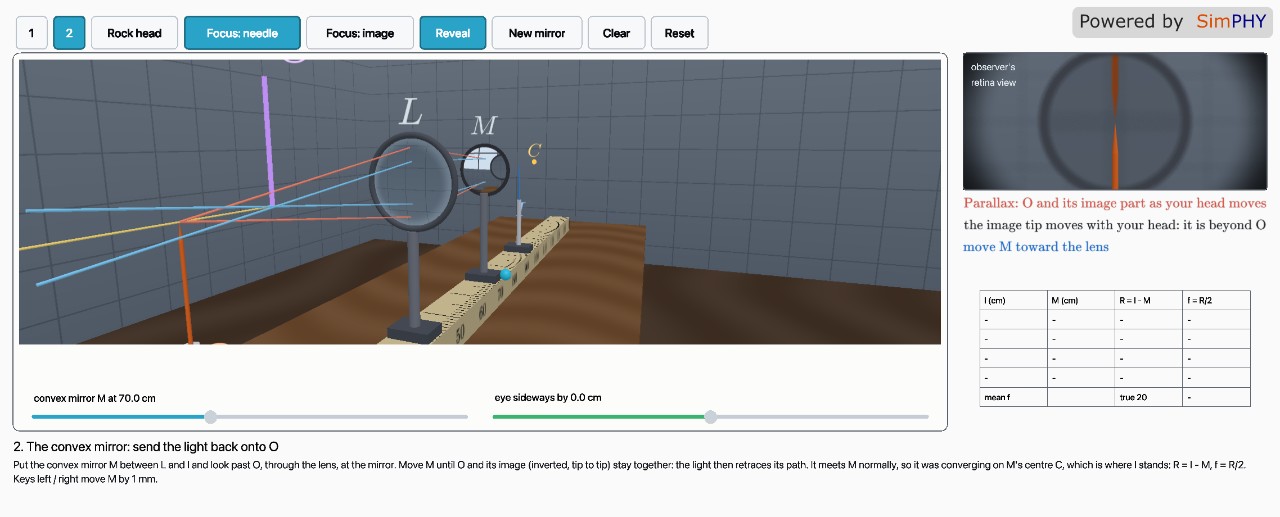
Measure a convex mirror’s focal length on an optical bench using a con...
 Free
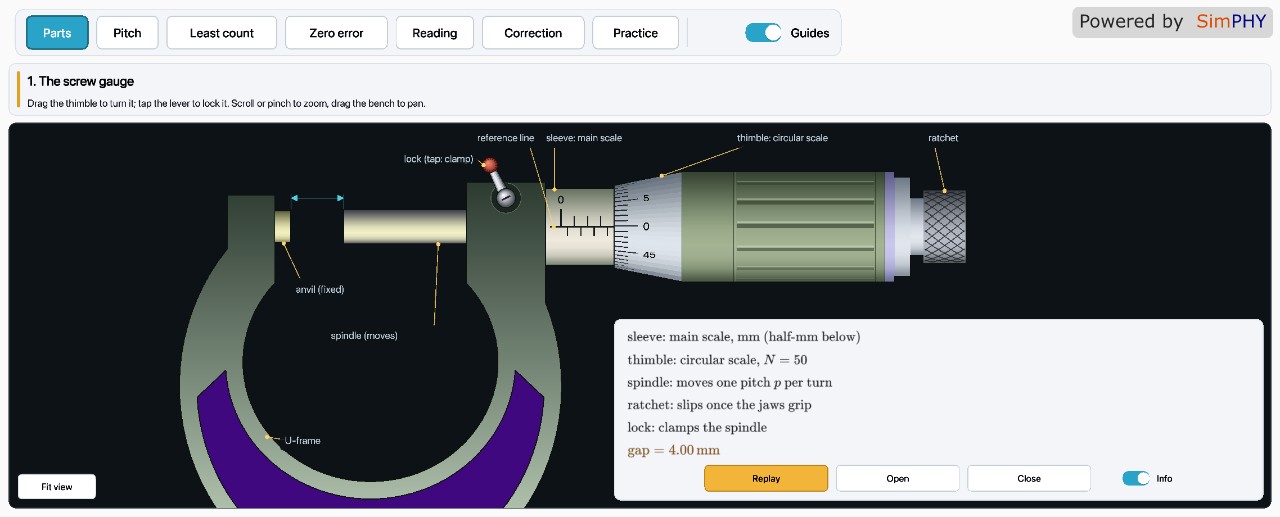
Explore a micrometer’s pitch, least count, zero error and readings thr...