 Free
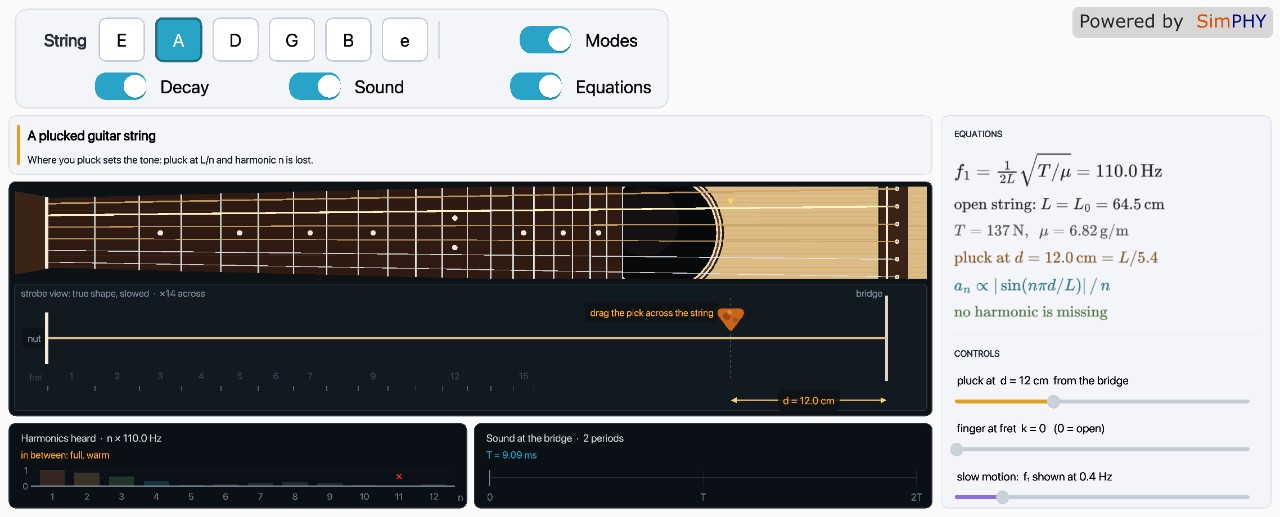
Guitar String Harmonics
Thermal Properties of MatterExplore how plucking position and fret choice affect the harmonic seri...
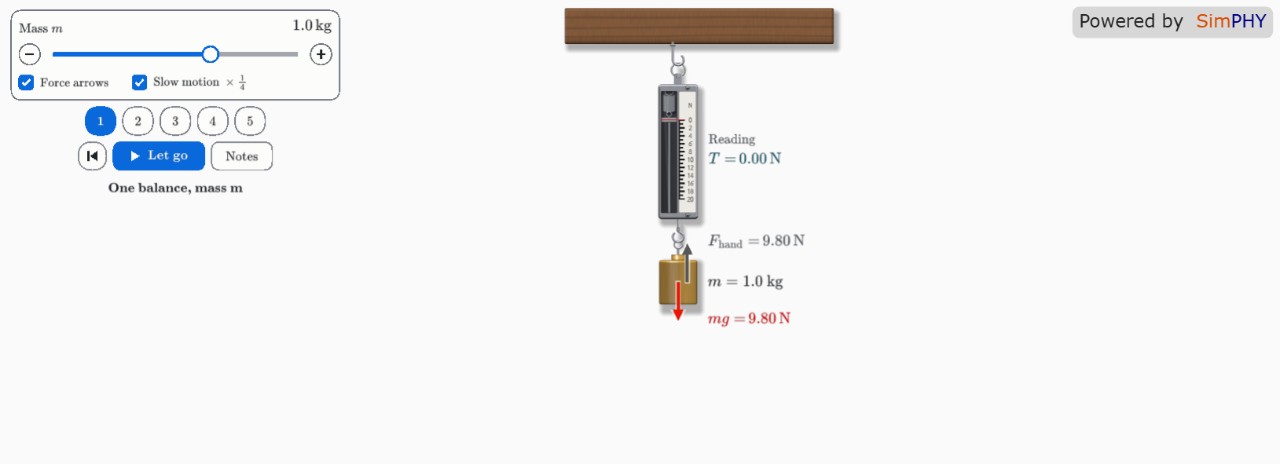
Explore five cases where a spring balance reads tension—from hanging masses to pulls—using Newton’s laws.
A massless spring balance measures the tension in its hook, which equals the restoring force of the spring (Fs = kx). The simulation presents five distinct setups that illustrate Newton’s second and third laws, Hooke’s law, and equilibrium conditions, from a single hanging mass to balances pulled from both ends and series arrangements with pulleys. Each case shows how the balance’s reading relates to the forces acting on the system.\n\nStudents advance through the cases with step buttons (1‑5) or keyboard keys. In cases with a hanging mass they can drag the mass and release it; in pull cases they can drag the pull ring. The dialog lets them set the mass (0.1–1.5 kg) or the external pull force F, toggle force arrows, enable slow‑motion playback, and view the worked textbook solution. The motion follows the exact damped‑oscillation equation (k = 200 N/m, damping ratio 0.32).\n\nBy observing the balance’s reading during motion and at rest, learners see how tension equals weight for hanging masses, how a massless balance transmits an external pull unchanged, and why a balance pulled from both ends reads only the applied force. The activity reinforces concepts of force balance, tension, Hooke’s law, and the role of Newton’s laws in dynamic and static situations.
Free
Explore how plucking position and fret choice affect the harmonic seri...
 Free
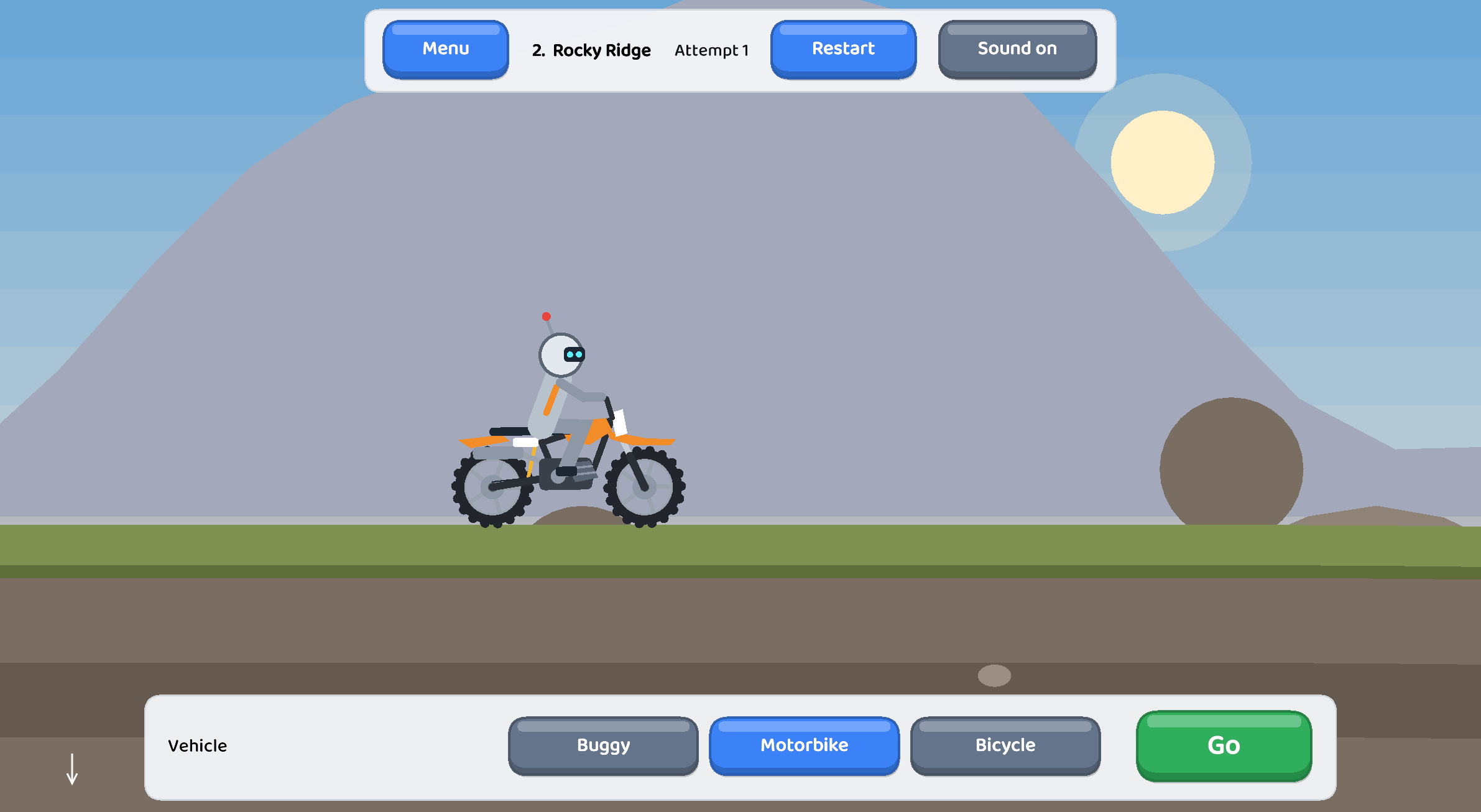
Drive a buggy, motorbike or bicycle over terrain, exploring gravity an...
 Free
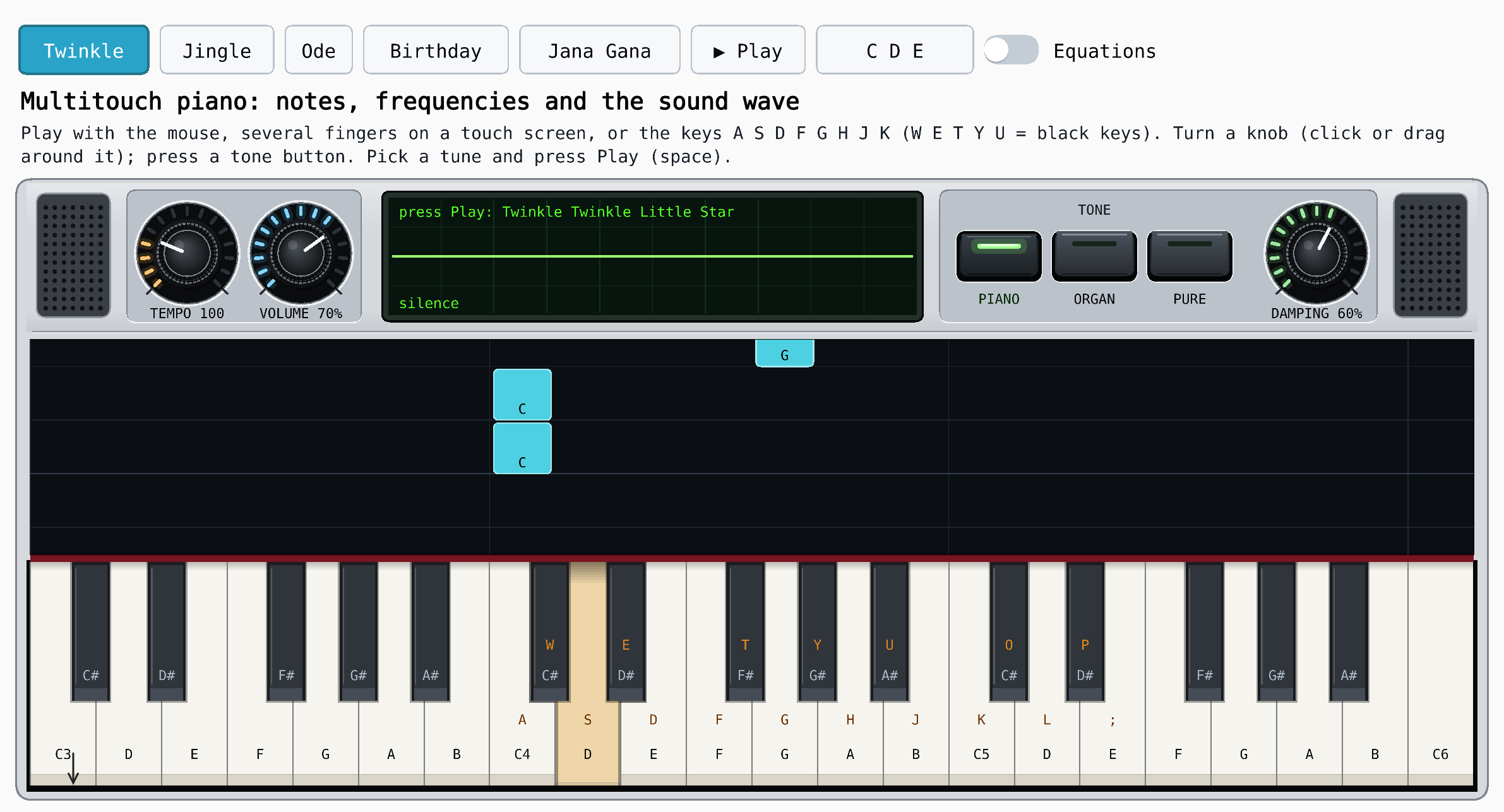
Play a virtual piano, view the sound wave on an oscilloscope, and see...
 Free
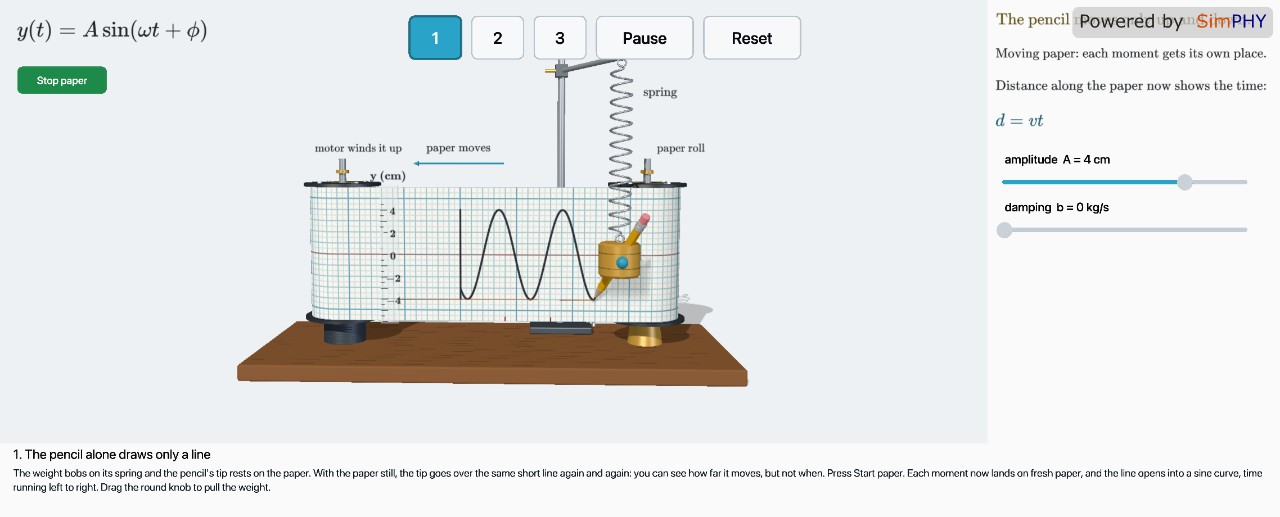
Pull the spring‑mass weight to draw a sine wave on moving paper, explo...
 Free
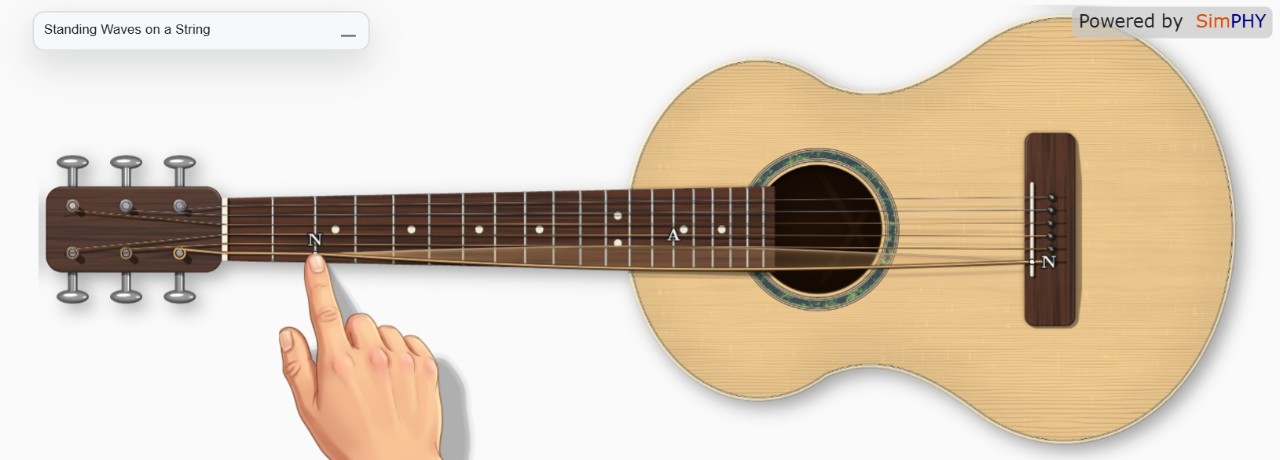
Explore standing wave patterns on a guitar string by choosing string,...
 Free
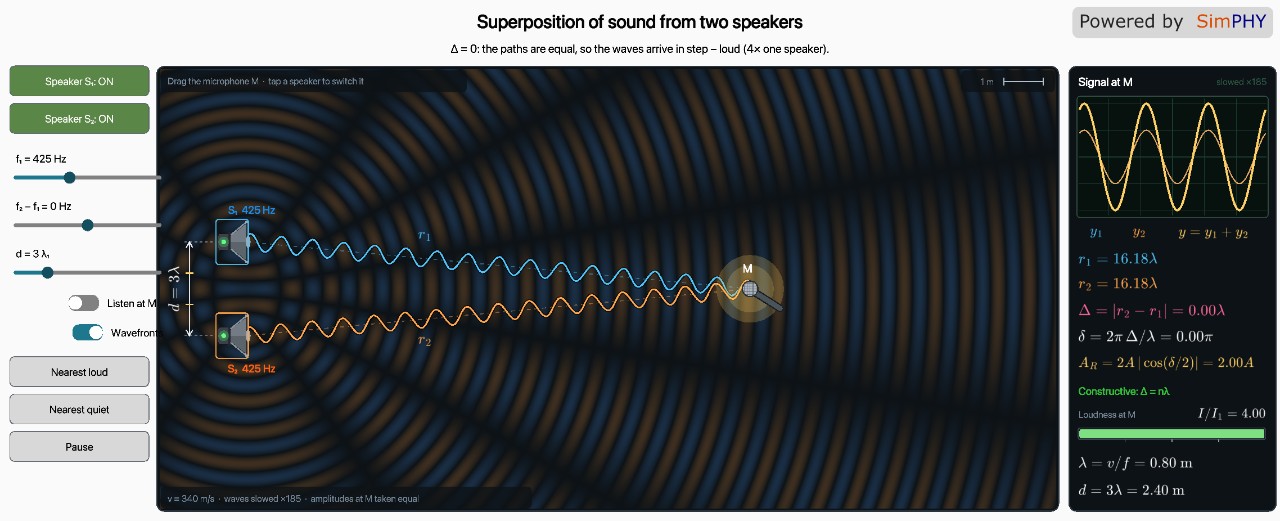
Explore interference and beats from two speakers by adjusting frequenc...