 Free
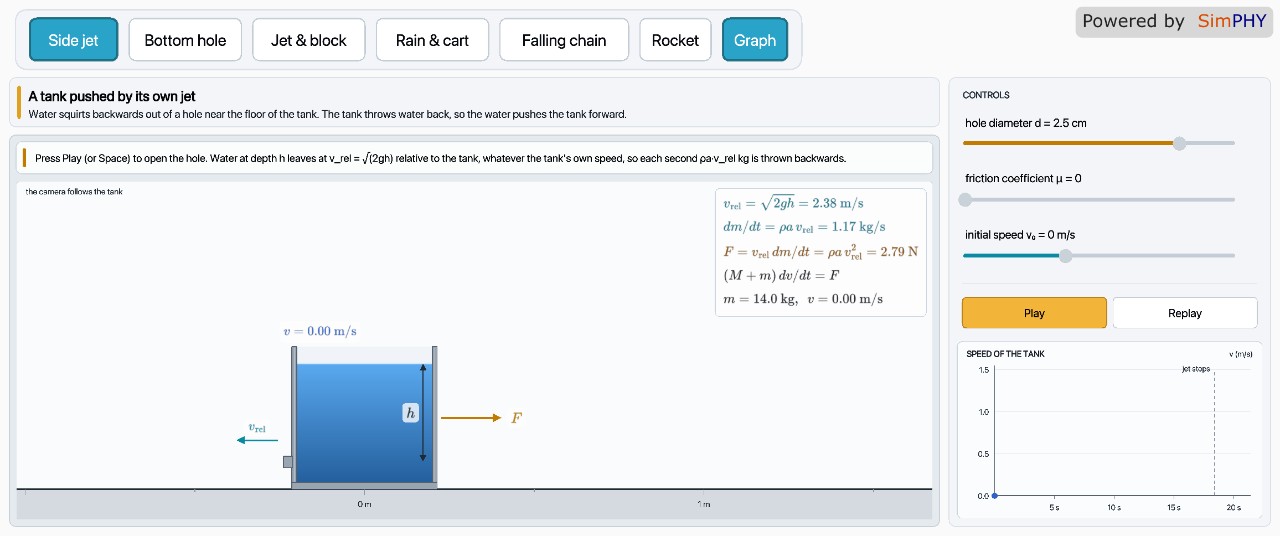
Variable Mass Systems: Jets, Rockets, and Falling Chains
Centre of MassExplore how changing mass affects motion with jets, draining carts, ra...
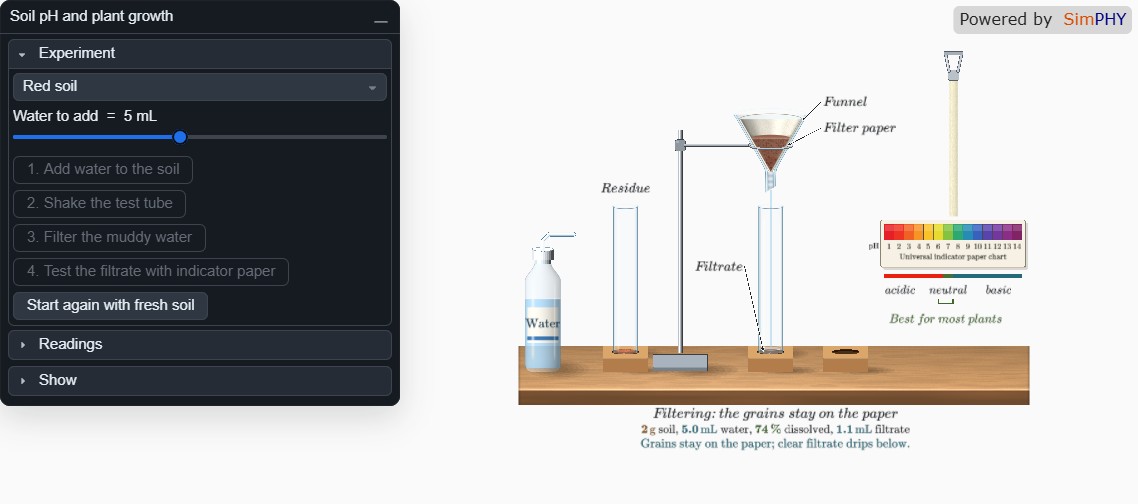
Filter soil water and dip universal indicator paper to read pH; see how acidity changes nutrient availability.
The simulation reproduces a simple laboratory test: a small amount of soil is mixed with water, the mixture is shaken, filtered, and the clear filtrate is tested with universal indicator paper. The colour of the paper is matched to a chart to estimate the soil pH, showing whether the soil is acidic, neutral, or basic and indicating its suitability for plant growth.
A physics model underlies the settling of soil particles in the water. Using Stokes' law, the simulation calculates the settling velocities for sand, silt, and clay particles based on their size and density differences with water. Students can observe how larger sand particles settle quickly while fine clay remains suspended, affecting the clarity of the filtrate.
By linking the measured pH to plant nutrient availability, learners see why most crops thrive in soils with pH between 6 and 7.5. The activity connects chemical concepts of acidity with biological nutrition and demonstrates the role of fluid mechanics in laboratory techniques.
Free
Explore how changing mass affects motion with jets, draining carts, ra...
 Free
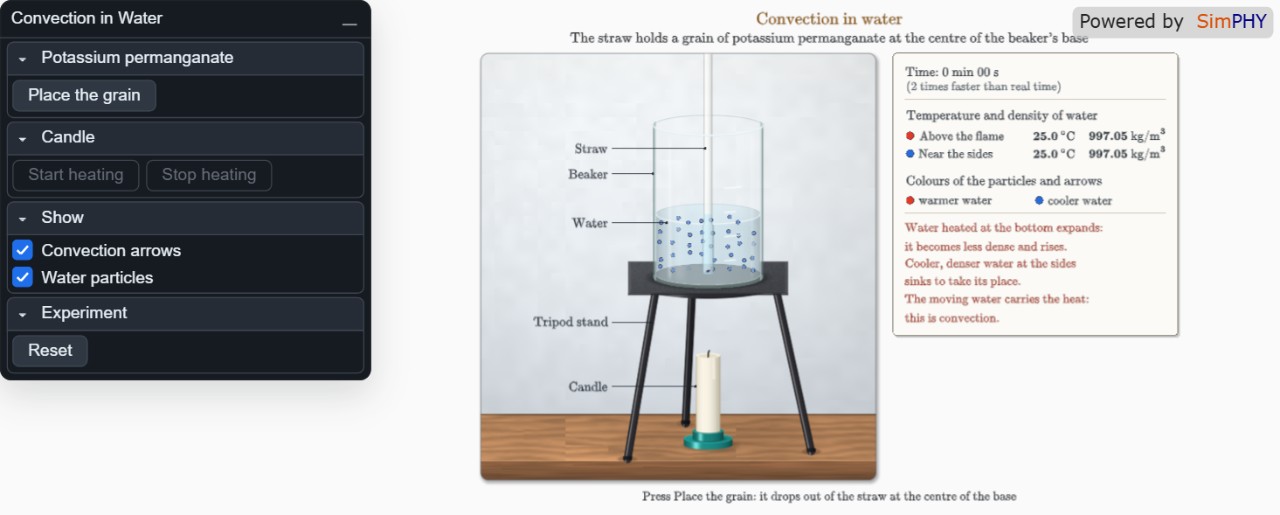
Observe heating a beaker of water produce a convection loop, shown by...
 Free
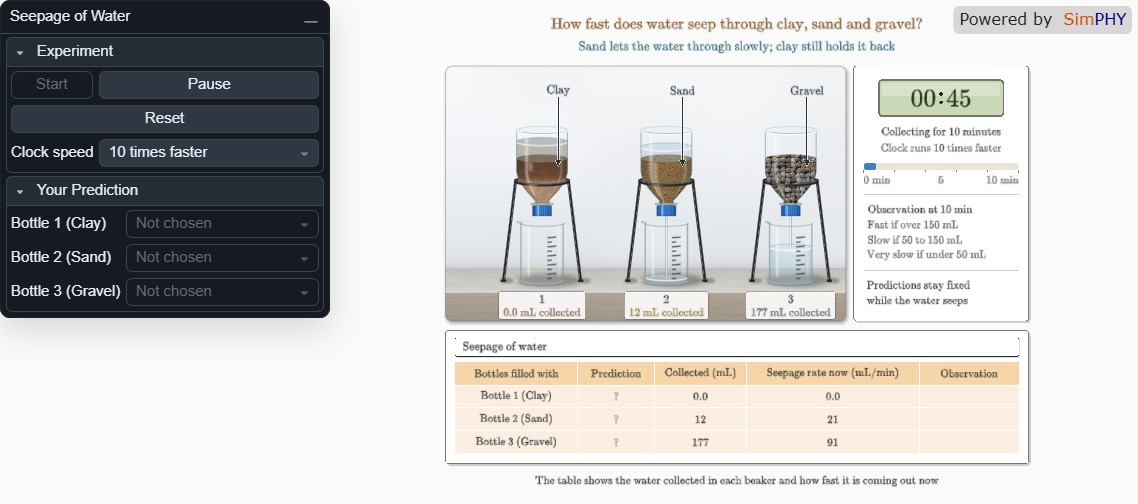
Compare water flow through clay, sand and gravel using Darcy’s law to...
 Free
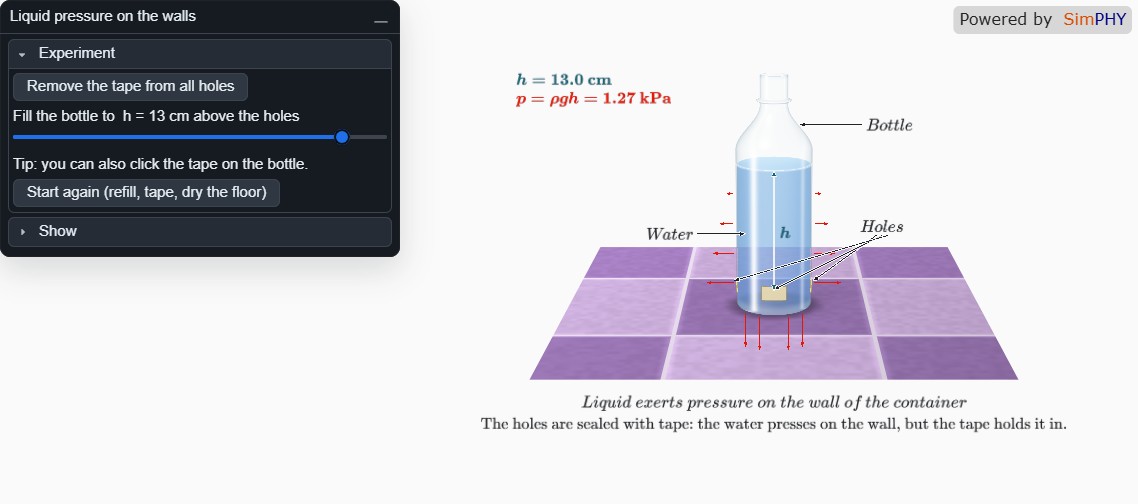
Water jets from four equal‑depth holes show that liquid pressure acts...
 Free
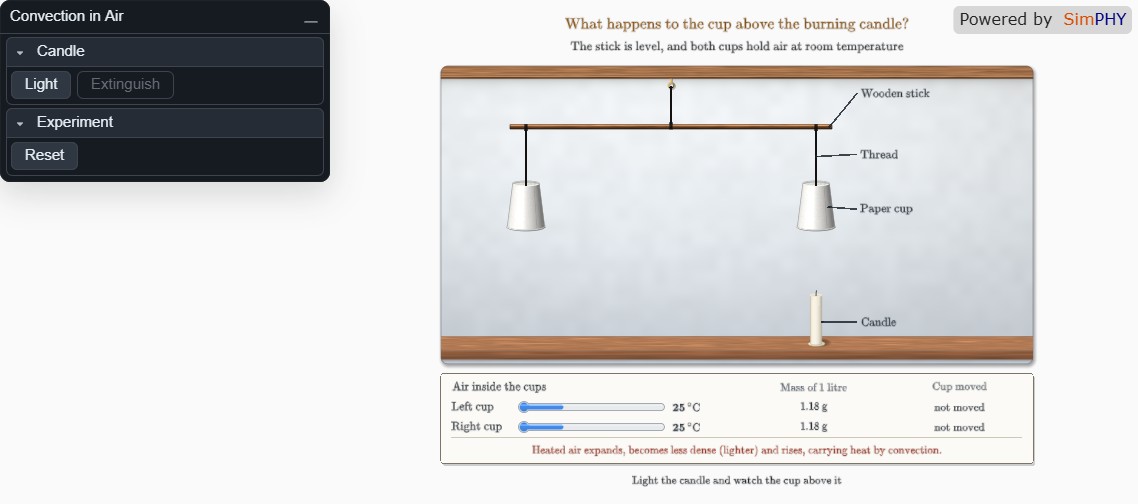
Light a candle under an upside‑down paper cup; warm air rises, lifting...
 Free
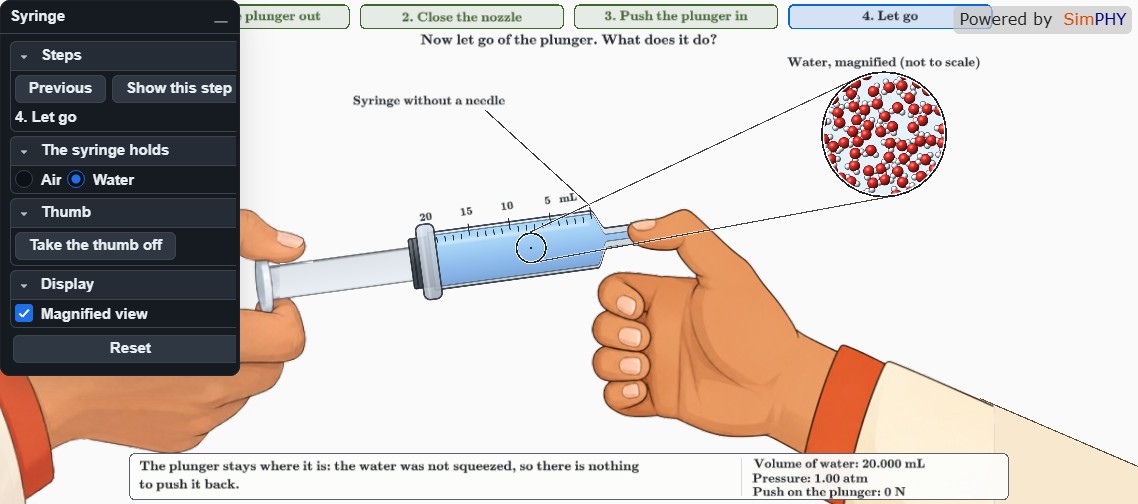
Pull the plunger, seal the tip, and see air compress while water remai...