 Free
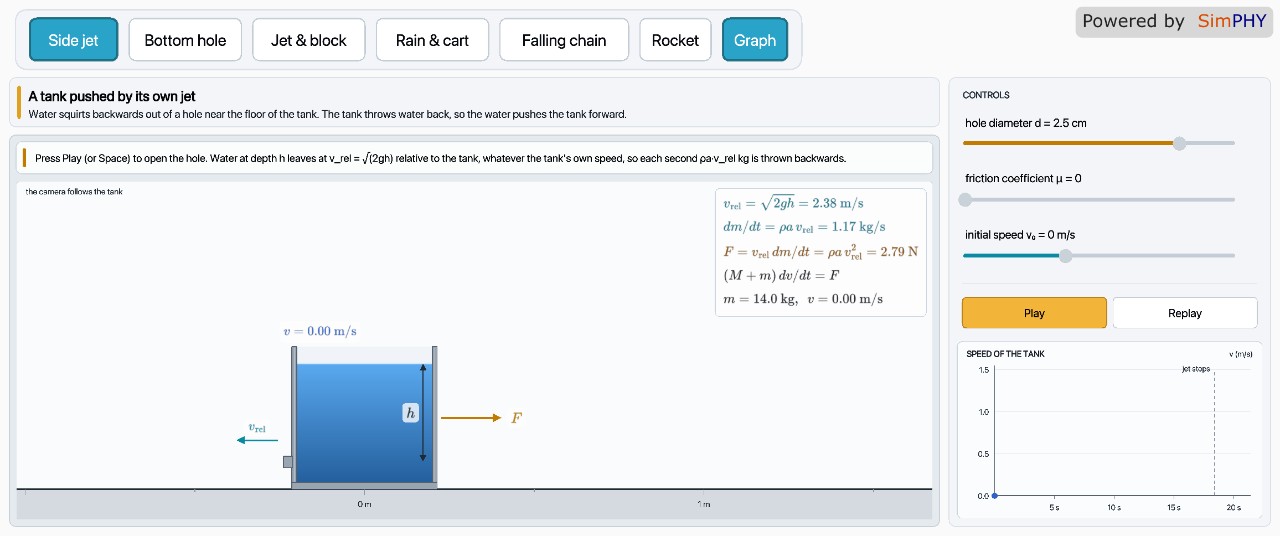
Variable Mass Systems: Jets, Rockets, and Falling Chains
Centre of MassExplore how changing mass affects motion with jets, draining carts, ra...
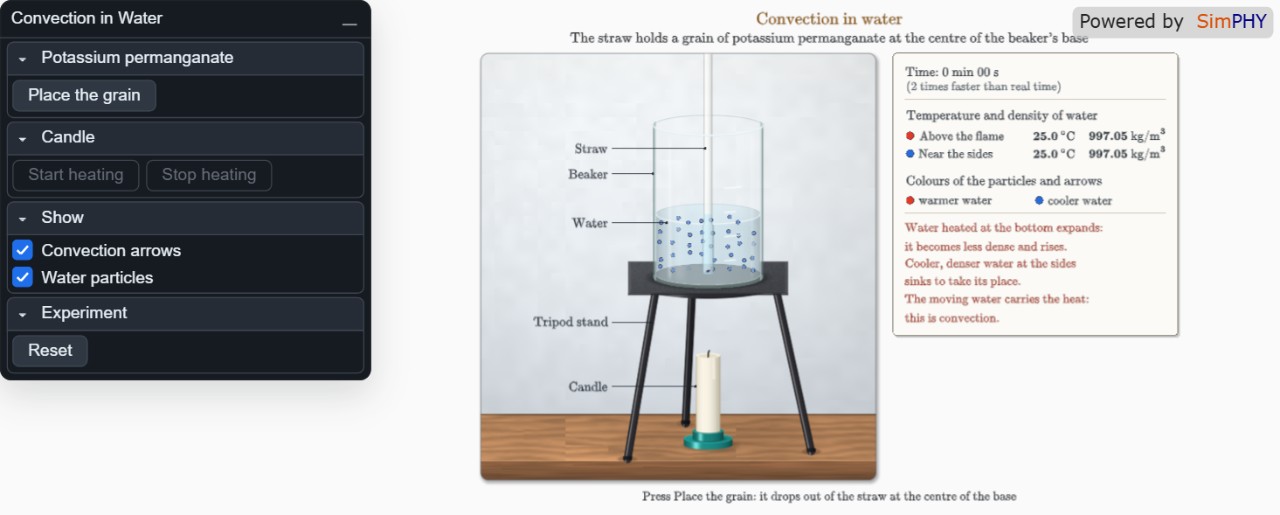
Observe heating a beaker of water produce a convection loop, shown by colored dye and temperature arrows.
When the candle heats the water at the bottom of the beaker, the warmed water expands, becomes less dense and rises. Cooler, denser water at the sides sinks, creating a circulating convection current that transports heat throughout the fluid.
Students can place the potassium permanganate grain, start the heating, stop the candle, and reset the experiment. Arrows indicate the direction of flow and small particles are coloured red for warmer water and blue for cooler water, making the temperature pattern visible as the simulation runs at double speed.
The model solves the Boussinesq equations for a round beaker, showing how slight density differences drive fluid motion. Learners explore the link between temperature, density, and fluid flow, reinforcing concepts of heat transfer, convection, and basic fluid‑mechanics principles.
Free
Explore how changing mass affects motion with jets, draining carts, ra...
 Free
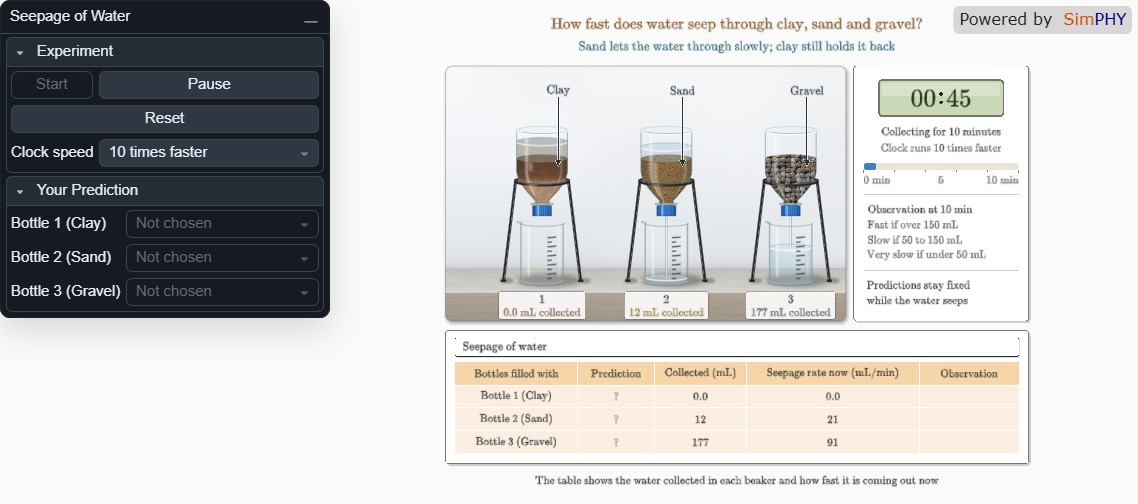
Compare water flow through clay, sand and gravel using Darcy’s law to...
 Free
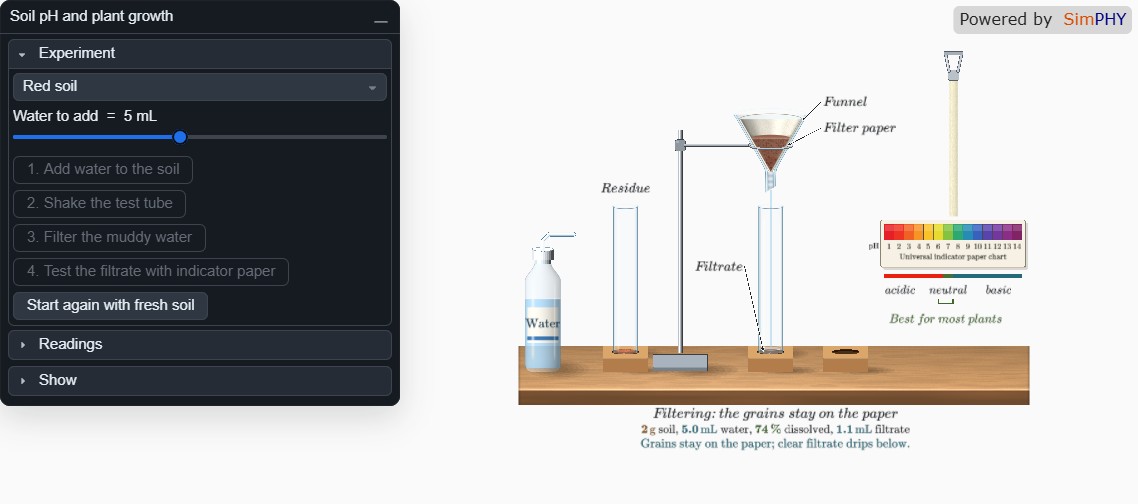
Filter soil water and dip universal indicator paper to read pH; see ho...
 Free
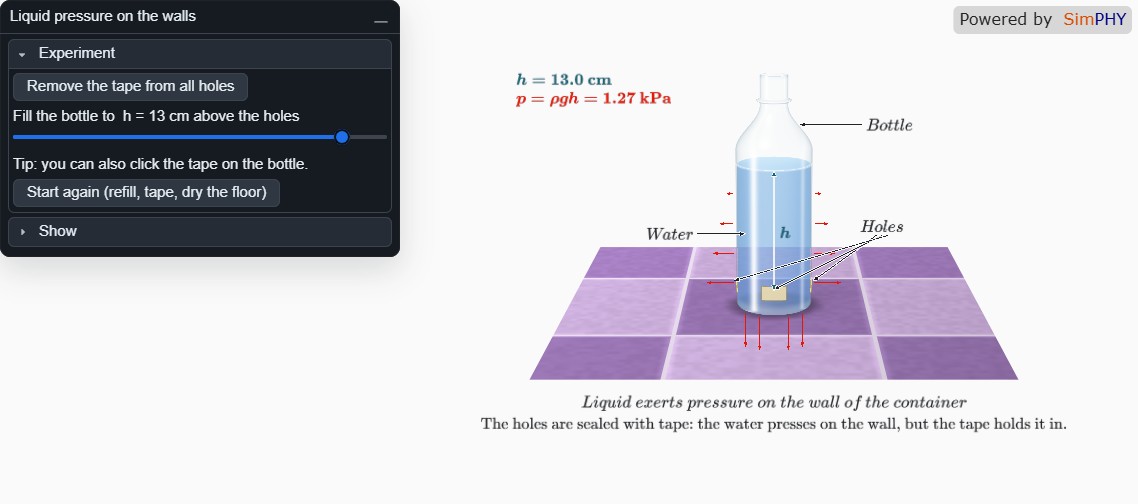
Water jets from four equal‑depth holes show that liquid pressure acts...
 Free
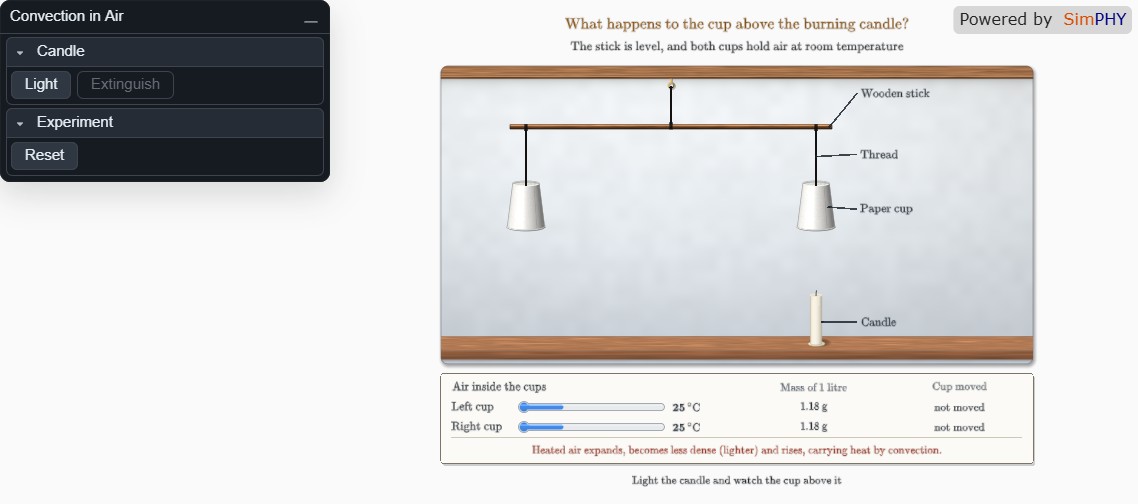
Light a candle under an upside‑down paper cup; warm air rises, lifting...
 Free
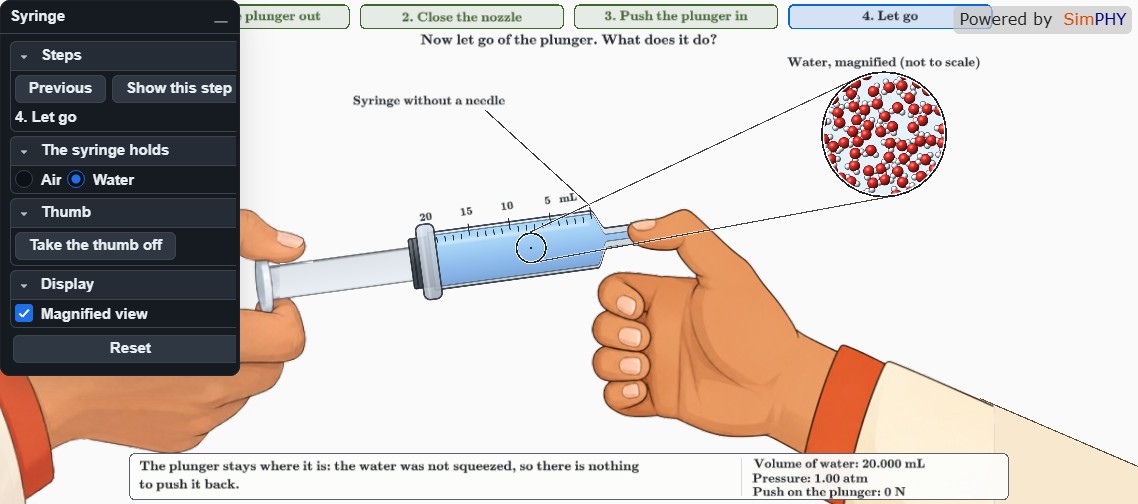
Pull the plunger, seal the tip, and see air compress while water remai...