 Free
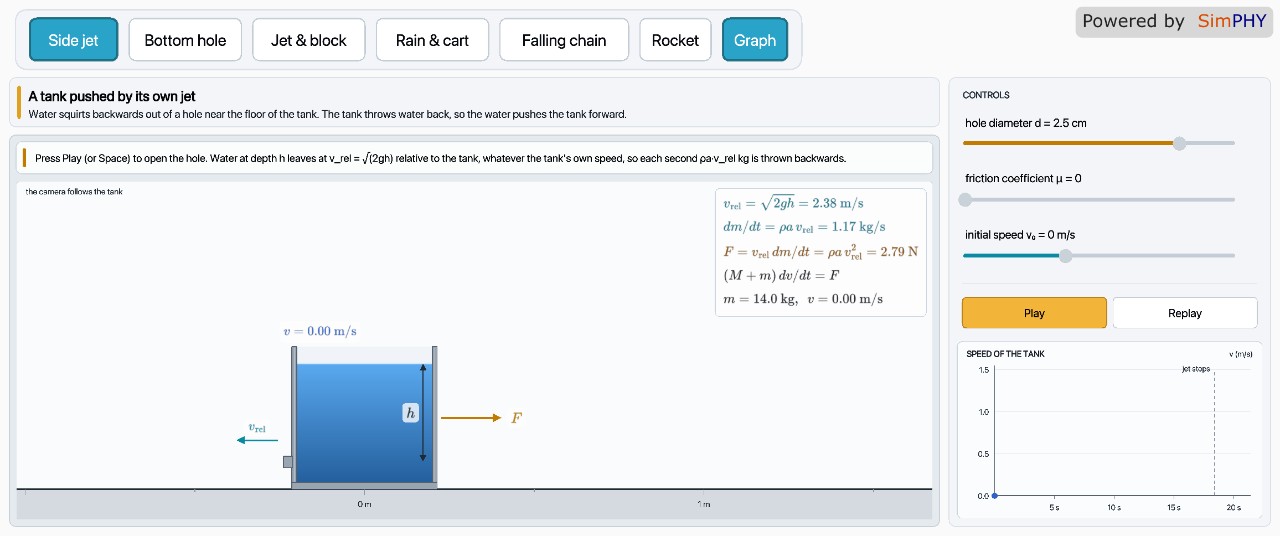
Variable Mass Systems: Jets, Rockets, and Falling Chains
Centre of MassExplore how changing mass affects motion with jets, draining carts, ra...
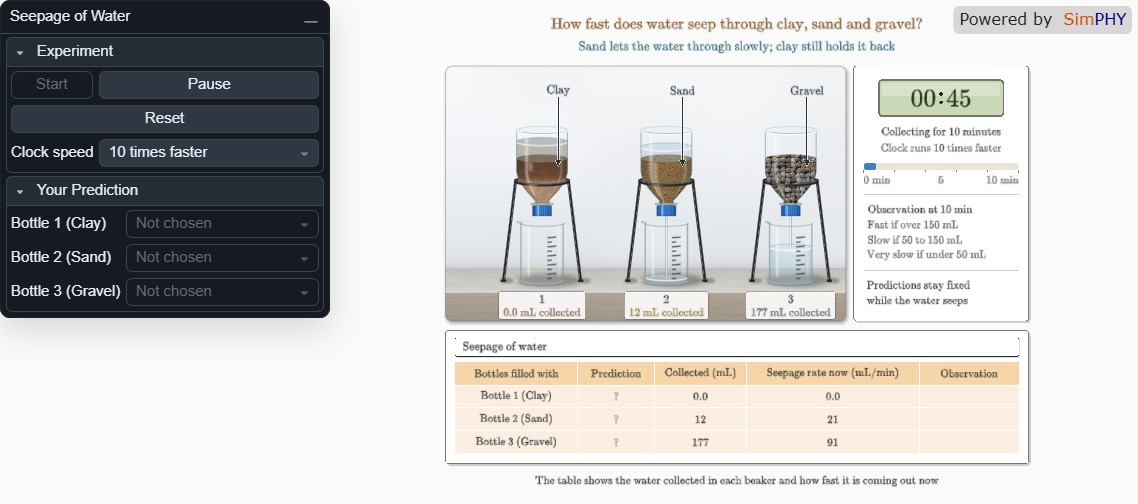
Compare water flow through clay, sand and gravel using Darcy’s law to see how soil type affects seepage rate.
The simulation models water moving through three common soil types—clay, sand and gravel—by solving Richards’ equation, which incorporates Darcy’s law and the van Genuchten‑Mualem relationships. These equations describe how hydraulic conductivity and suction drive flow in partially saturated porous media.
Students can start the simulation for each material and watch the water level in the bottle and the amount collected in the beaker over a ten‑minute period. By comparing the curves for the three soils, they see how pore size and material permeability control the rate of seepage.
Through this activity learners understand the concepts of permeability, hydraulic conductivity, and the role of capillary suction in groundwater movement, linking fluid‑mechanics principles to real‑world environmental and engineering problems.
Free
Explore how changing mass affects motion with jets, draining carts, ra...
 Free
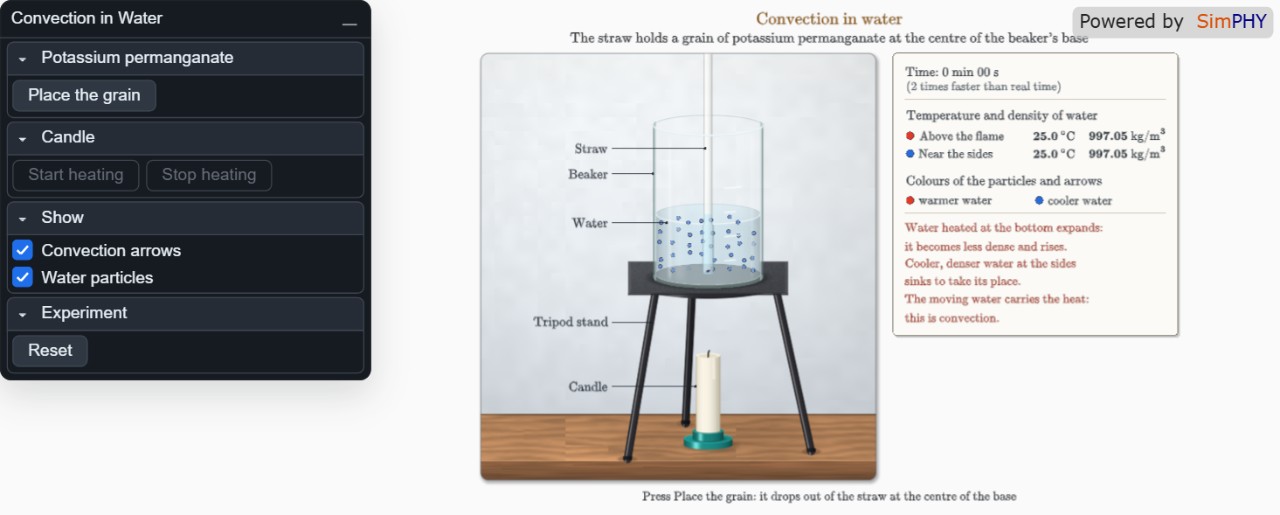
Observe heating a beaker of water produce a convection loop, shown by...
 Free
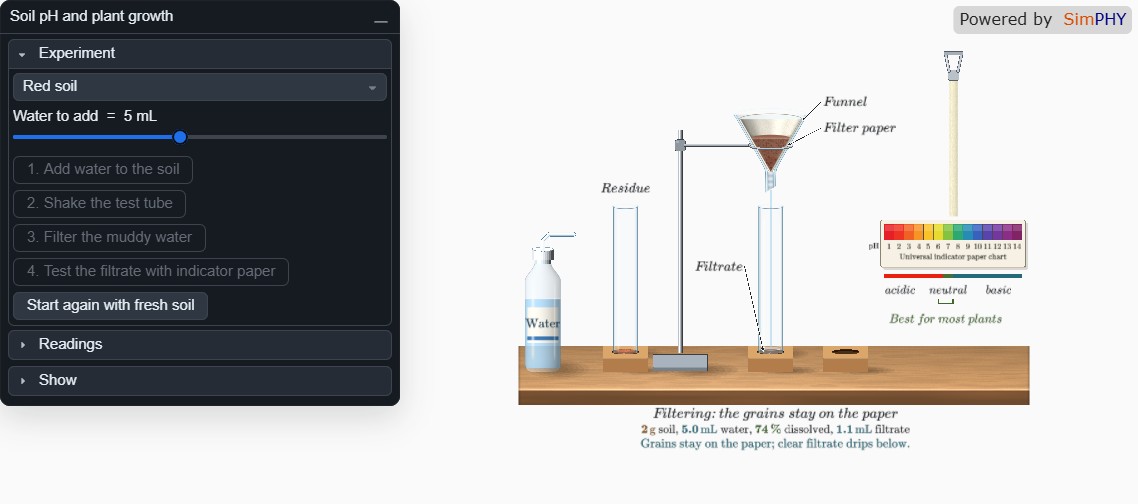
Filter soil water and dip universal indicator paper to read pH; see ho...
 Free
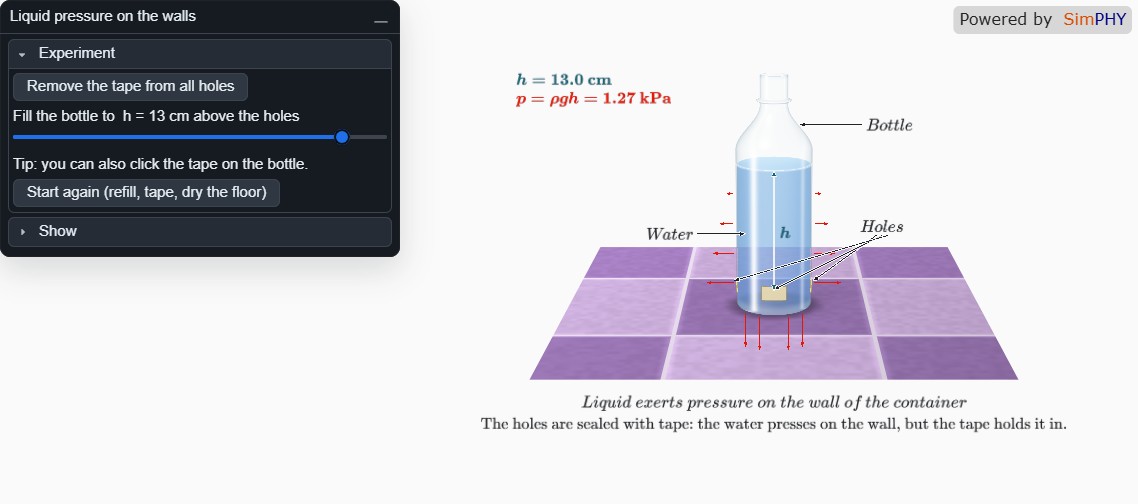
Water jets from four equal‑depth holes show that liquid pressure acts...
 Free
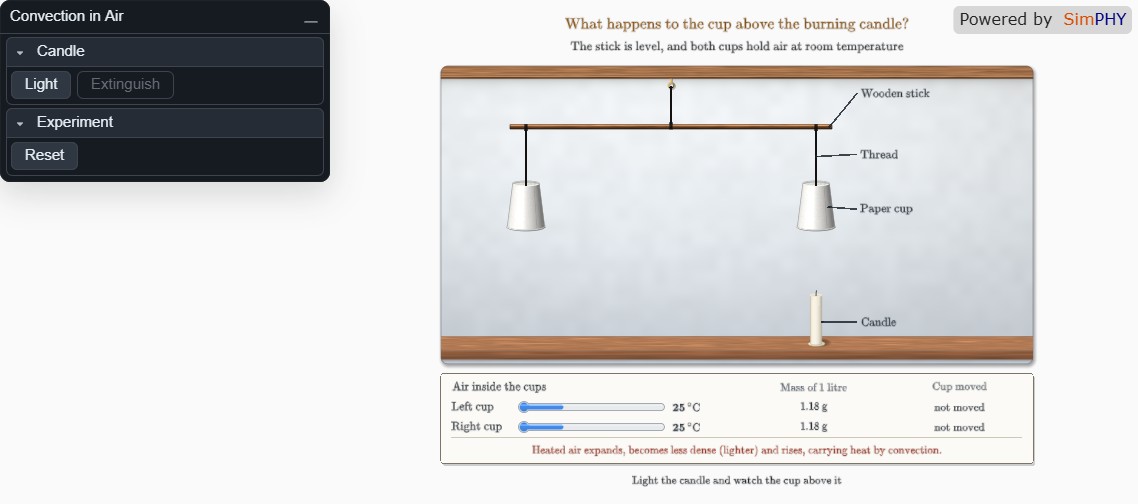
Light a candle under an upside‑down paper cup; warm air rises, lifting...
 Free
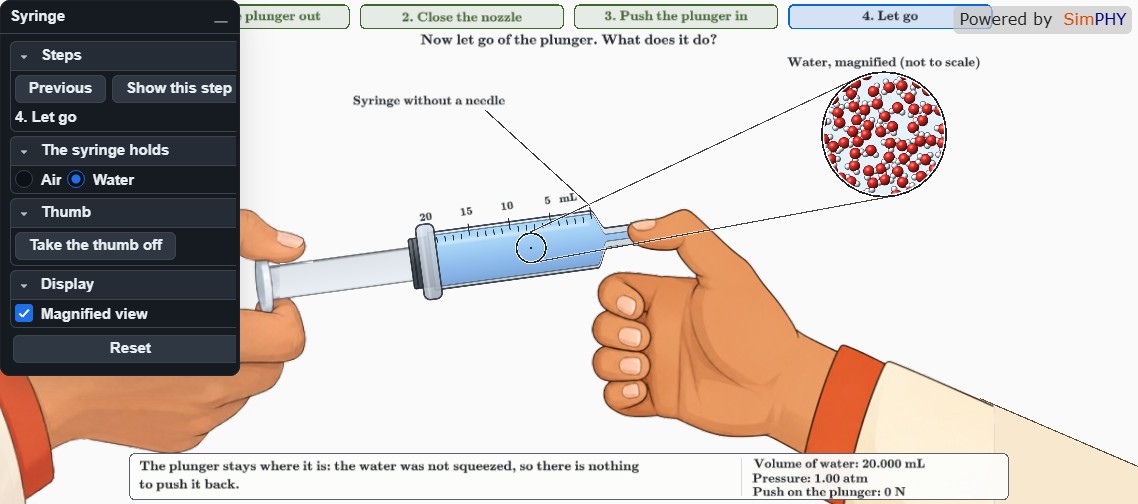
Pull the plunger, seal the tip, and see air compress while water remai...