 Free
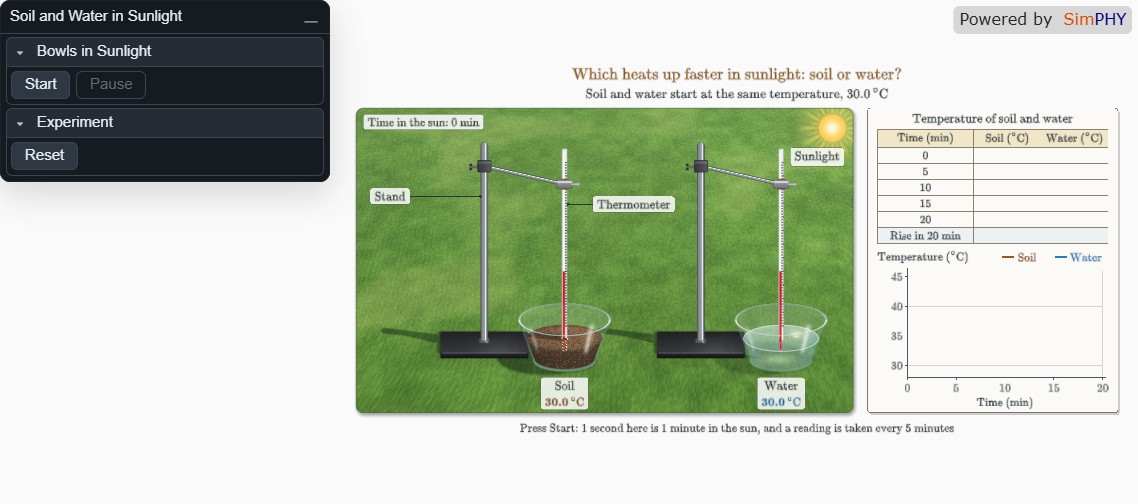
Soil and Water Heating in Sunlight
Thermal Properties of MatterWatch dry soil heat up faster than water under identical sunlight, log...
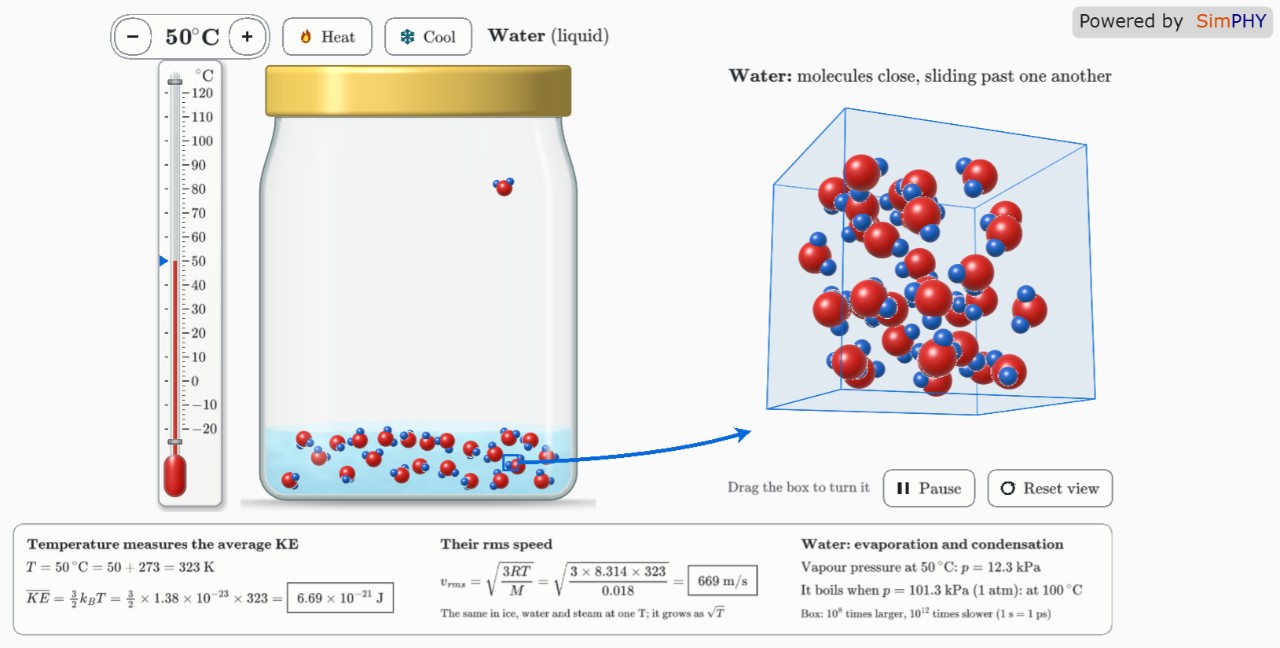
Heat or cool a jar to see water change from ice to liquid to steam, showing molecular motion and changes.
The simulation visualizes water in its three common phases—solid ice, liquid water, and gaseous steam—inside a closed jar. Temperature is linked to the average kinetic energy of the molecules, and the model displays the hexagonal lattice of ice, the sliding molecules of liquid, and the widely spaced steam molecules. Latent heat of fusion and vaporisation are shown as the temperature plateaus at 0 °C and 100 °C while phase change occurs.
Students can drag the thermometer or use the –/+ buttons to set the temperature between –20 °C and 120 °C, and press Heat or Cool to apply a steady heat flow. The jar can be moved and rotated, and a pause button freezes the motion for closer inspection. As the temperature changes, users observe density differences (ice floating), bubble formation during boiling, and the growth of vapour pressure.
Through this interactive view, learners connect temperature, kinetic energy, and molecular speed, and quantify the energy required for melting and boiling. They see why ice is less dense than water, how evaporation and condensation balance, and how the heating curve of water reflects specific heat and latent heats.
Free
Watch dry soil heat up faster than water under identical sunlight, log...
 Free
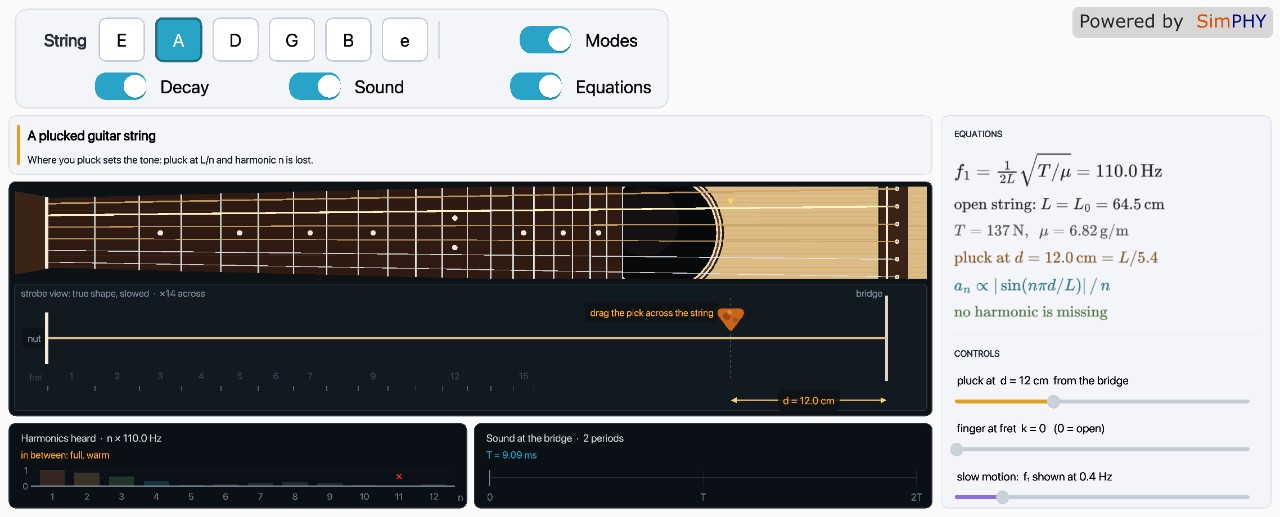
Explore how plucking position and fret choice affect the harmonic seri...
 Free
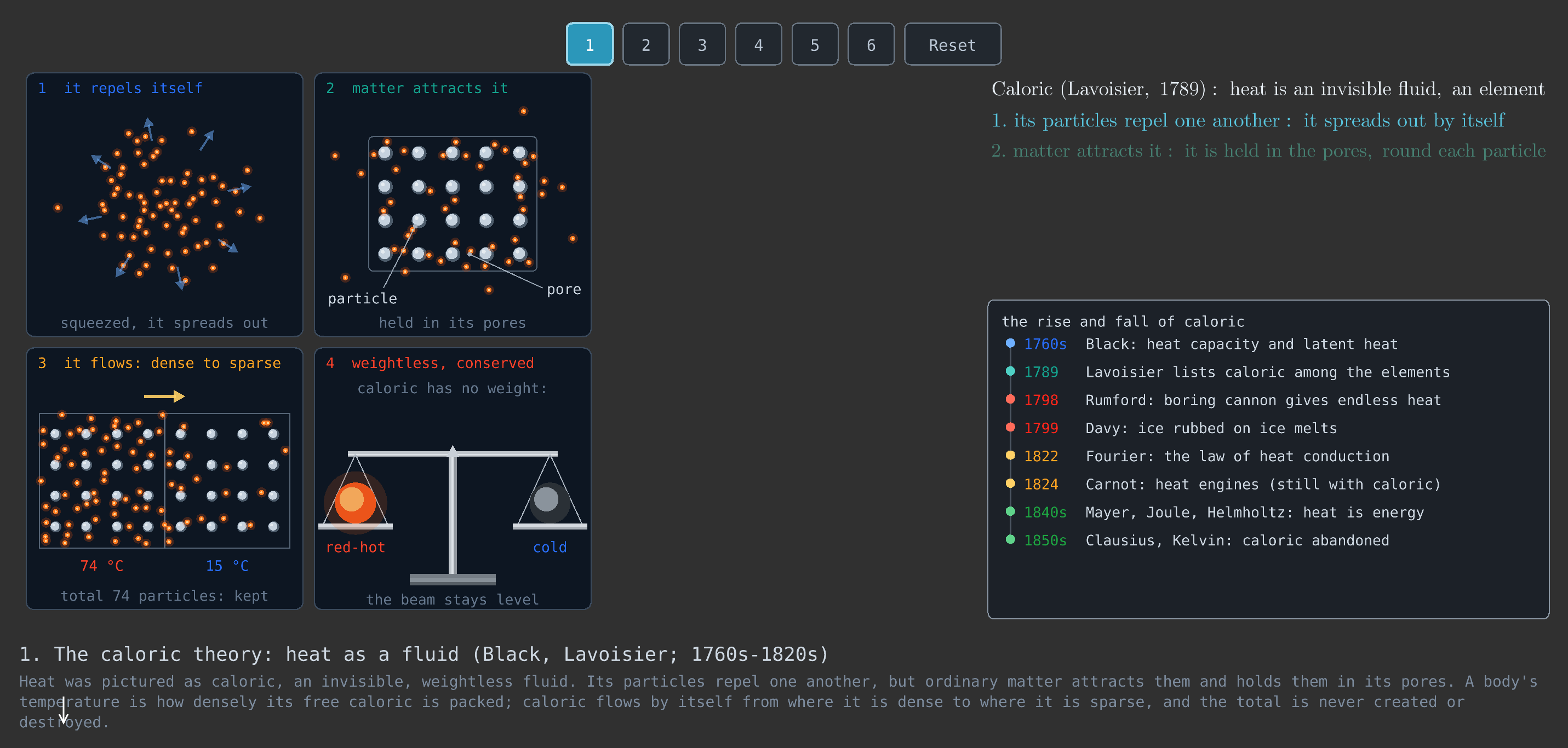
Explore the caloric fluid model of heat, watching particle motion, tem...
 Free
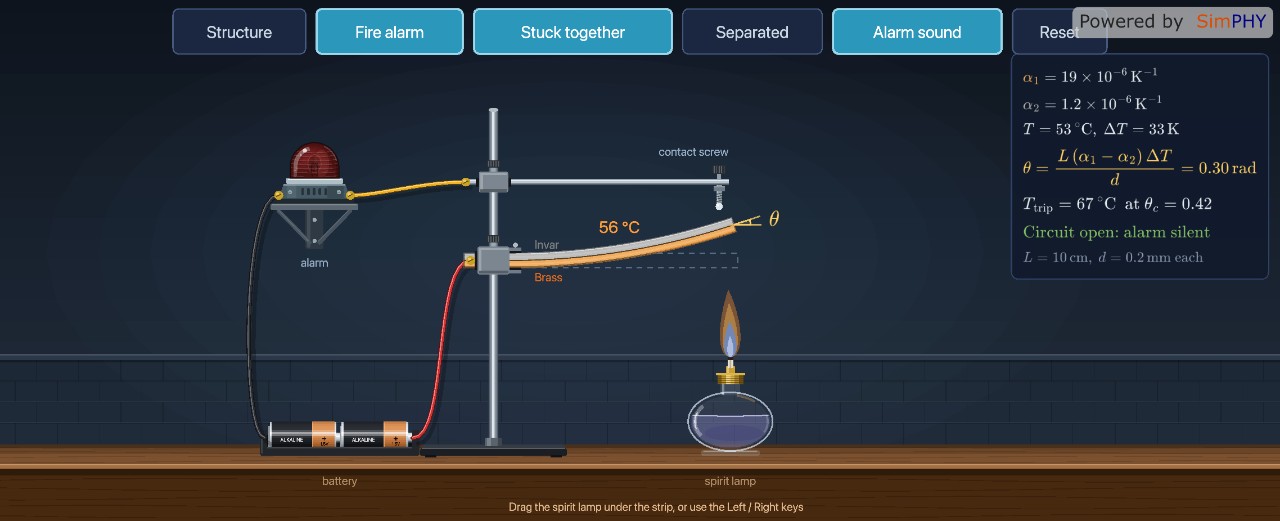
Adjust a thermometer or flame to heat a bimetallic strip, watch it ben...
 Free
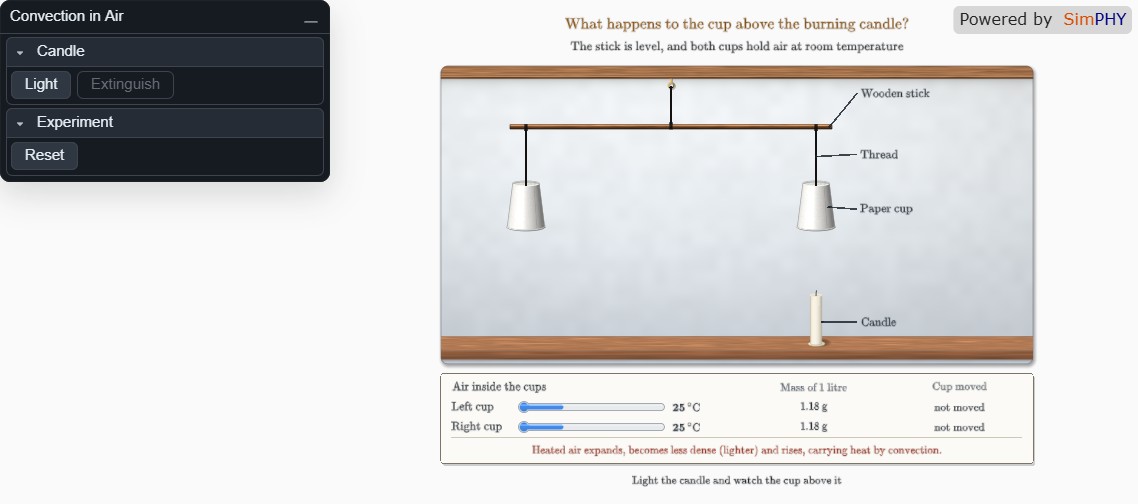
Light a candle under an upside‑down paper cup; warm air rises, lifting...
 Free
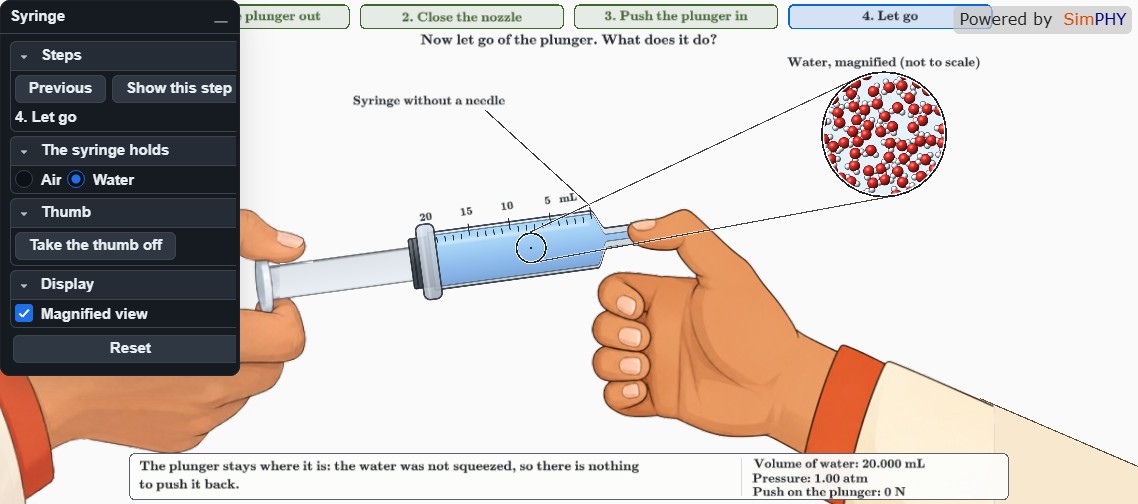
Pull the plunger, seal the tip, and see air compress while water remai...