 Free
States of Matter: Ice, Water, and Steam
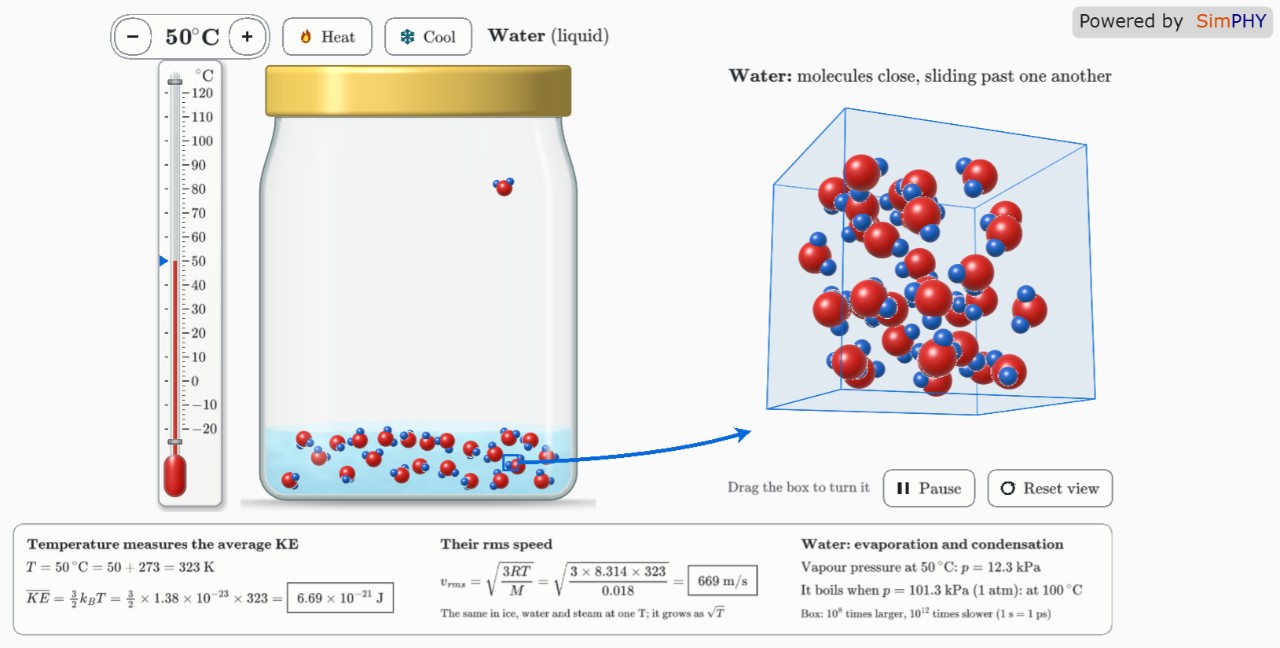
Thermal Properties of MatterHeat or cool a jar to see water change from ice to liquid to steam, sh...
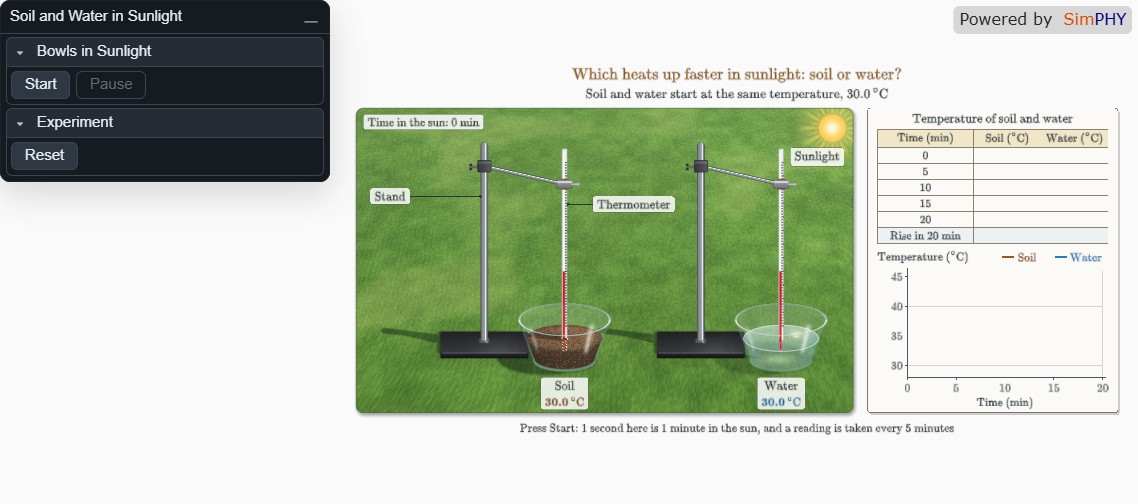
Watch dry soil heat up faster than water under identical sunlight, logging temperatures every five minutes.
The simulation models two identical bowls placed in the same sunlight: one half‑filled with dry garden soil and the other with clear water. Both are exposed to 850 W/m² solar radiation while the surrounding air is at 30 °C. The soil’s dark surface absorbs a large fraction of the light and, because of its low specific heat and modest thermal conductivity, its temperature rises quickly. Water, by contrast, lets most light pass through and has a much higher specific heat, so its temperature increases more slowly.
Students press the Start button to begin the experiment. The thermometer readings are recorded automatically every five minutes for twenty minutes, and the data appear in a table and a graph. By watching the temperature curves, learners can compare how quickly each material heats, relate the differences to absorption, specific heat capacity, and thermal conductivity, and see real‑time data visualisation.
Through this activity students develop an intuitive understanding of heat transfer mechanisms in solids and liquids, the role of material properties in temperature change, and basic data‑collection skills used in experimental physics.
Free
Heat or cool a jar to see water change from ice to liquid to steam, sh...
 Free
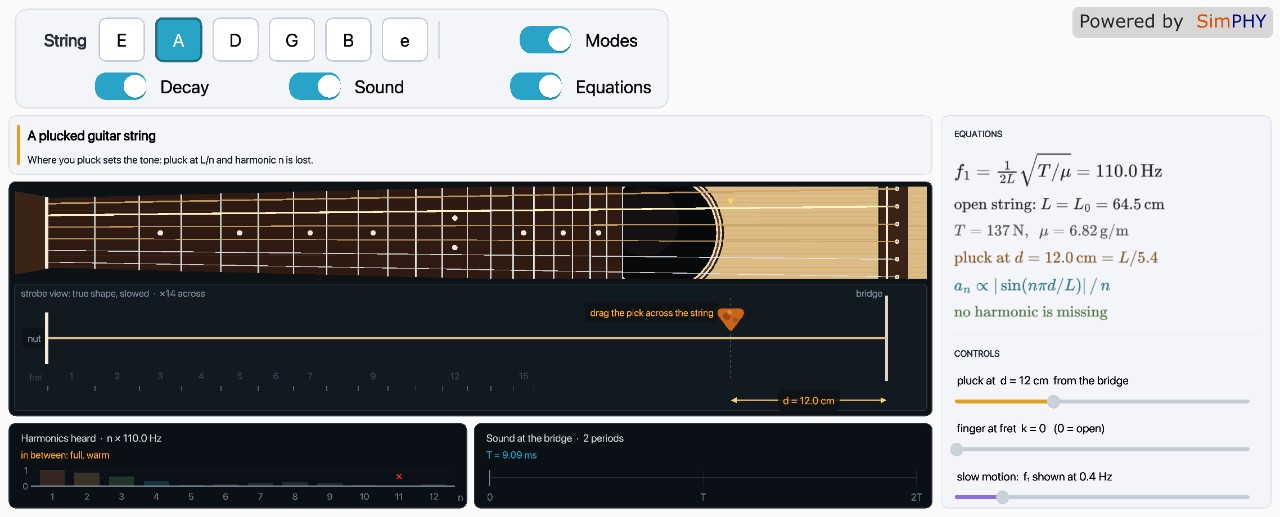
Explore how plucking position and fret choice affect the harmonic seri...
 Free
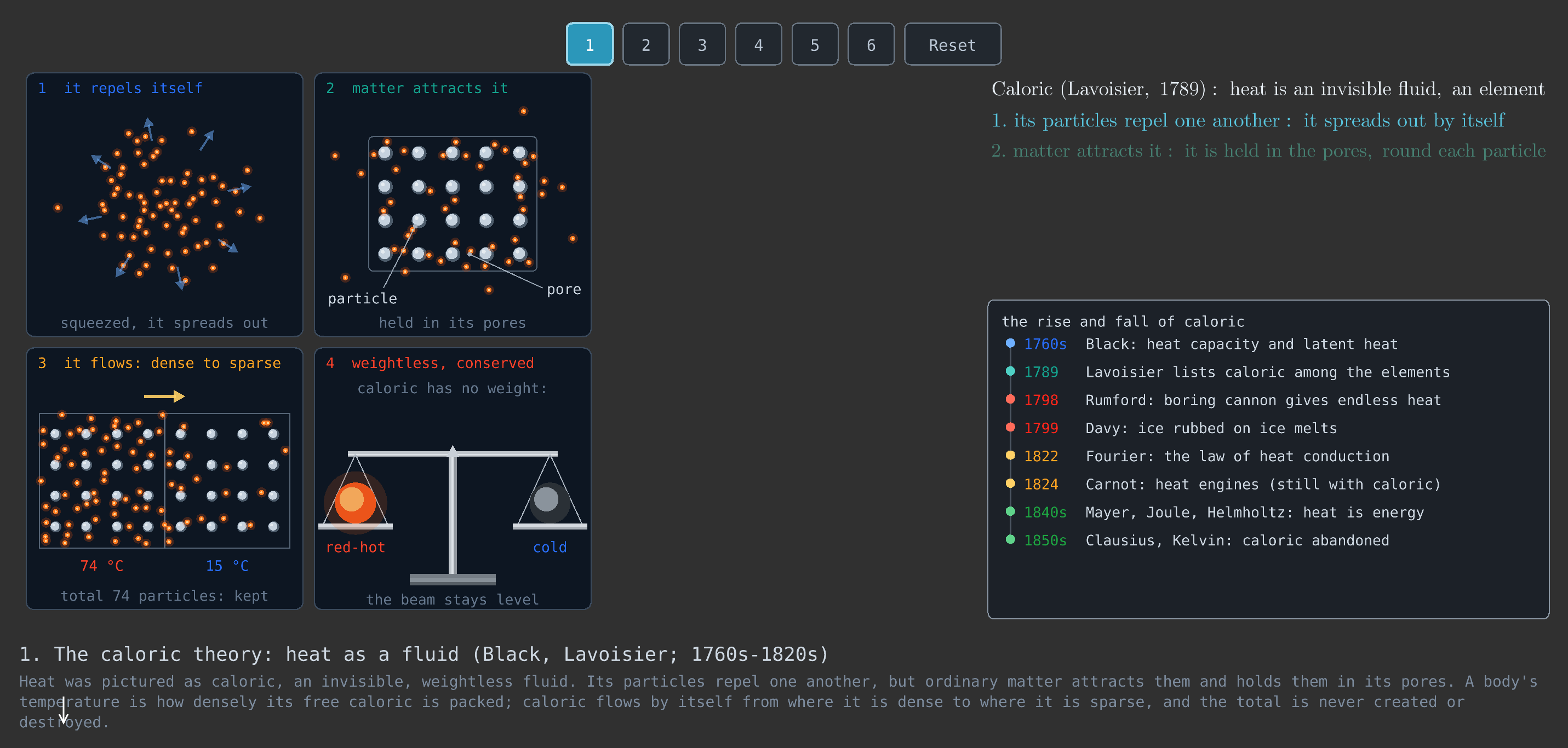
Explore the caloric fluid model of heat, watching particle motion, tem...
 Free
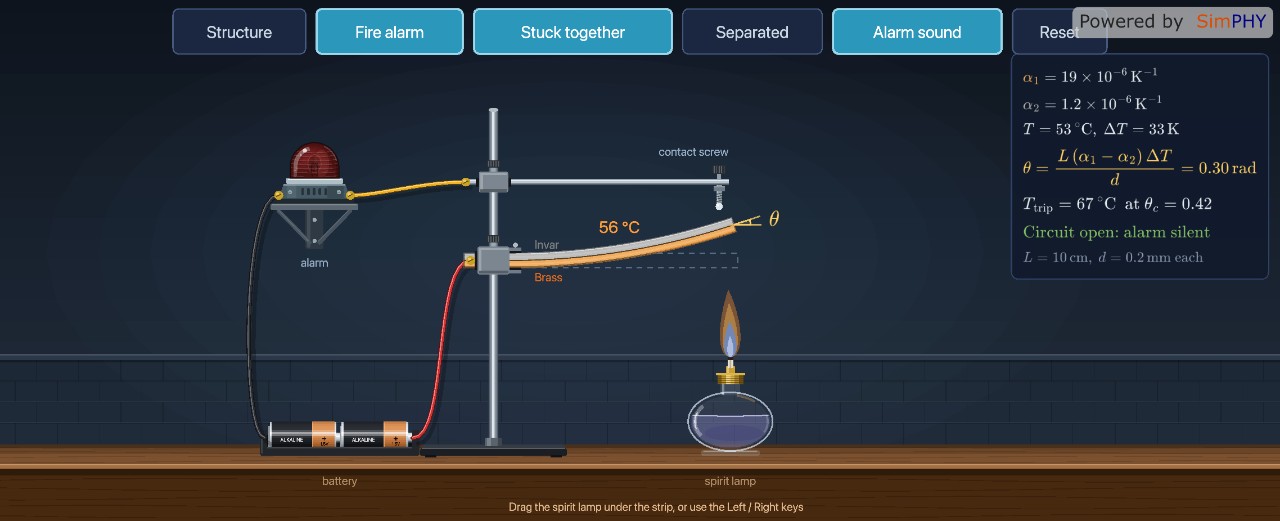
Adjust a thermometer or flame to heat a bimetallic strip, watch it ben...
 Free
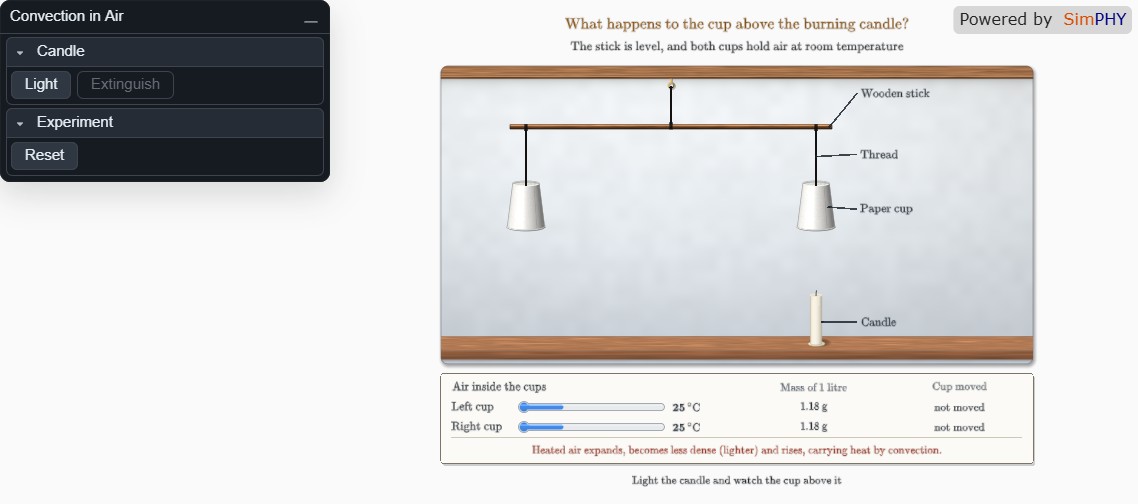
Light a candle under an upside‑down paper cup; warm air rises, lifting...
 Free
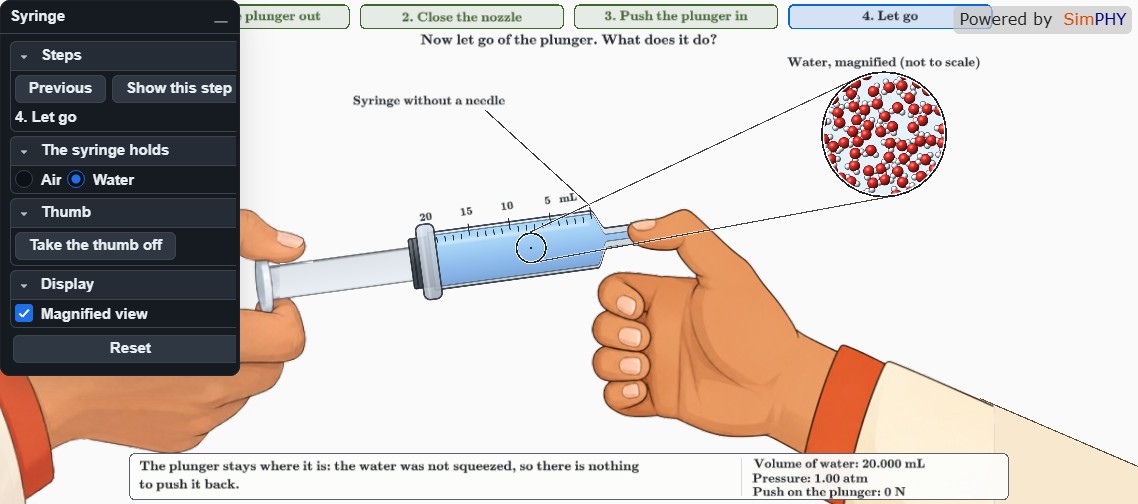
Pull the plunger, seal the tip, and see air compress while water remai...