 Free
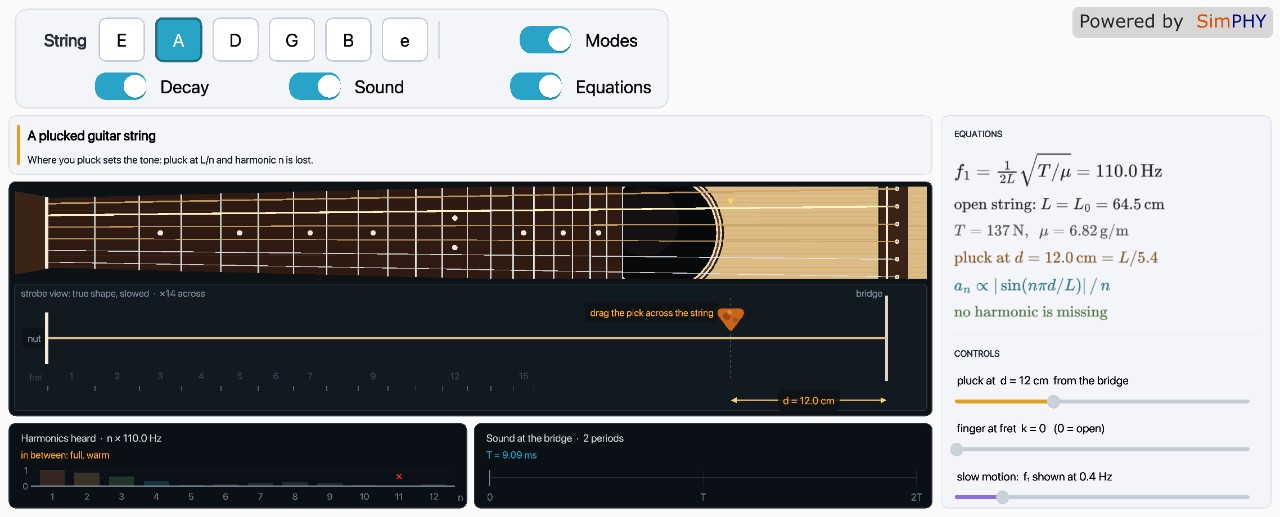
Guitar String Harmonics
Thermal Properties of MatterExplore how plucking position and fret choice affect the harmonic seri...
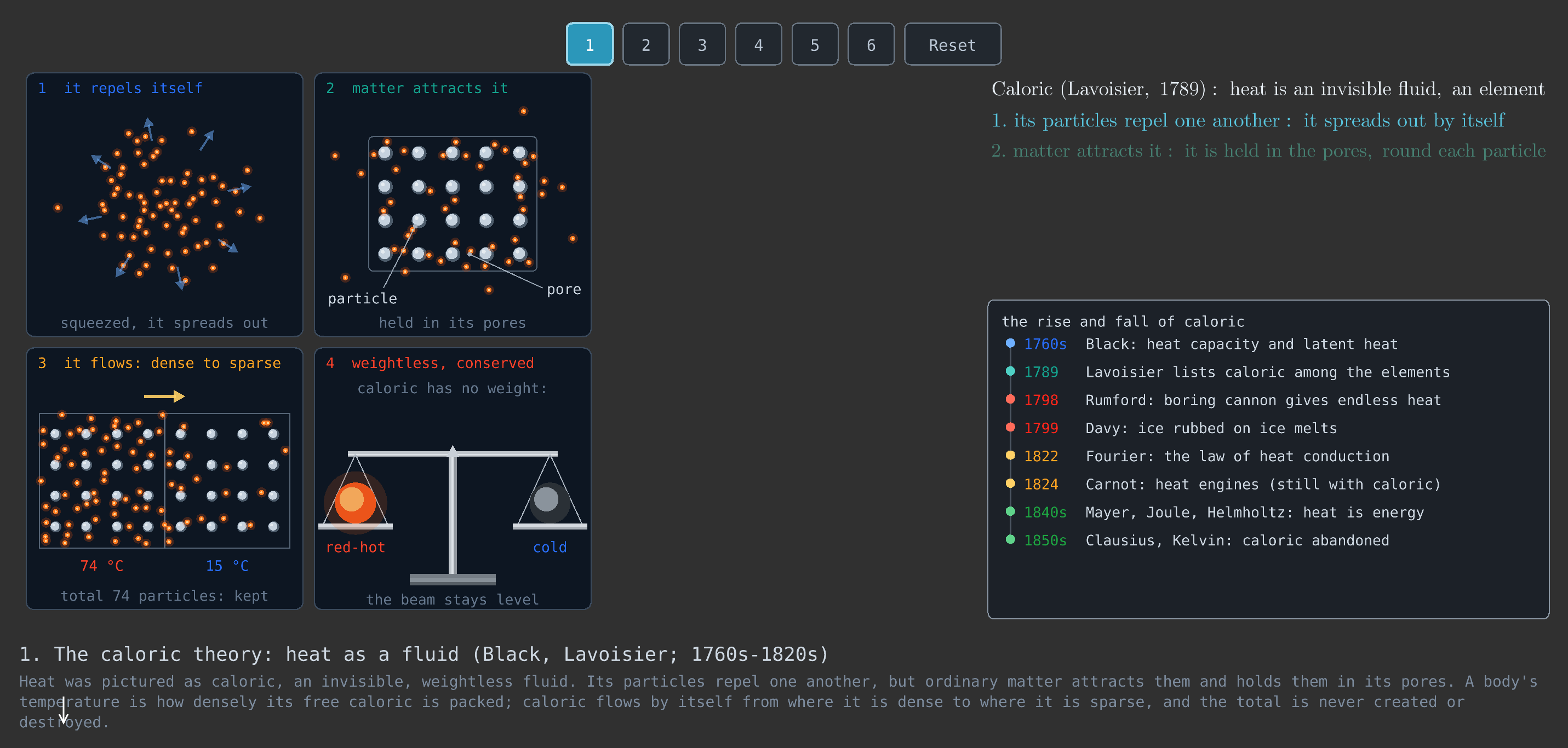
Explore the caloric fluid model of heat, watching particle motion, temperature rise, and material impact.
The simulation presents the historic caloric theory, where heat is imagined as a weightless fluid that fills the pores of matter and flows from regions of high density to low density. Temperature is represented by how densely the free caloric particles are packed, giving a visual of tension within the fluid.
Students advance through numbered steps using on‑screen buttons or arrow keys. They can add heat, switch the rod material between copper and wood, rub the sponge to generate heat, and adjust a temperature slider. A reset button returns the system to its initial state. As they interact, glowing orange particles move, the thermometer reading changes, and a live graph or timeline updates on the right side of the screen.
Through this activity learners compare the outdated caloric model with modern kinetic ideas of heat, see how material properties affect heat transfer, and develop an intuitive sense of temperature as particle density, reinforcing concepts in thermal physics and the evolution of scientific thought.
Free
Explore how plucking position and fret choice affect the harmonic seri...
 Free
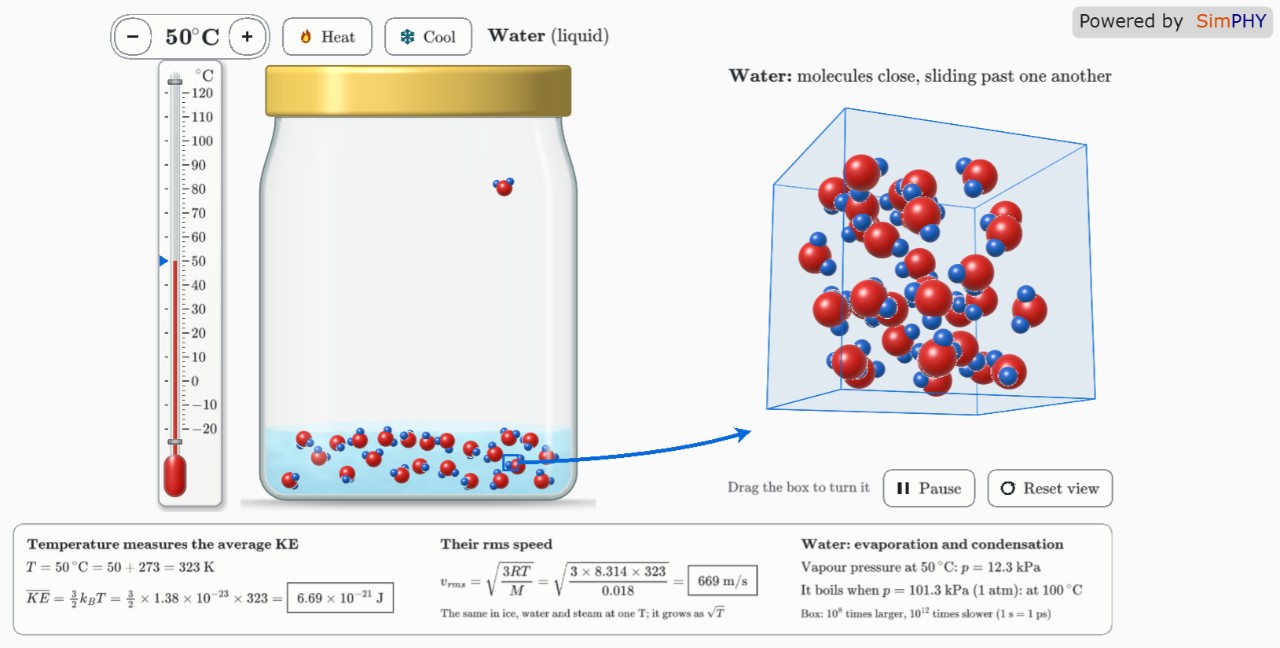
Heat or cool a jar to see water change from ice to liquid to steam, sh...
 Free
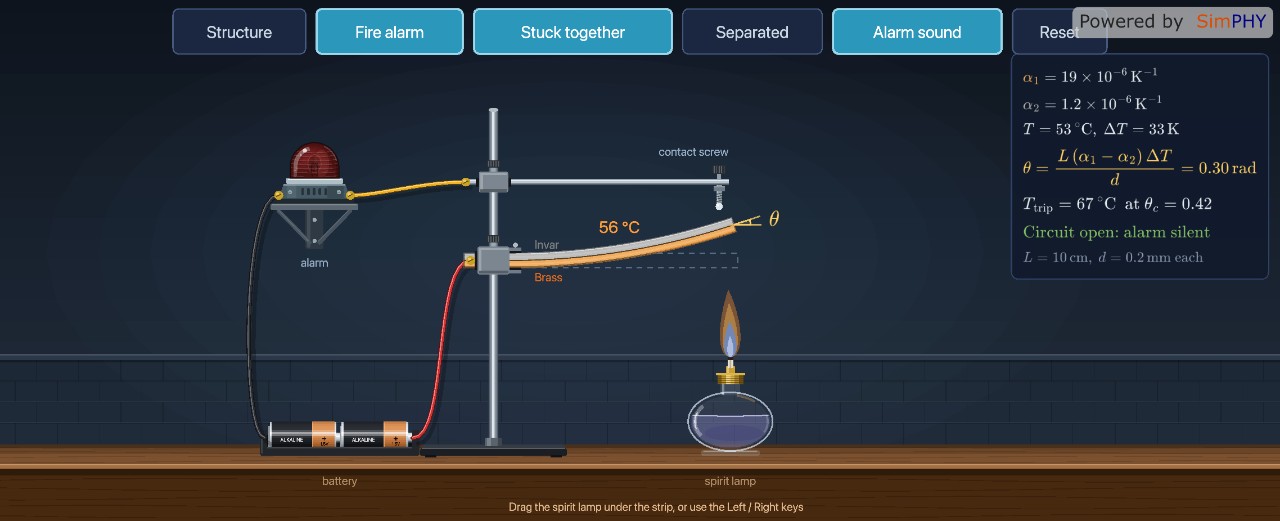
Adjust a thermometer or flame to heat a bimetallic strip, watch it ben...
 Free
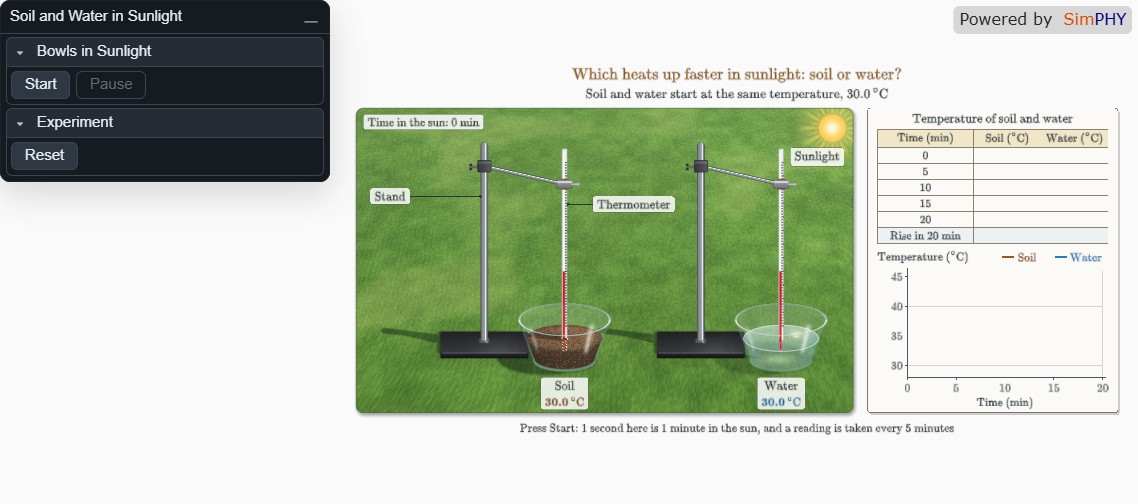
Watch dry soil heat up faster than water under identical sunlight, log...
 Free
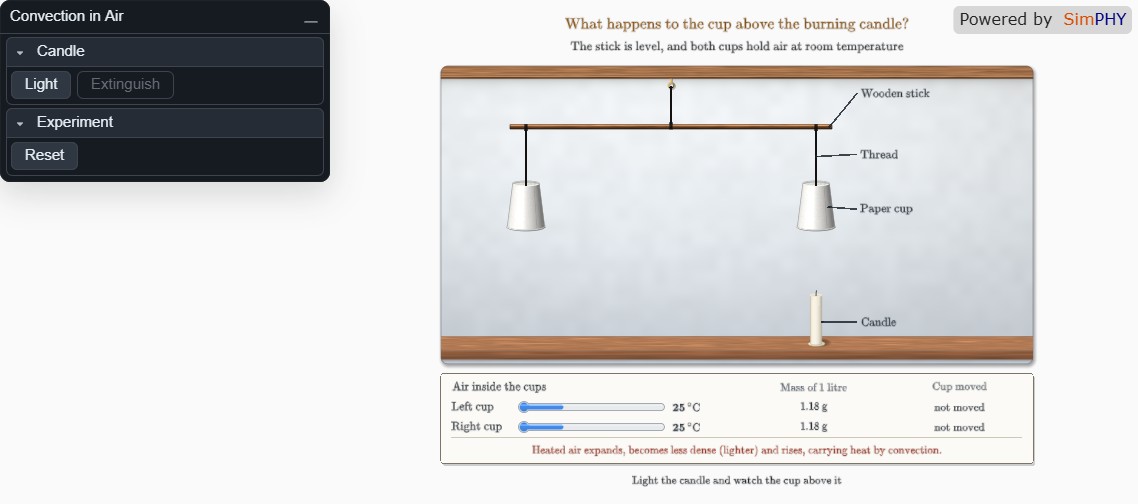
Light a candle under an upside‑down paper cup; warm air rises, lifting...
 Free
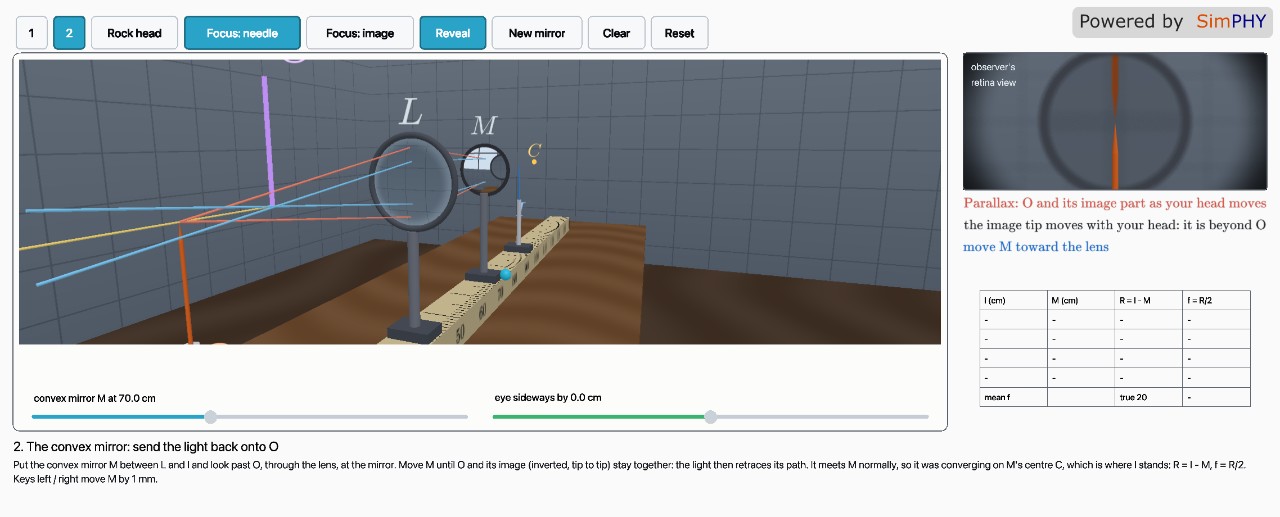
Measure a convex mirror’s focal length on an optical bench using a con...