 Free
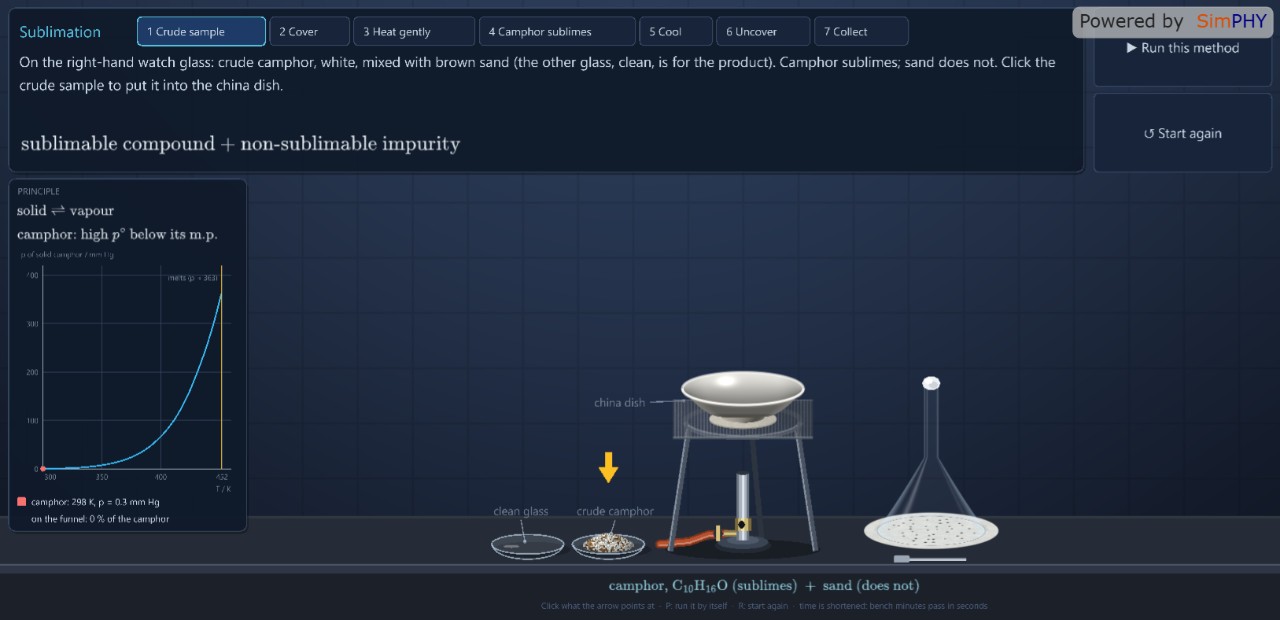
Sublimation: Purifying Organic Compounds
Practical ChemistryWatch camphor sublimate, condense on a surface, and leave sand behind,...
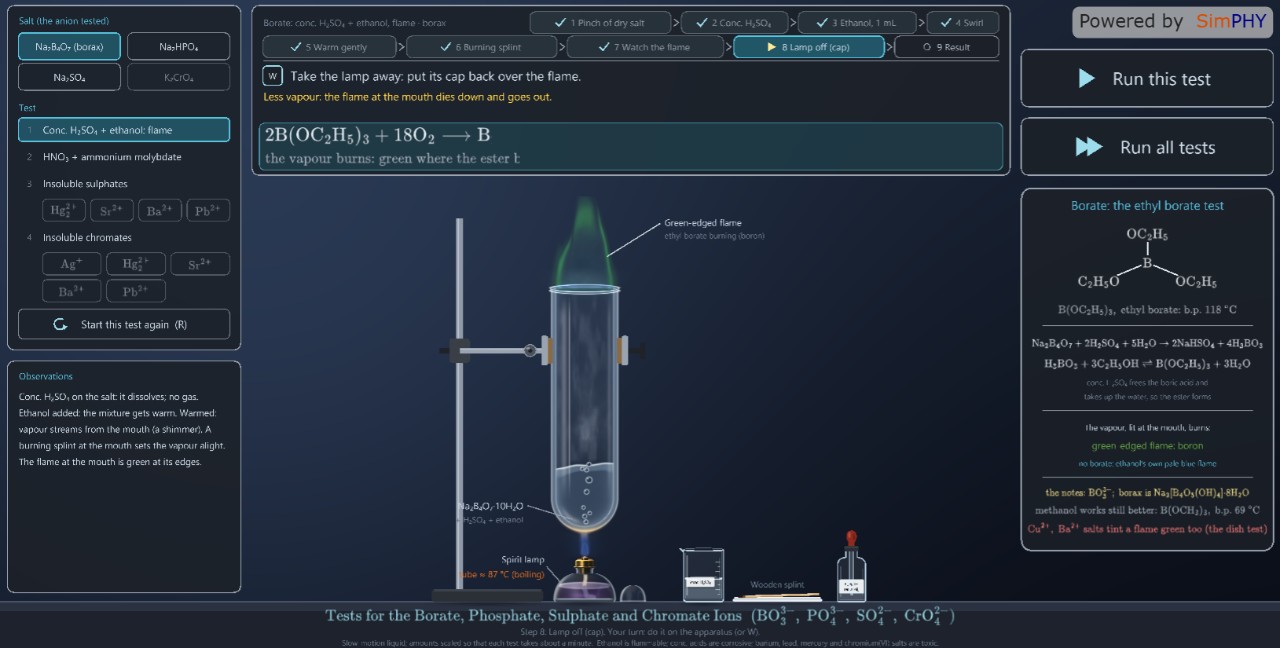
Identify borate, phosphate, sulphate and chromate ions with reagent tests and flame color observations.
This simulation demonstrates classic qualitative analysis techniques used to detect specific anions in solution. Students observe how reagents such as concentrated sulfuric acid, ethanol, nitric acid, ammonium molybdate and others interact with borate, phosphate, sulphate and chromate ions, producing characteristic colour changes, precipitates or flame colours.\n\nBy stepping through each test, learners can see the formation of ethyl borate vapour with a green‑edged flame for borate, the canary‑yellow ammonium phosphomolybdate complex for phosphate, the formation of insoluble white sulphate precipitates (BaSO₄, PbSO₄, SrSO₄, Hg₂SO₄), and the distinct chromate colour reactions. The simulation highlights the underlying chemical equations and the role of solubility, oxidation state and complexation.\n\nStudents gain insight into ion identification, the use of selective reagents, and how qualitative observations link to stoichiometric equations. The activity reinforces concepts of solubility rules, acid‑base reactions, and coordination chemistry relevant to high‑school chemistry curricula.
Free
Watch camphor sublimate, condense on a surface, and leave sand behind,...
 Free
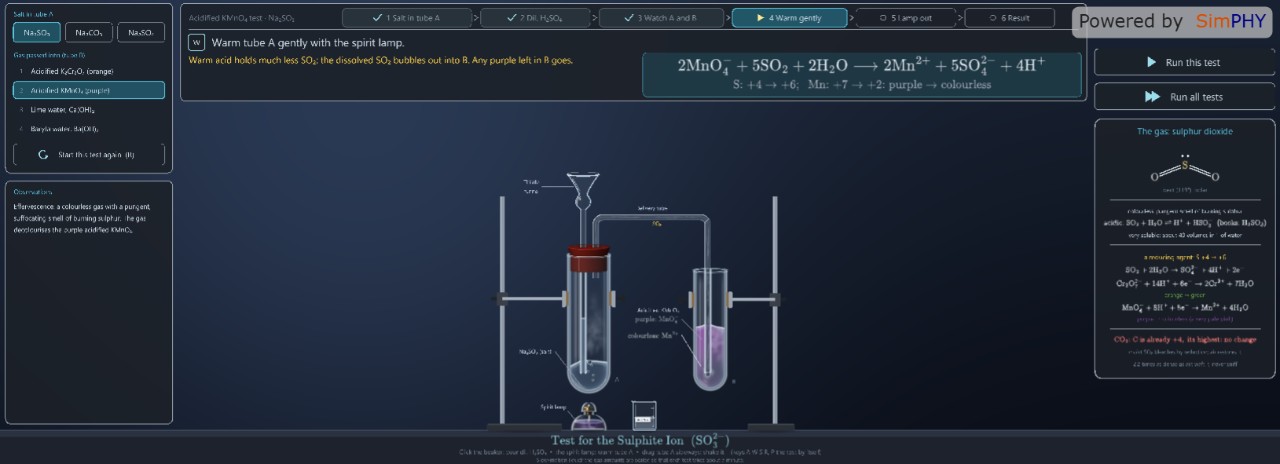
Test sulphite ions with acid, lime water and redox reagents to see col...
 Free
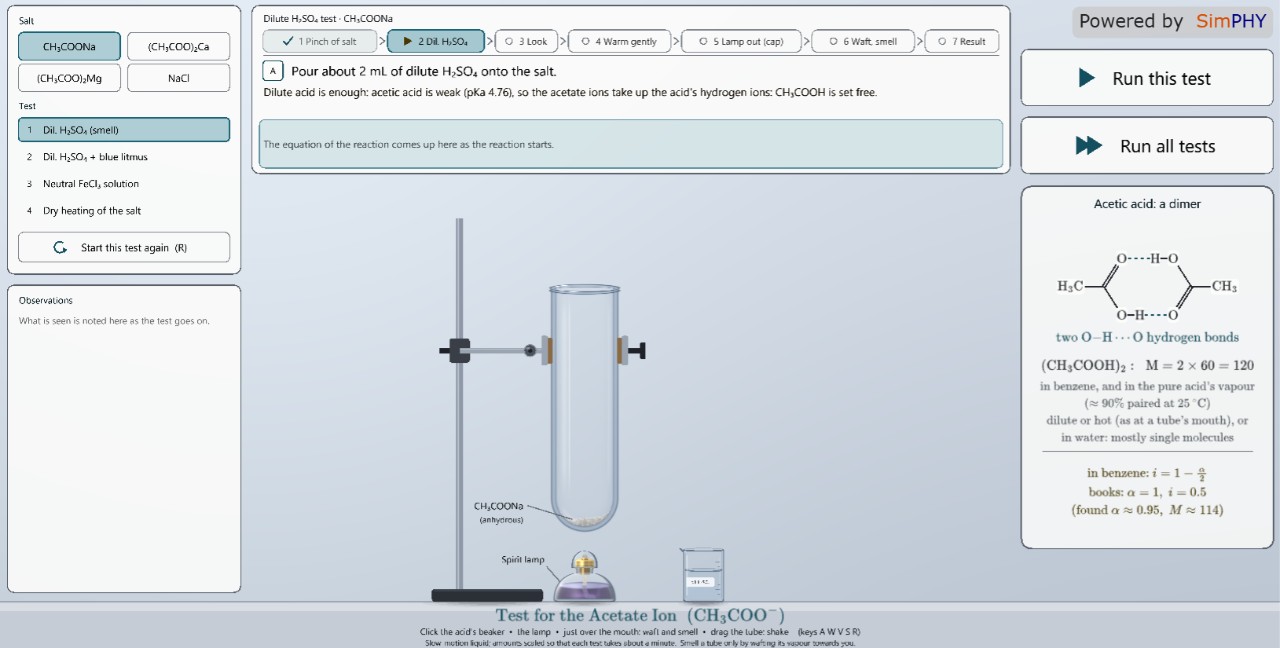
Explore the acetate ion test with sulfuric acid, FeCl₃ and heating to...
 Free
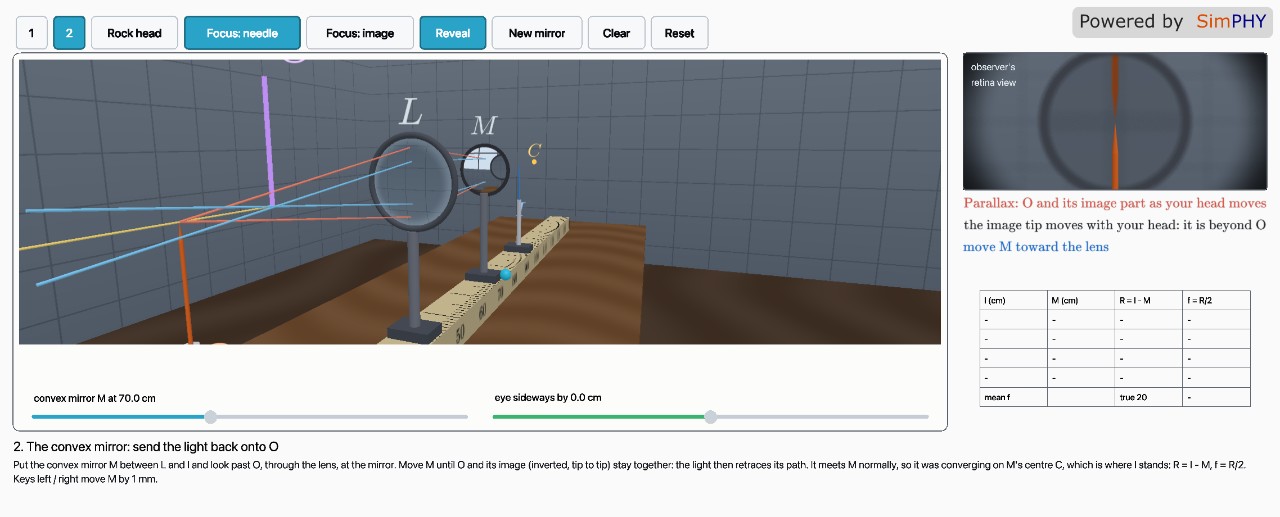
Measure a convex mirror’s focal length on an optical bench using a con...
 Free
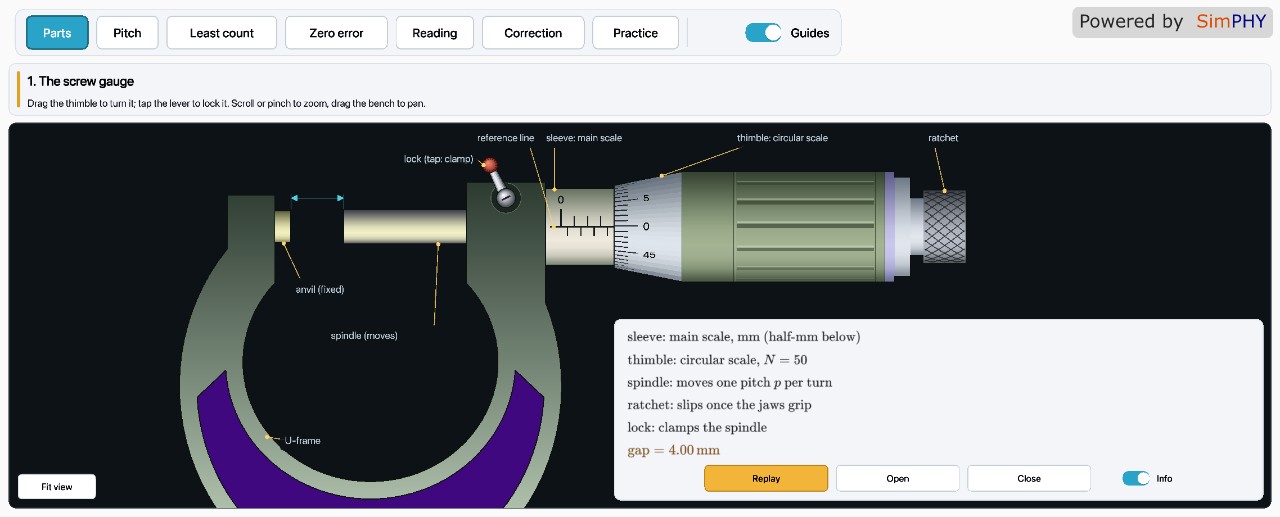
Explore a micrometer’s pitch, least count, zero error and readings thr...
 Free
Fire a cannon by setting angle and speed to hit targets in 11 levels,...