 Free
Sublimation: Purifying Organic Compounds
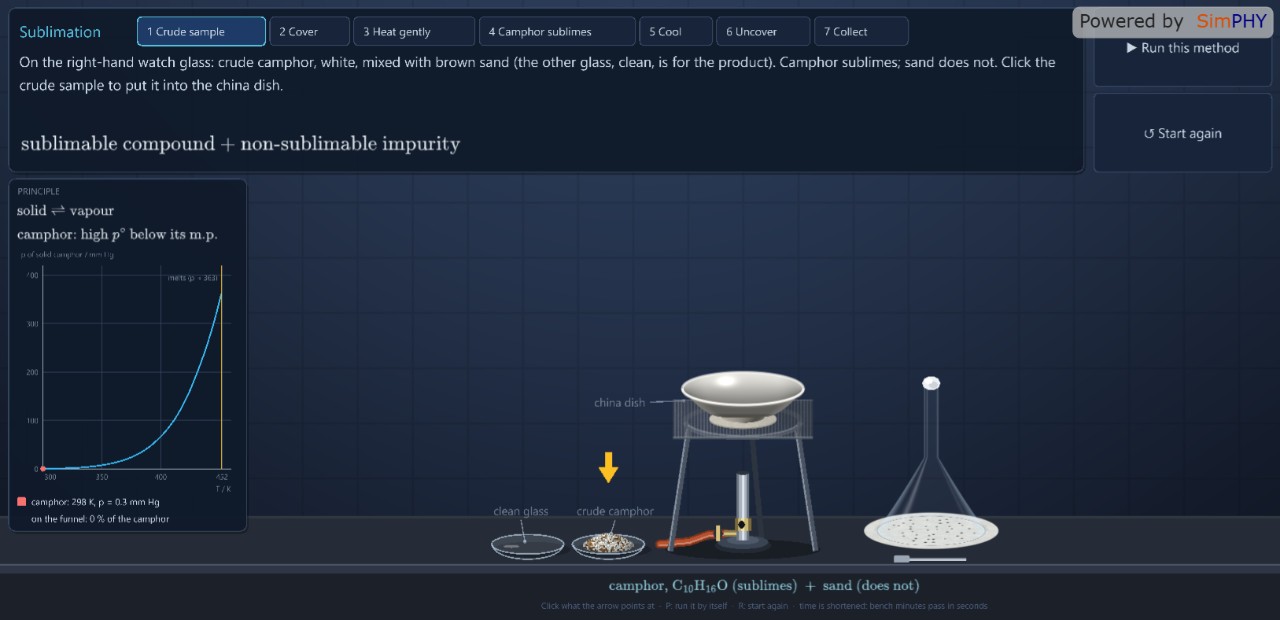
Practical ChemistryWatch camphor sublimate, condense on a surface, and leave sand behind,...
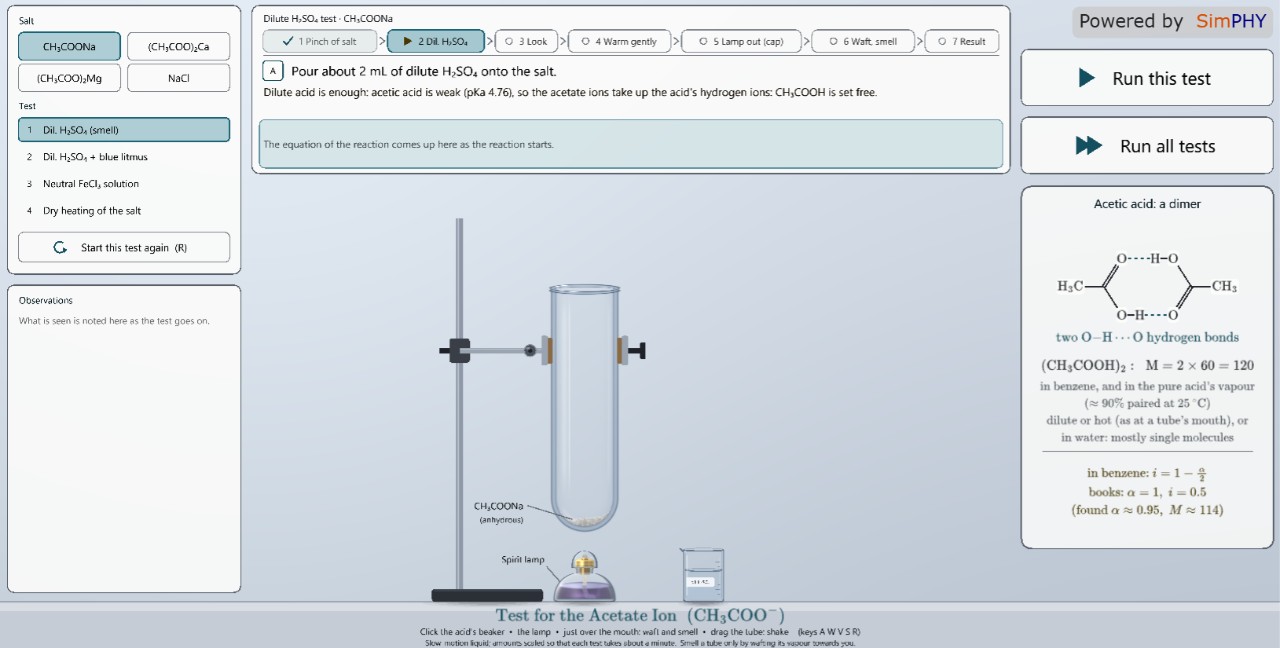
Explore the acetate ion test with sulfuric acid, FeCl₃ and heating to see changes and precipitate formation.
The simulation demonstrates the classic qualitative analysis for the acetate ion (CH₃COO⁻). Adding dilute sulfuric acid converts acetate to acetic acid, which can be detected by its vinegar smell and by heating to produce vapour. Reaction with neutral FeCl₃ gives a deep‑red complex that changes colour on boiling or when diluted with HCl, illustrating complex ion formation and redox behaviour. Students can compare sodium, calcium and magnesium acetates and a sodium chloride sample, observing colour changes of litmus, precipitate formation of gypsum, and the evolution of acetic acid vapour. By watching each step—acid addition, FeCl₃ reaction, boiling, and heating—learners see how equilibria shift with concentration and temperature. The activity reinforces concepts of acid‑base equilibrium, complex ion chemistry, and practical laboratory techniques used in ion identification, supporting high‑school chemistry curricula.
Free
Watch camphor sublimate, condense on a surface, and leave sand behind,...
 Free
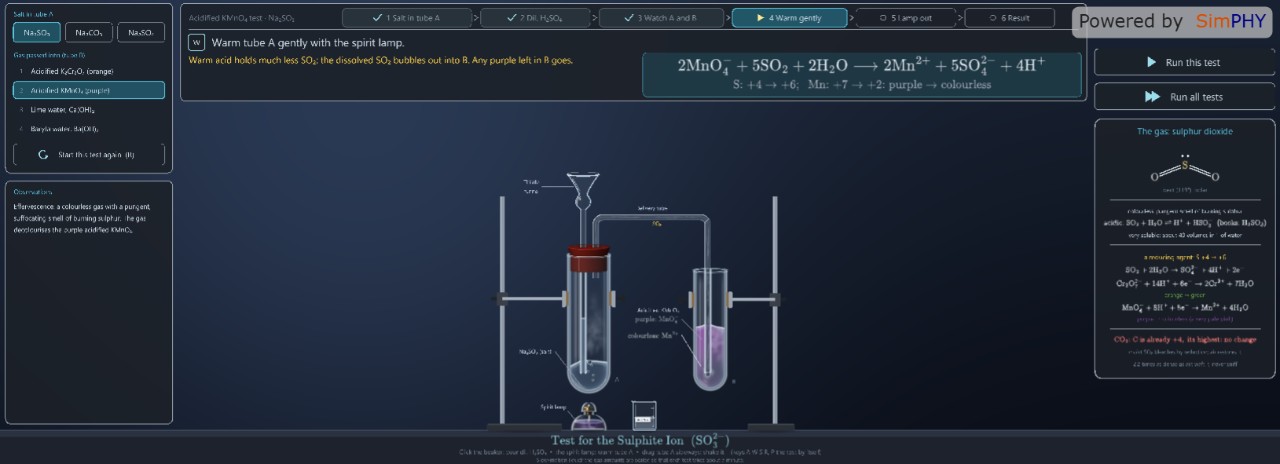
Test sulphite ions with acid, lime water and redox reagents to see col...
 Free
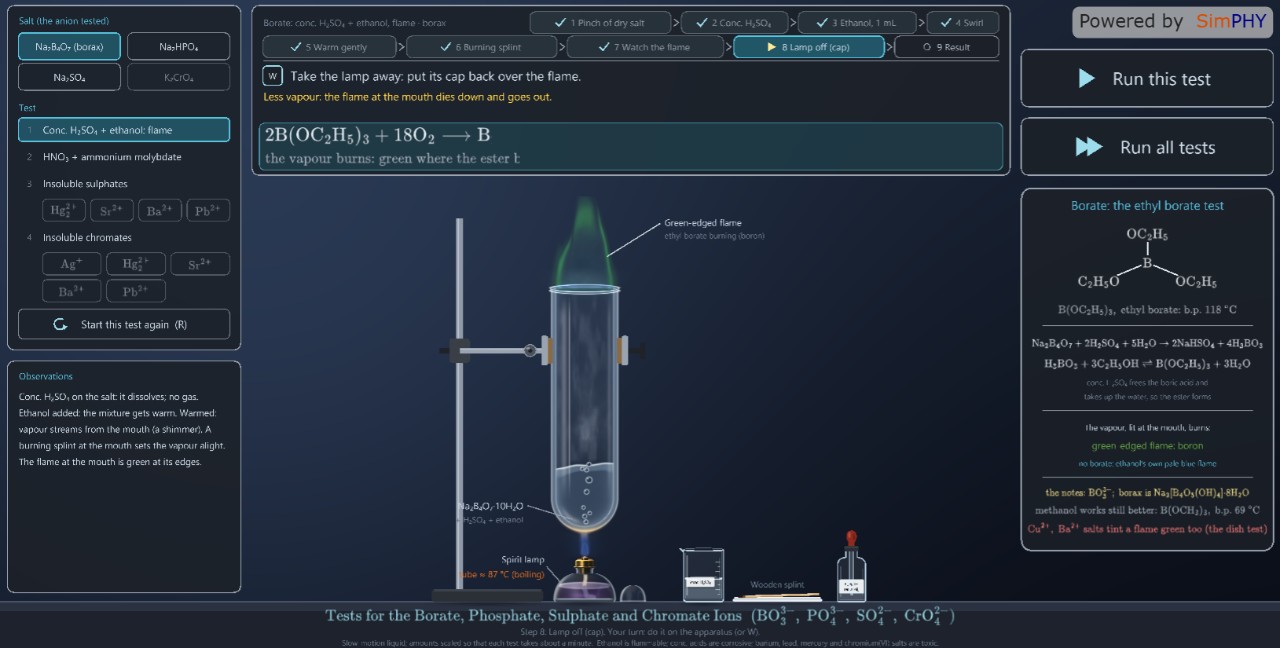
Identify borate, phosphate, sulphate and chromate ions with reagent te...
 Free
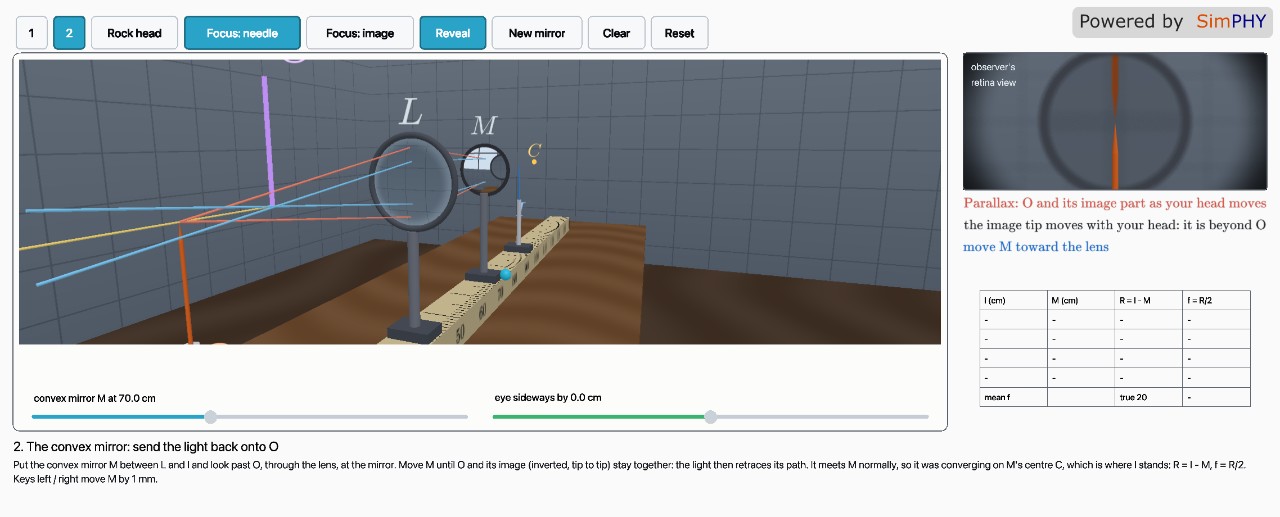
Measure a convex mirror’s focal length on an optical bench using a con...
 Free
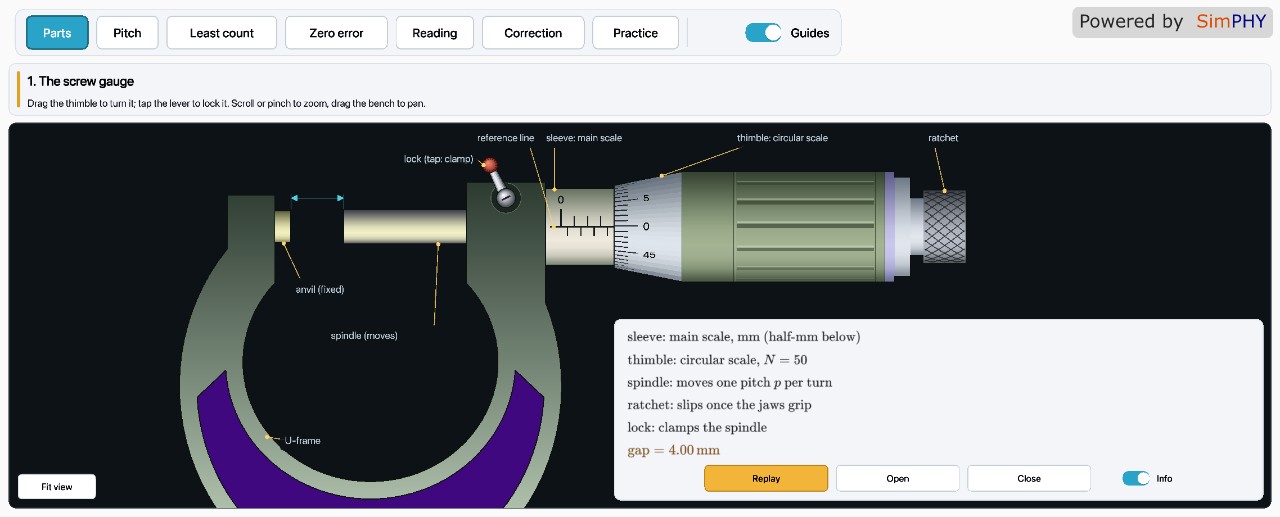
Explore a micrometer’s pitch, least count, zero error and readings thr...
 Free
Fire a cannon by setting angle and speed to hit targets in 11 levels,...