 Free
States of Matter: Ice, Water, and Steam
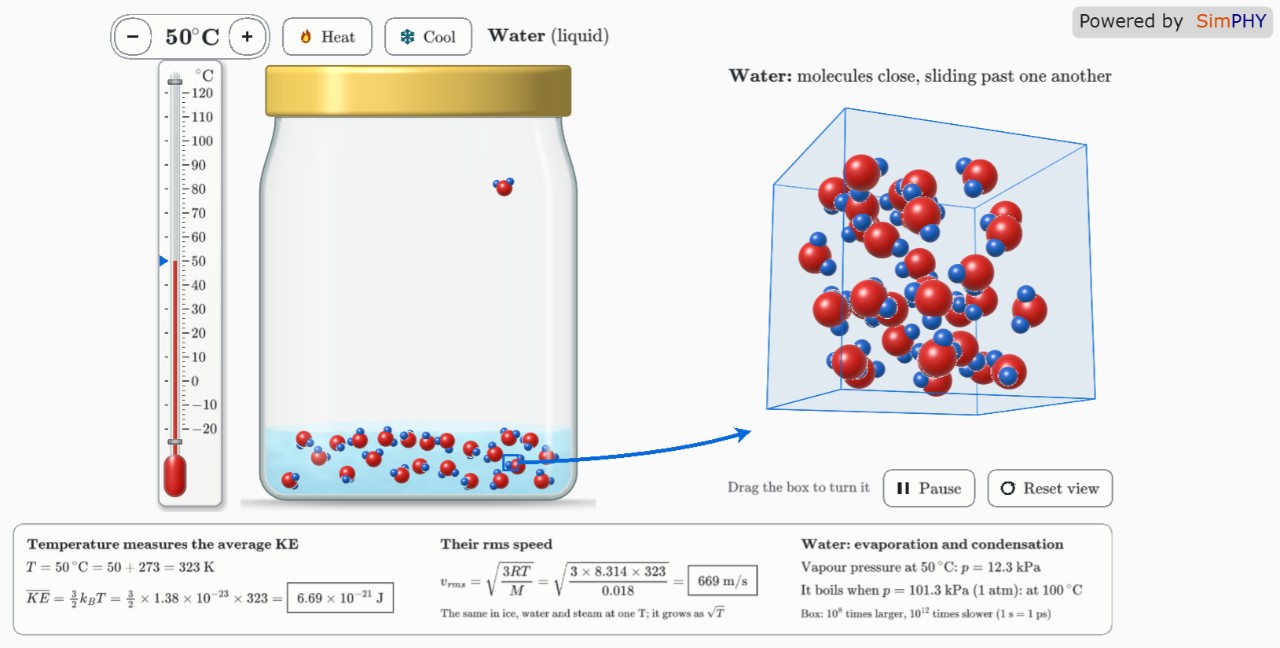
Thermal Properties of MatterHeat or cool a jar to see water change from ice to liquid to steam, sh...
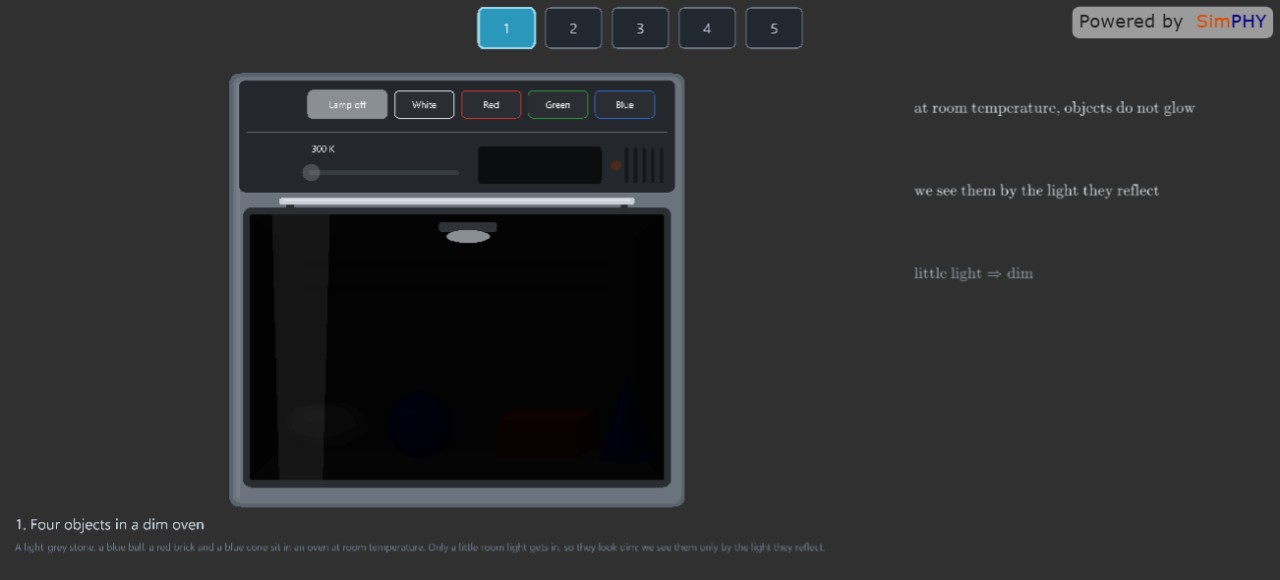
Explore how objects reflect colored light and emit thermal radiation, showing Kirchhoff’s law as they heat up.
This simulation demonstrates the difference between colour observed from reflected light and colour emitted due to an object's temperature. It visualises Kirchhoff's law: at thermal equilibrium an object's emissivity equals its absorptivity, so a hot object radiates the same colour as its surroundings.
Students step through five stages using numbered buttons and can change the lamp colour (off, white, red, green, blue) and the oven temperature via the control panel. They watch a grey stone, blue ball, red brick, and blue cone change colour under various lighting and heating conditions, eventually all merging into the same glow as the walls.
By interacting with the simulation, learners see how selective reflection works, how thermal radiation overtakes reflected light at high temperatures, and how objects approach black‑body behaviour. The activity reinforces concepts of emissivity, absorptivity, and the relationship between temperature and emitted colour.
Free
Heat or cool a jar to see water change from ice to liquid to steam, sh...
 Free
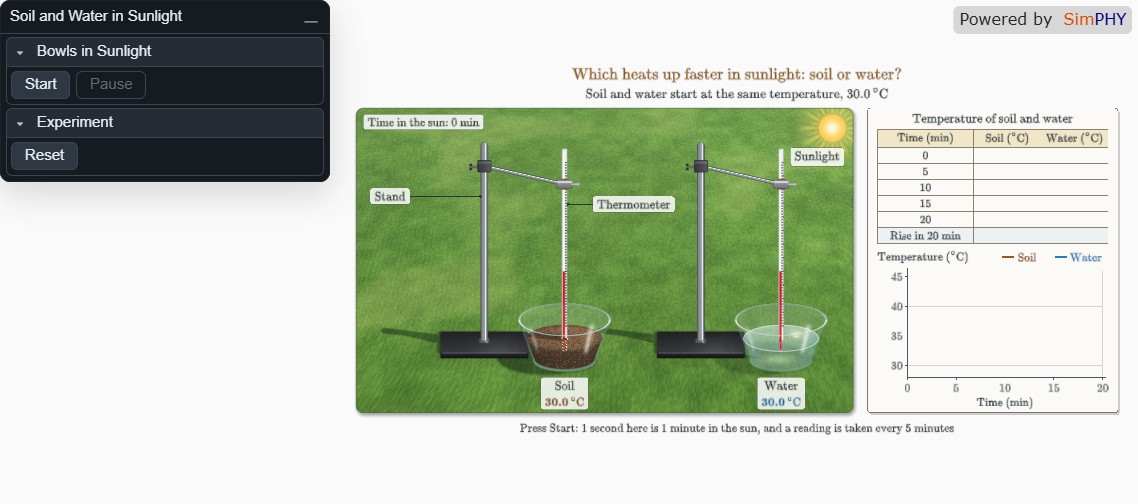
Watch dry soil heat up faster than water under identical sunlight, log...
 Free
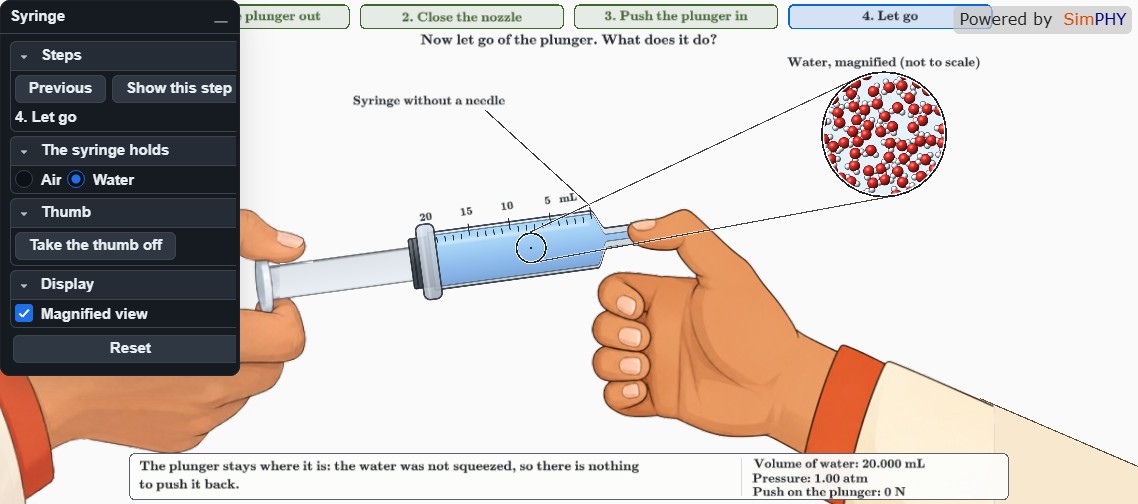
Pull the plunger, seal the tip, and see air compress while water remai...
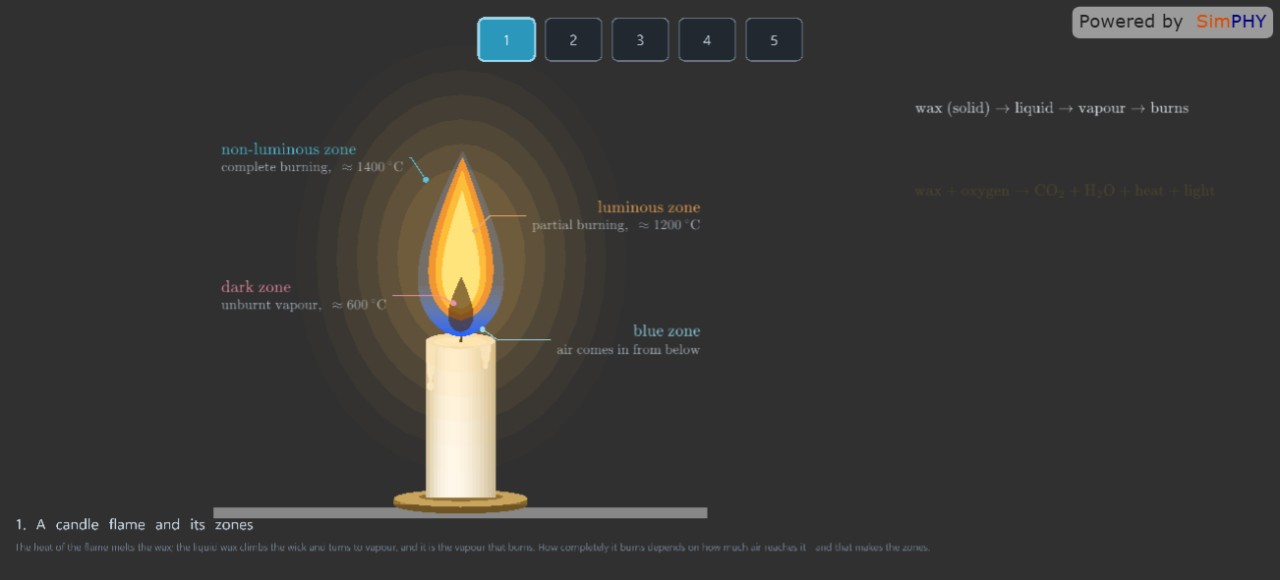 Free
Explore the distinct zones of a candle flame—dark, luminous, outer, an...
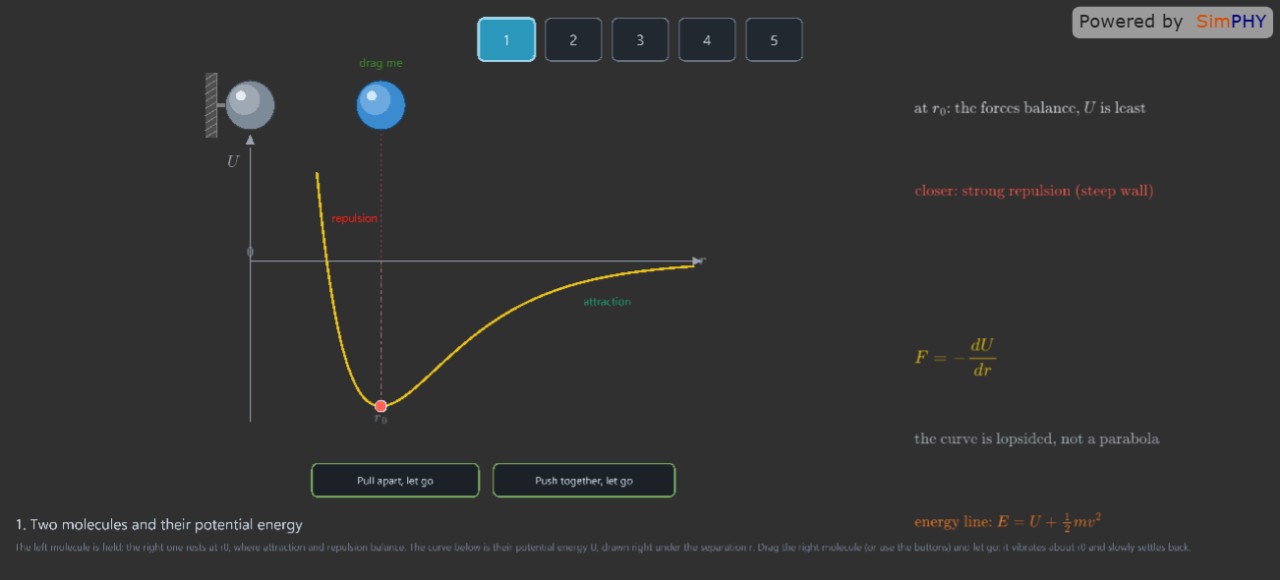 Free
Watch how anharmonic molecular forces cause solids to expand with temp...
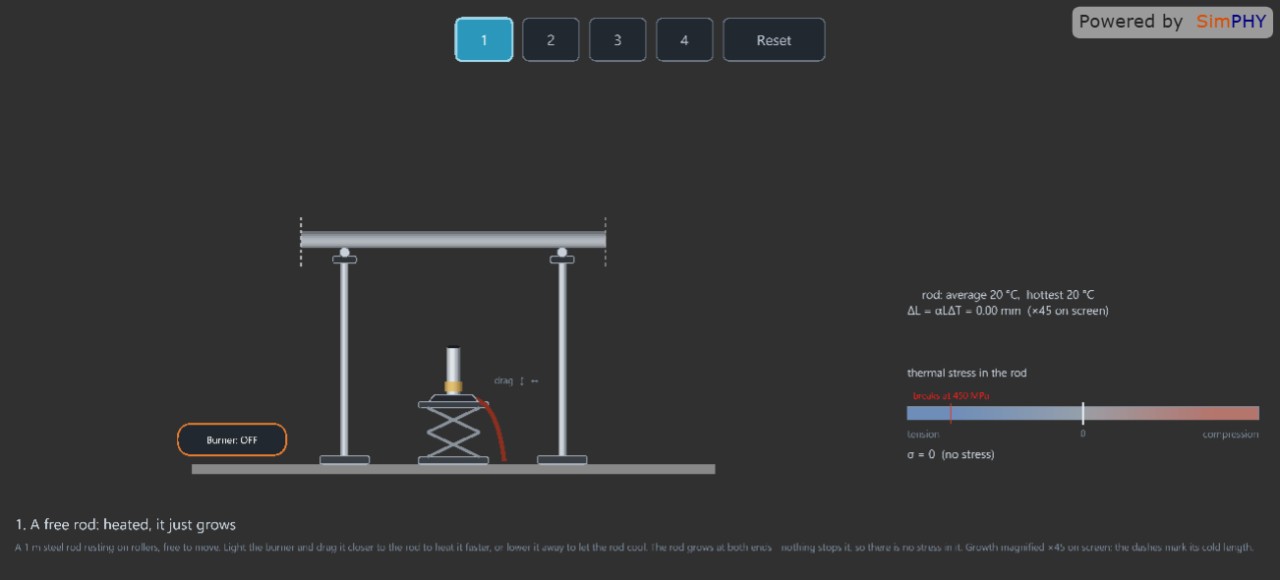 Free
Explore how heating, constraints, and rapid cooling create thermal str...