 Free
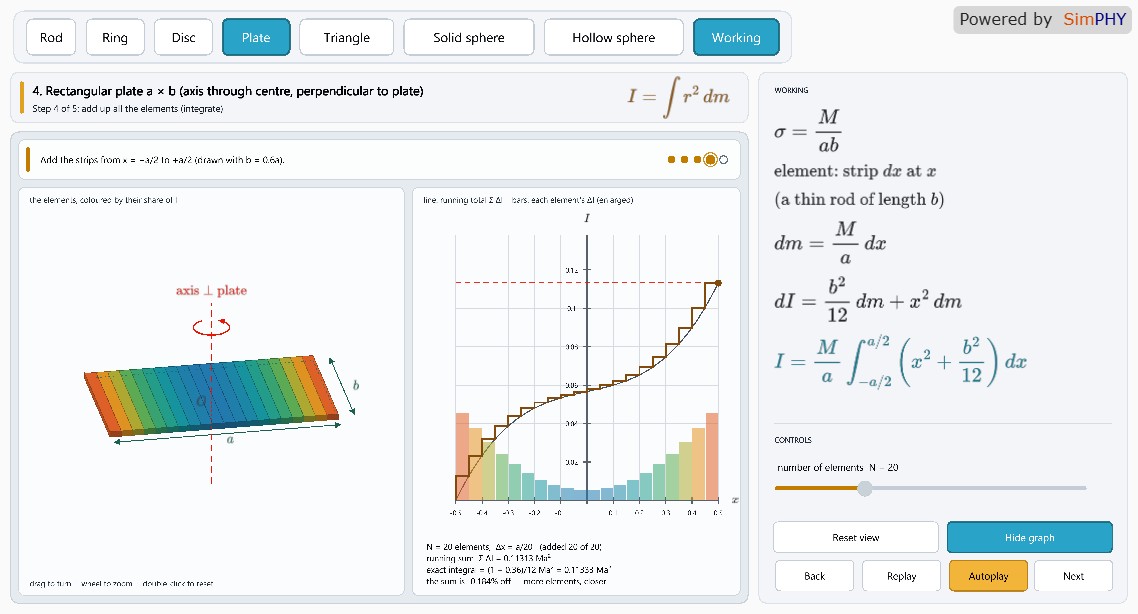
Moment of Inertia by Integration – Rods, Discs, Spheres and More
Rotational MotionIntegration reveals the moment of inertia for rods, rings, discs, plat...
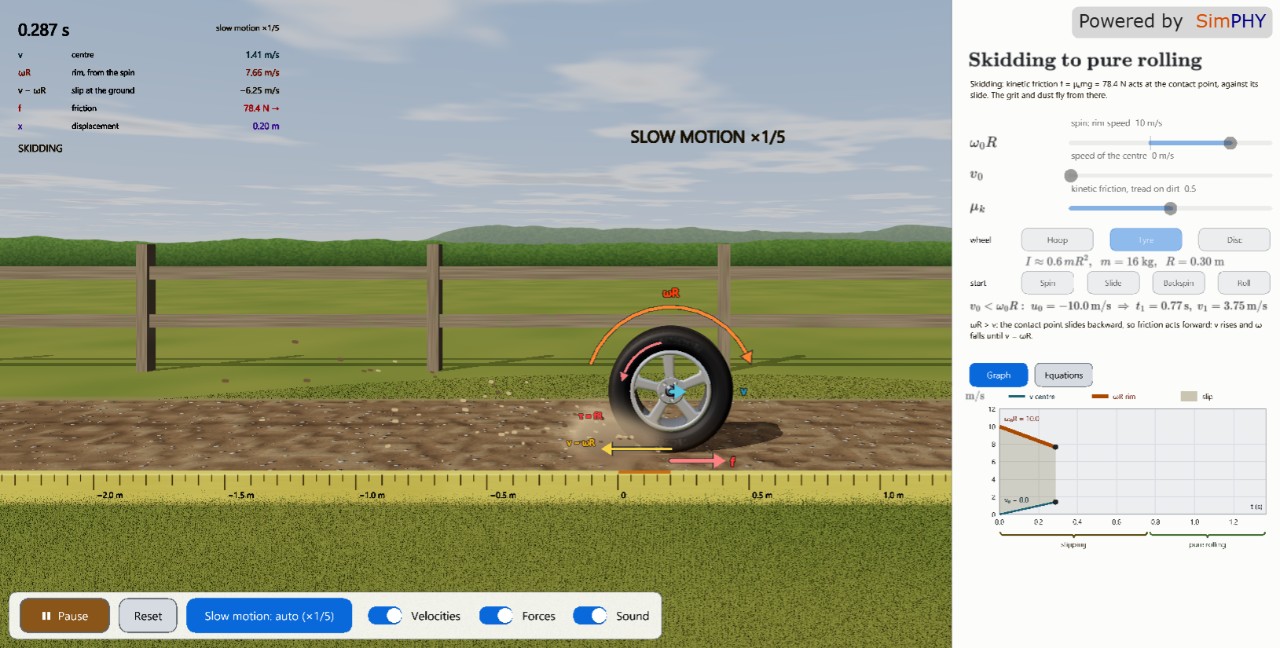
Explore how kinetic friction turns a slipping wheel into pure rolling by adjusting spin, speed and inertia.
A wheel placed on a rough track may initially slide because its linear speed and surface speed differ. Kinetic friction at the contact point creates a torque that reduces the slip velocity, gradually bringing the wheel to the condition v = ωR where it rolls without slipping. The simulation shows the exact analytical solution for the transition, including the heat generated by friction.
Students can set the initial translational speed (v0), the initial spin (ω0R), the kinetic‑friction coefficient (μk), and choose the wheel’s moment of inertia (steel hoop, car wheel, solid disc) or use preset scenarios such as Spin, Slide, Backspin, or Roll. Live read‑outs display velocity, angular speed, slip, friction force, and displacement, while vector arrows and a graph of v and ωR versus time illustrate the dynamics. Skid marks and tread prints visualize the slipping phase.
By interacting with the model, learners see how friction provides the torque that changes angular momentum, why the final speed depends on the inertia factor k, and how energy is dissipated as heat. The activity reinforces concepts of rolling without slipping, the role of kinetic friction, conservation of angular momentum about the contact point, and the influence of moment of inertia on rotational motion.
Free
Integration reveals the moment of inertia for rods, rings, discs, plat...
 Free
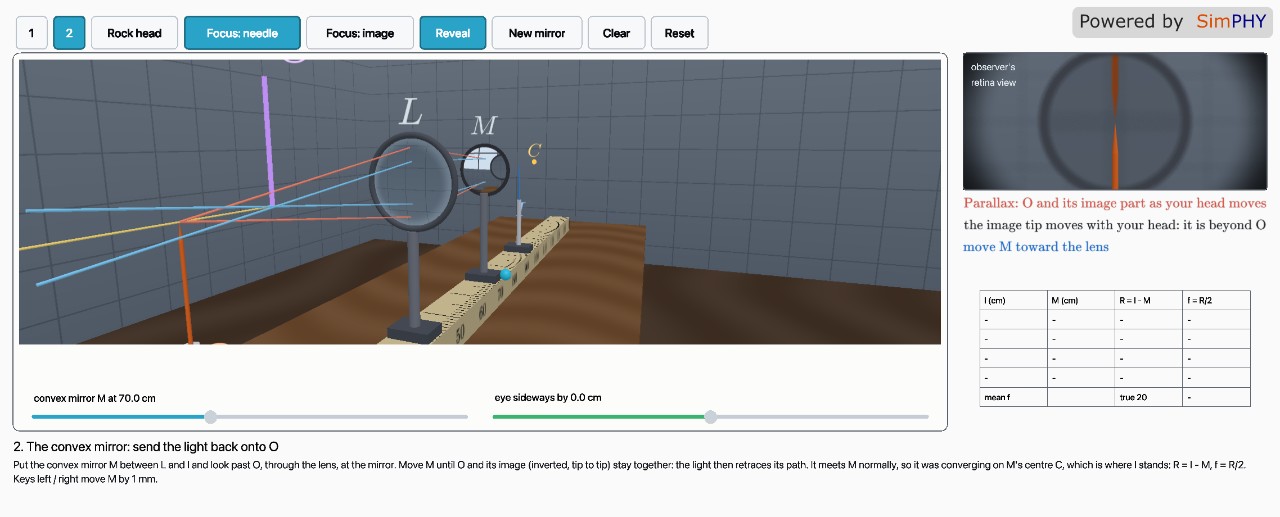
Measure a convex mirror’s focal length on an optical bench using a con...
 Free
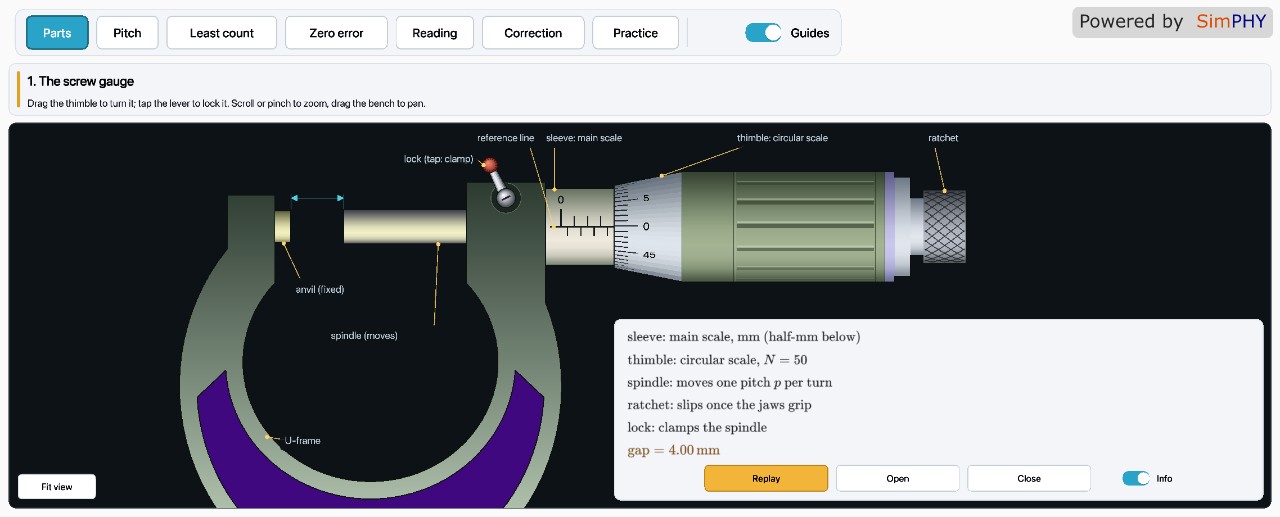
Explore a micrometer’s pitch, least count, zero error and readings thr...
 Free
Fire a cannon by setting angle and speed to hit targets in 11 levels,...
 Free
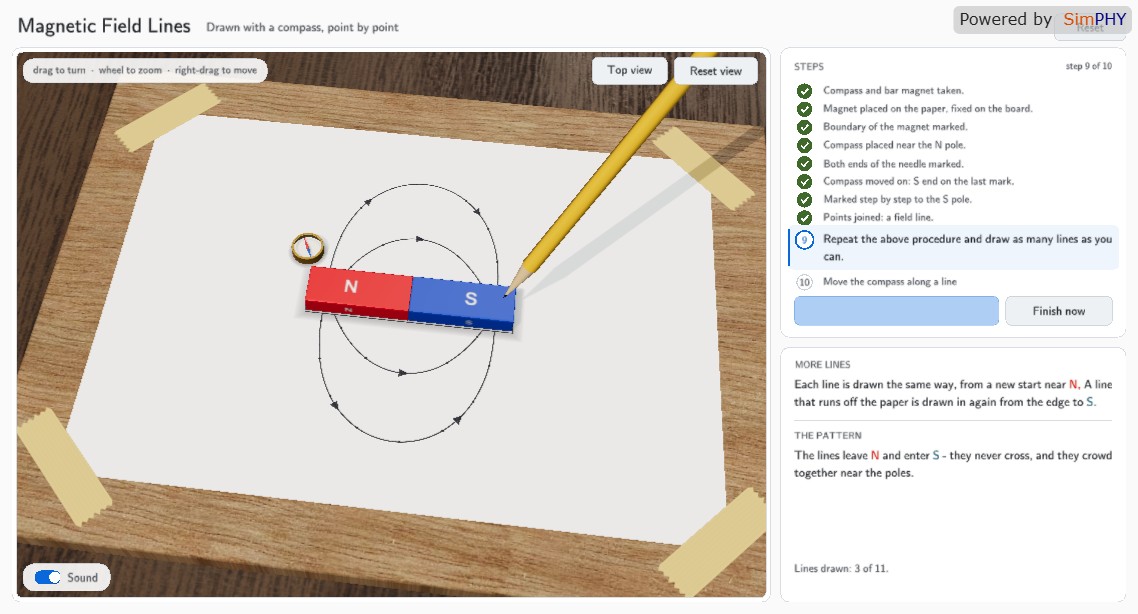
Draw magnetic field lines of a bar magnet with a compass, following NC...
 Free
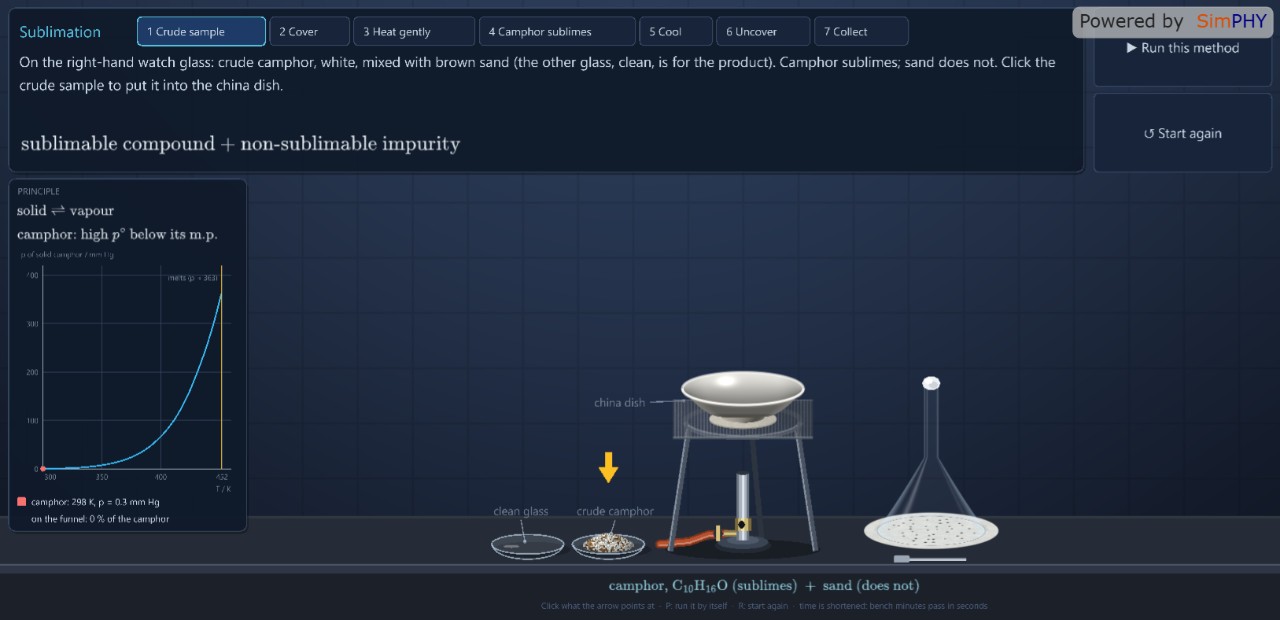
Watch camphor sublimate, condense on a surface, and leave sand behind,...