
 Free
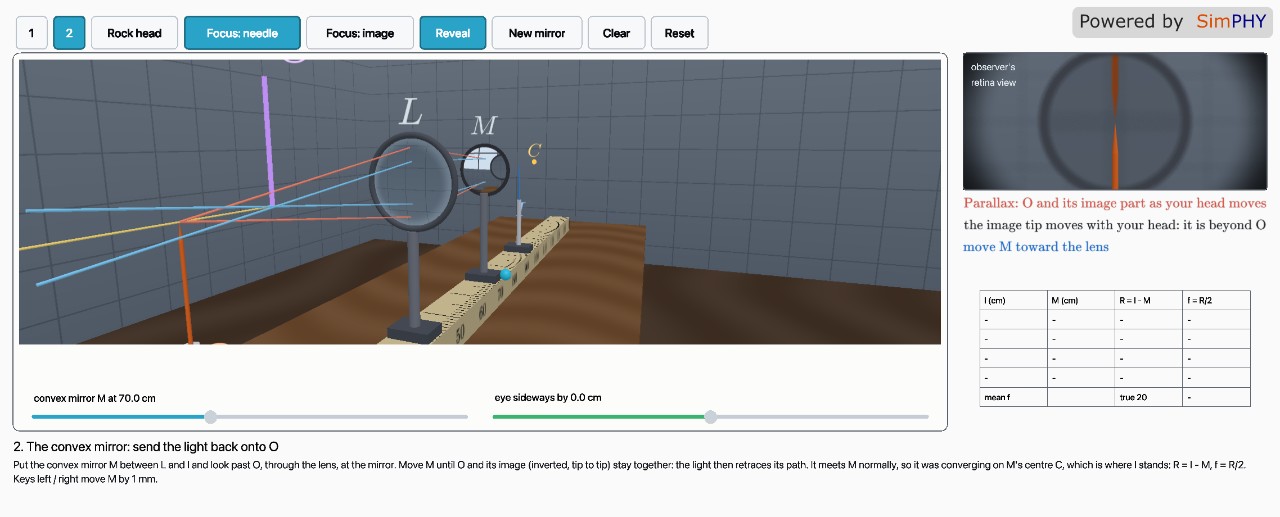
Focal Length of a Convex Mirror with Optical Bench
Ray OpticsMeasure a convex mirror’s focal length on an optical bench using a con...
Explore Stewart’s Theorem in a triangle by changing lengths and cevian position to verify a(mn+d²)=mb²+nc².
Stewart’s Theorem relates the lengths of the sides of a triangle ABC to a cevian AD that divides side BC into segments BD=m and DC=n. The formula a(mn+d²)=mb²+nc² follows from applying the Pythagorean theorem to the three right‑hand triangles formed by the altitude from A and then eliminating the altitude.
In this simulation students can adjust the side lengths a, b, c and move the cevian point D, which changes m, n and the cevian length d. The diagram updates in real time, showing the three sub‑triangles and the numerical values of each term in Stewart’s equation, allowing students to test whether the equality holds for any configuration.
By experimenting, learners see how algebraic relationships emerge from geometric constructions, reinforcing concepts of triangle geometry, the Pythagorean theorem, and the power of analytical reasoning in proving geometric results.
Free
Measure a convex mirror’s focal length on an optical bench using a con...
 Free
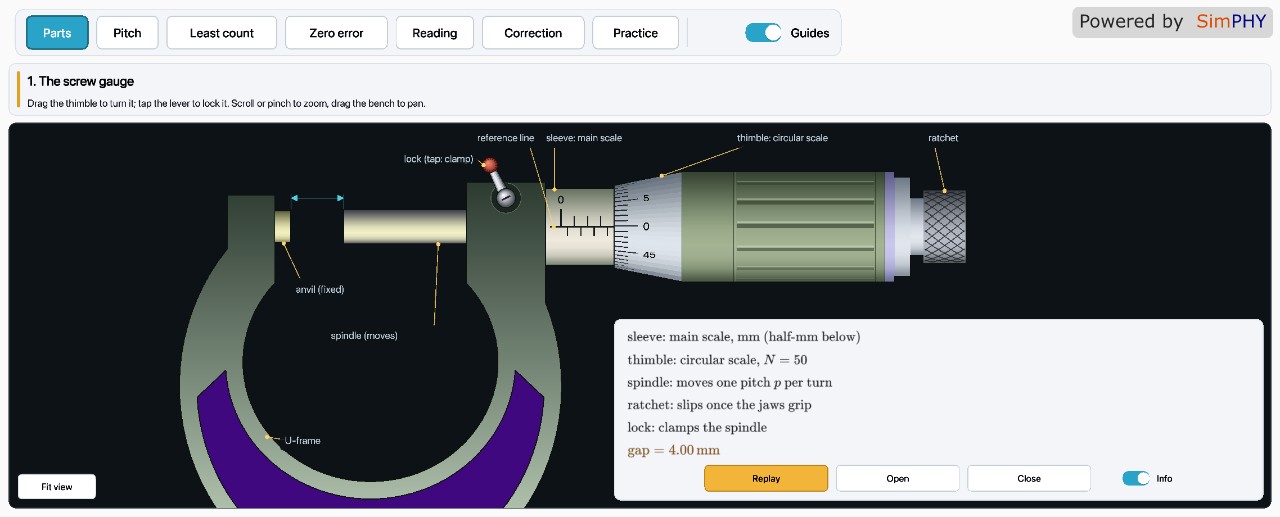
Explore a micrometer’s pitch, least count, zero error and readings thr...
 Free
Fire a cannon by setting angle and speed to hit targets in 11 levels,...
 Free
Draw magnetic field lines of a bar magnet with a compass, following NC...
 Free
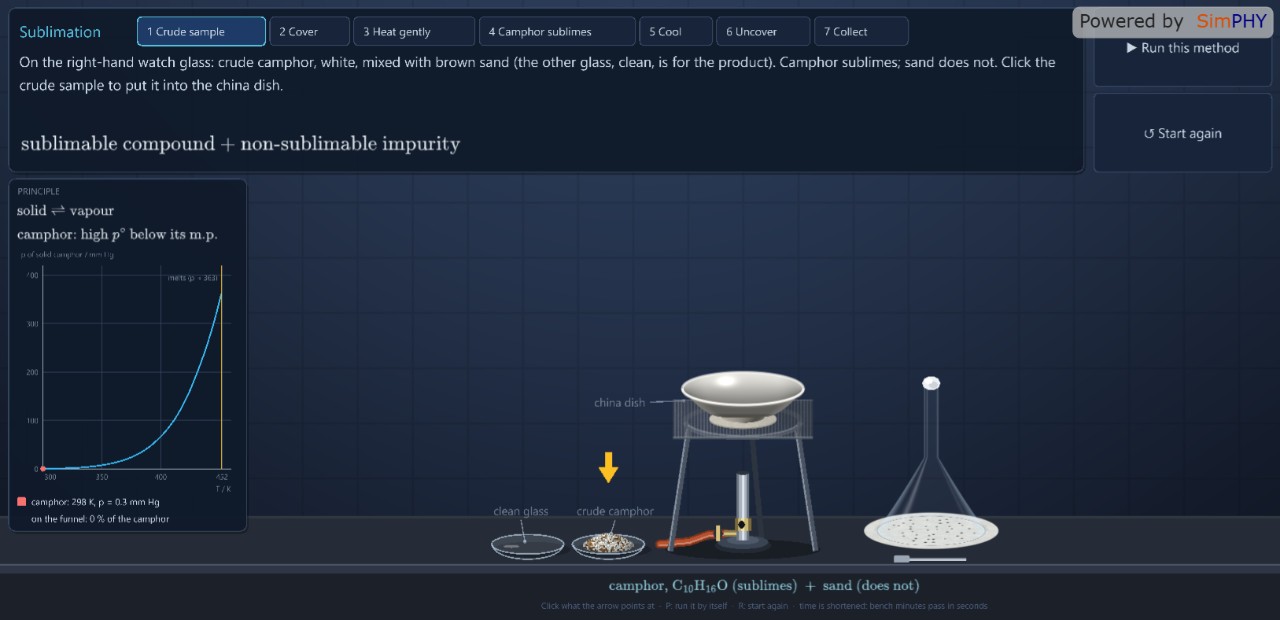
Watch camphor sublimate, condense on a surface, and leave sand behind,...
 Free
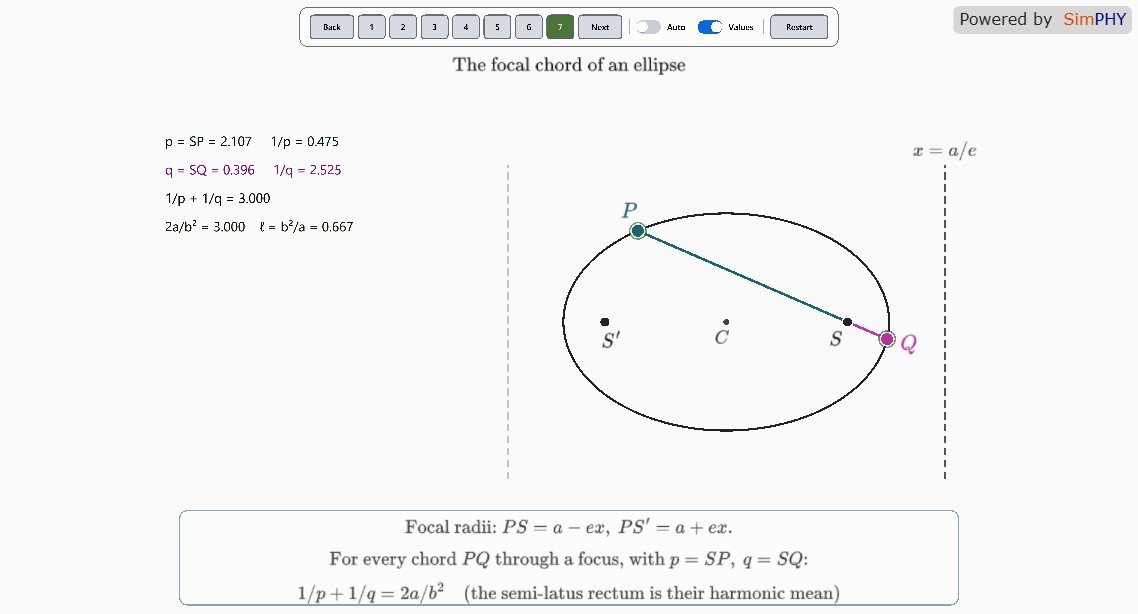
Explore the harmonic‑mean relationship of focal chord endpoints in an...