 Free
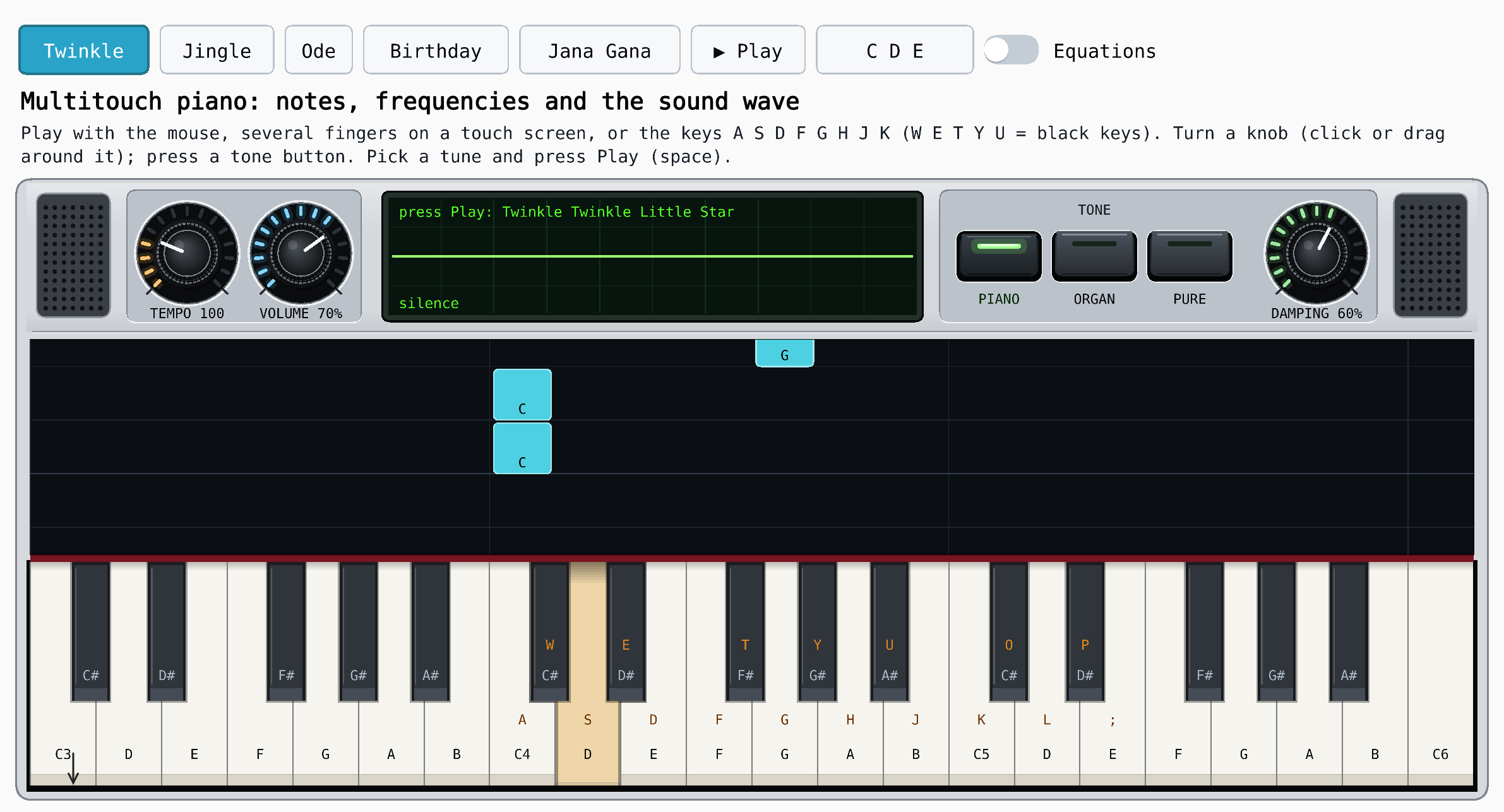
Piano Sound Wave Simulator
Sound WavesPlay a virtual piano, view the sound wave on an oscilloscope, and see...
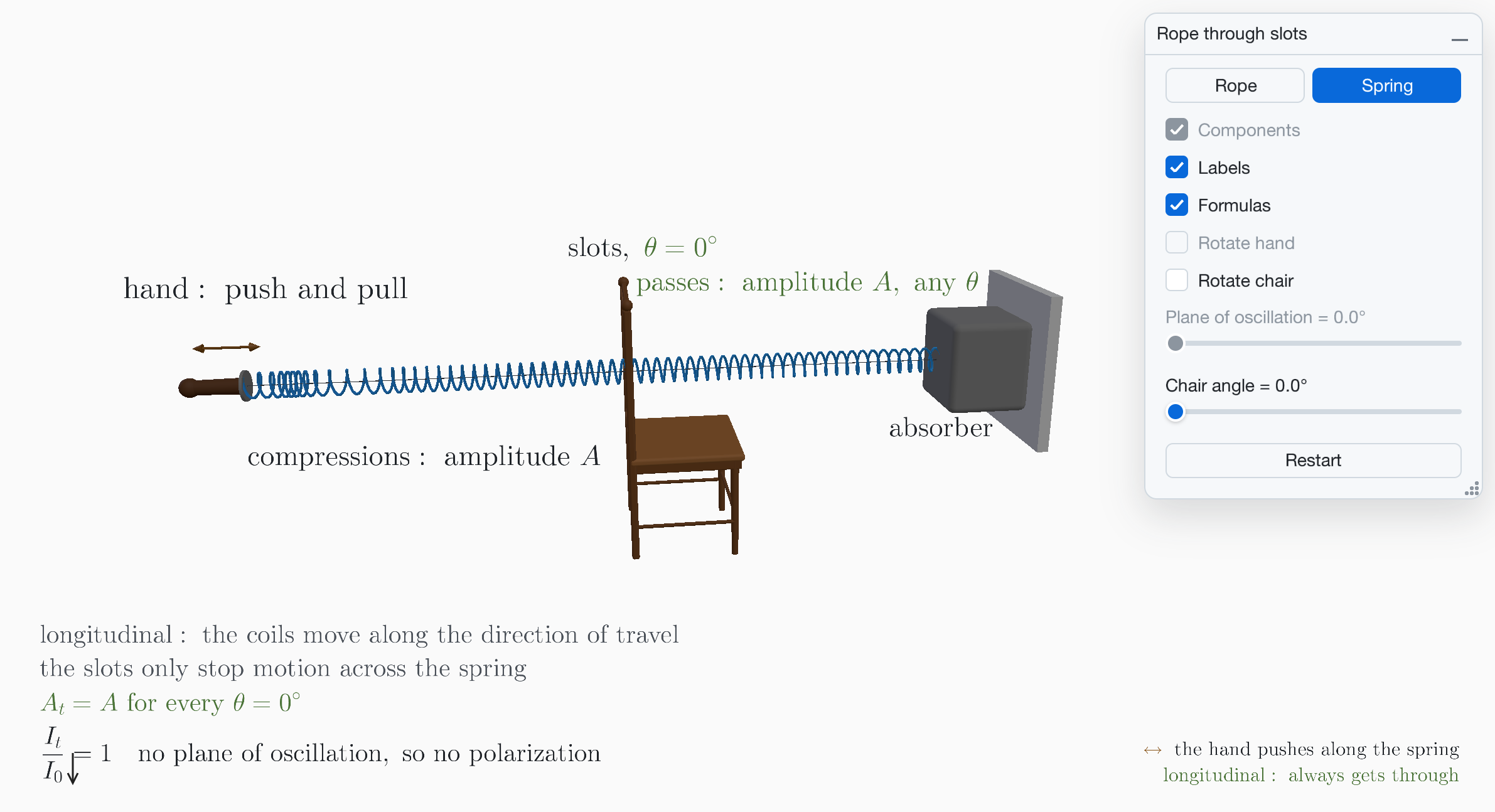
Watch a rope’s transverse wave split at slotted chair back, showing polarization and cos² energy transmission.
A transverse wave travelling along a rope can be described by two orthogonal components: one parallel to a set of slots and one perpendicular. When the rope passes through the slotted back of a chair, the perpendicular component is blocked while the parallel component continues, producing a transmitted wave whose intensity follows Iₜ/I₀ = cos²(φ‑θ), the same relationship as Malus’s law for light polarization.
Students can adjust the plane of oscillation of the hand (φ) and the angle of the chair slots (θ) with sliders, and watch arrows that display the parallel and perpendicular components in real time. The simulation also offers automatic rotation of the hand or chair, a restart button, and standard orbit/zoom controls, allowing learners to explore how changing the angle difference alters the transmitted amplitude and energy.
By interacting with the model, students develop a concrete understanding of vector decomposition of transverse waves, the concept of mechanical wave polarization, and the quantitative cos² dependence of transmitted energy. The activity links mechanical wave behavior to the familiar optics law, reinforcing connections across physics topics.
Free
Play a virtual piano, view the sound wave on an oscilloscope, and see...
 Free
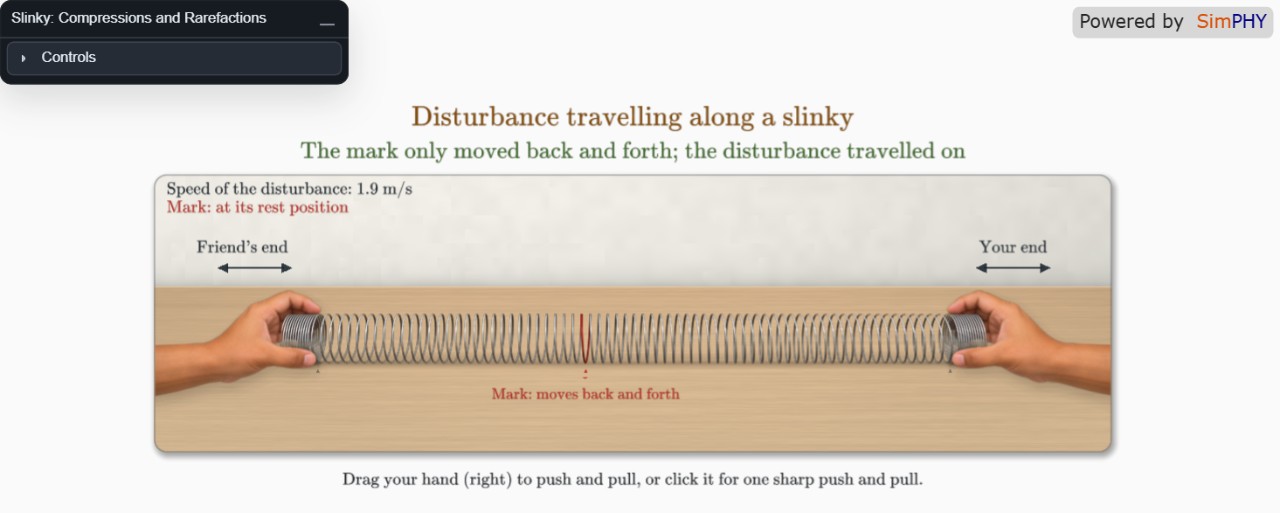
Push and pull a slinky to see longitudinal compressions and rarefactio...
 Free
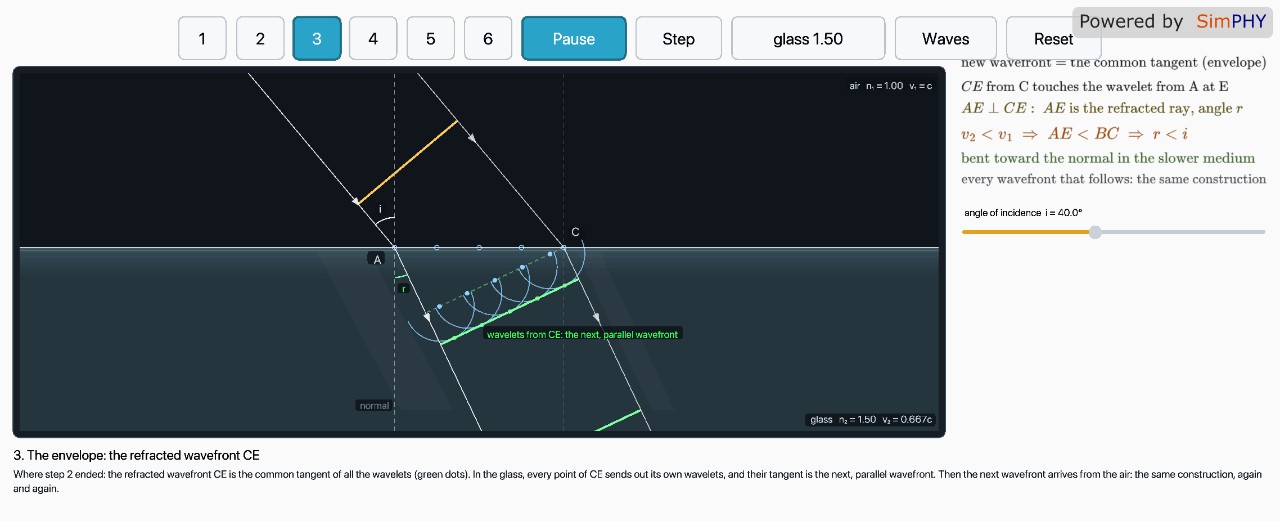
Step through Huygens' principle to watch wavefronts refract, derive Sn...
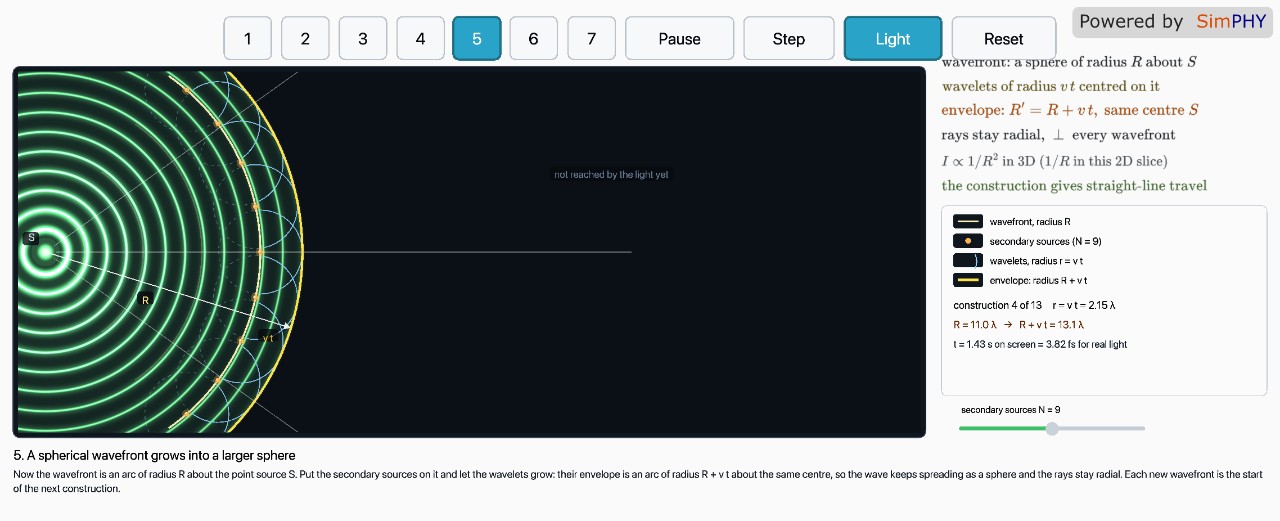 Free
Explore Huygens' principle by building wavefronts from wavelets, adjus...
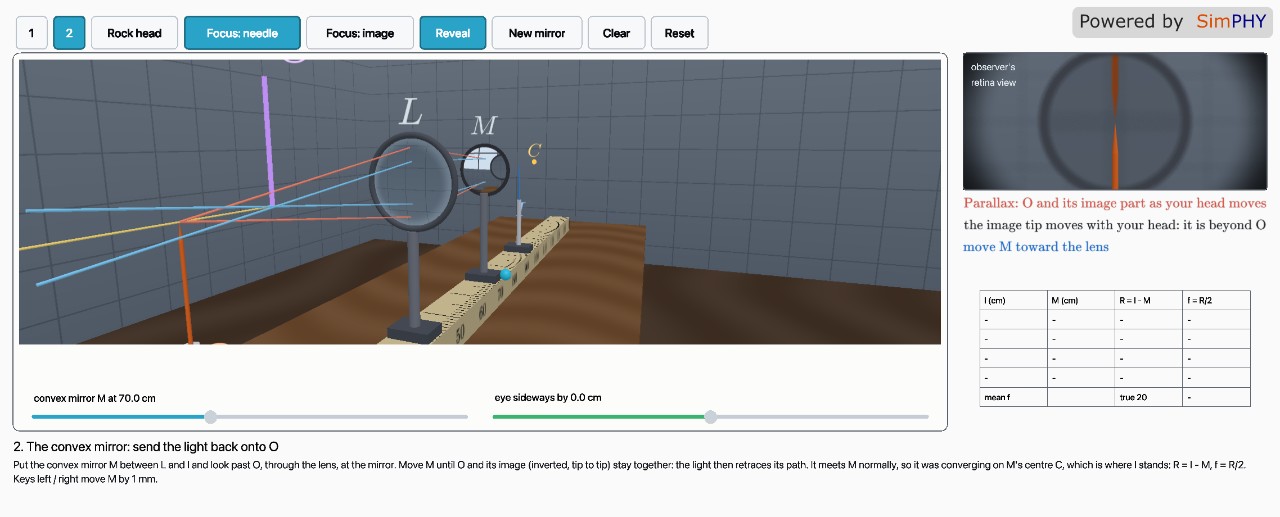 Free
Measure a convex mirror’s focal length on an optical bench using a con...
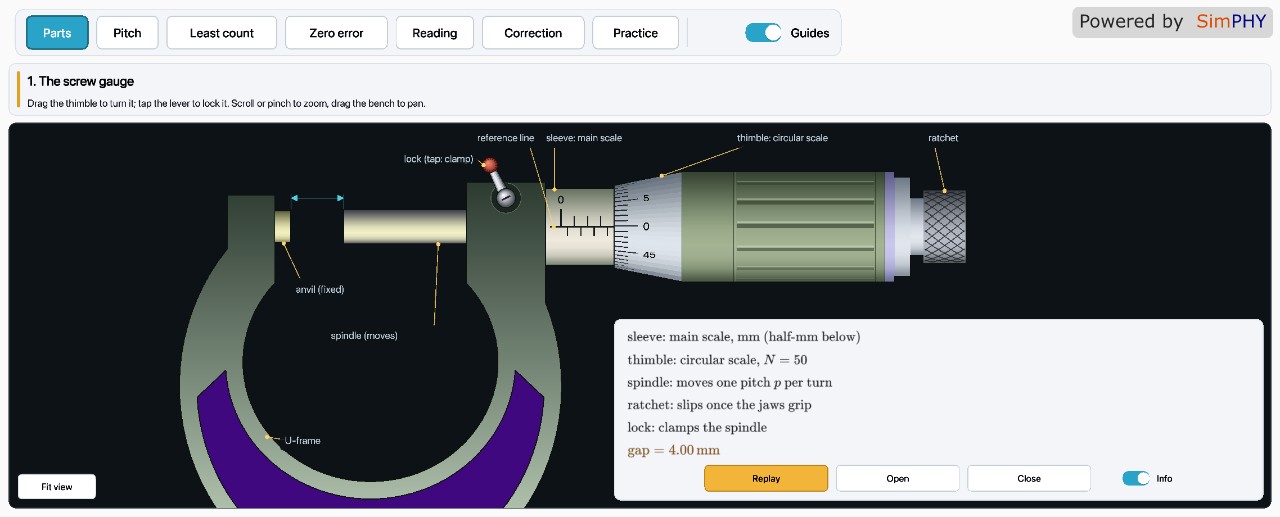 Free
Explore a micrometer’s pitch, least count, zero error and readings thr...