 Free
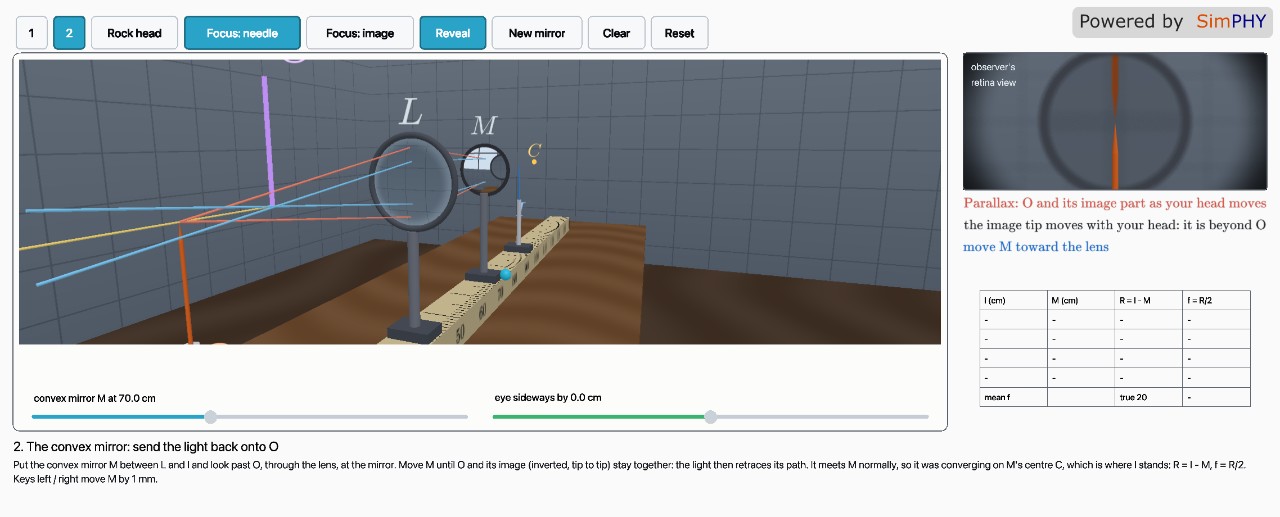
Focal Length of a Convex Mirror with Optical Bench
Ray OpticsMeasure a convex mirror’s focal length on an optical bench using a con...
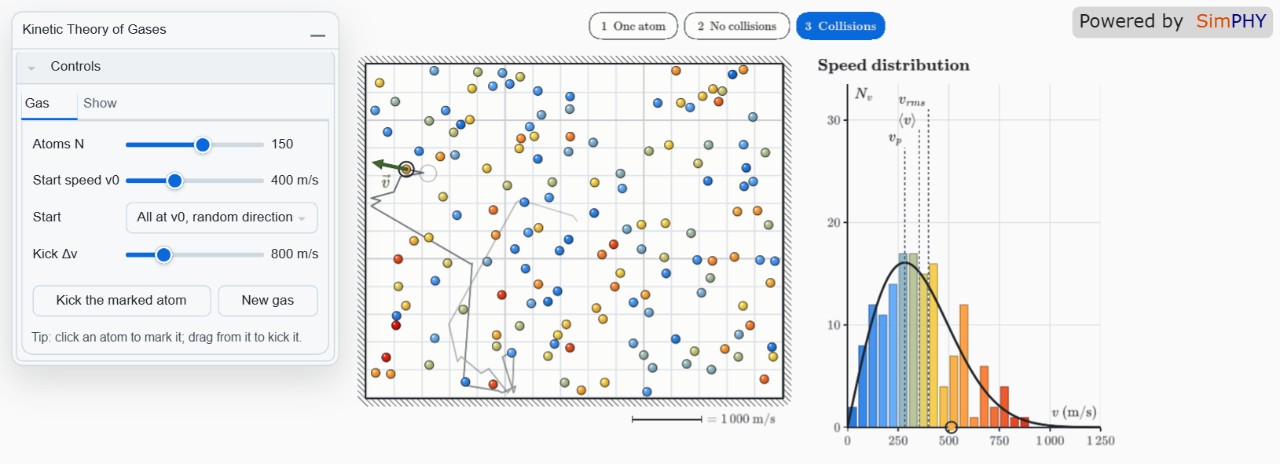
Explore how Argon atoms move, collide, and reach the Maxwell‑Boltzmann speed distribution in a 2‑D box.
The simulation visualises the kinetic theory of gases in two dimensions using Argon atoms modelled as hard discs. In step 1 a single atom bounces elastically off the walls, keeping its speed constant. Step 2 shows many atoms that pass through each other, so no energy exchange occurs and the speed histogram never changes. In step 3 the atoms collide elastically, conserving total momentum and kinetic energy, and the speeds relax to the 2‑D Maxwell‑Boltzmann distribution.
Use the keys 1, 2, 3 to select a step, R to generate a fresh gas, and K (or drag an atom) to give a particle an extra kick. The colour of each atom reflects its instantaneous speed, while the histogram plots the speed distribution together with the theoretical Maxwell‑Boltzmann curve. The graph of average kinetic energy and the calculated temperature update in real time.
Students can observe how microscopic collisions produce macroscopic temperature, how the most probable, average and rms speeds relate, and why equilibrium emerges only when collisions are allowed. The activity reinforces concepts of elastic collisions, energy conservation, and statistical description of gases.
Free
Measure a convex mirror’s focal length on an optical bench using a con...
 Free
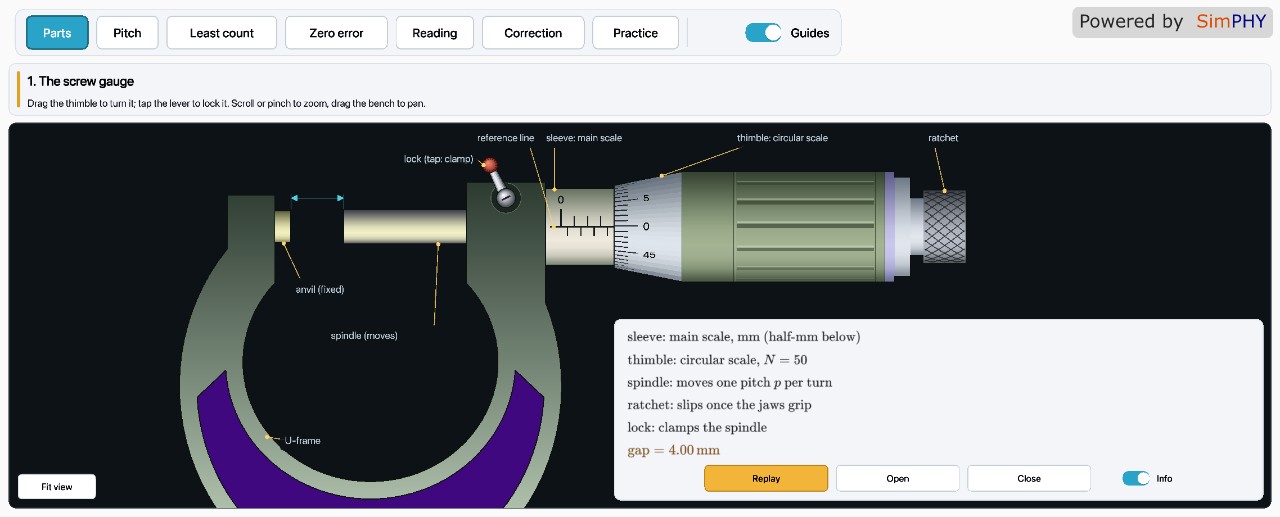
Explore a micrometer’s pitch, least count, zero error and readings thr...
 Free
Fire a cannon by setting angle and speed to hit targets in 11 levels,...
 Free
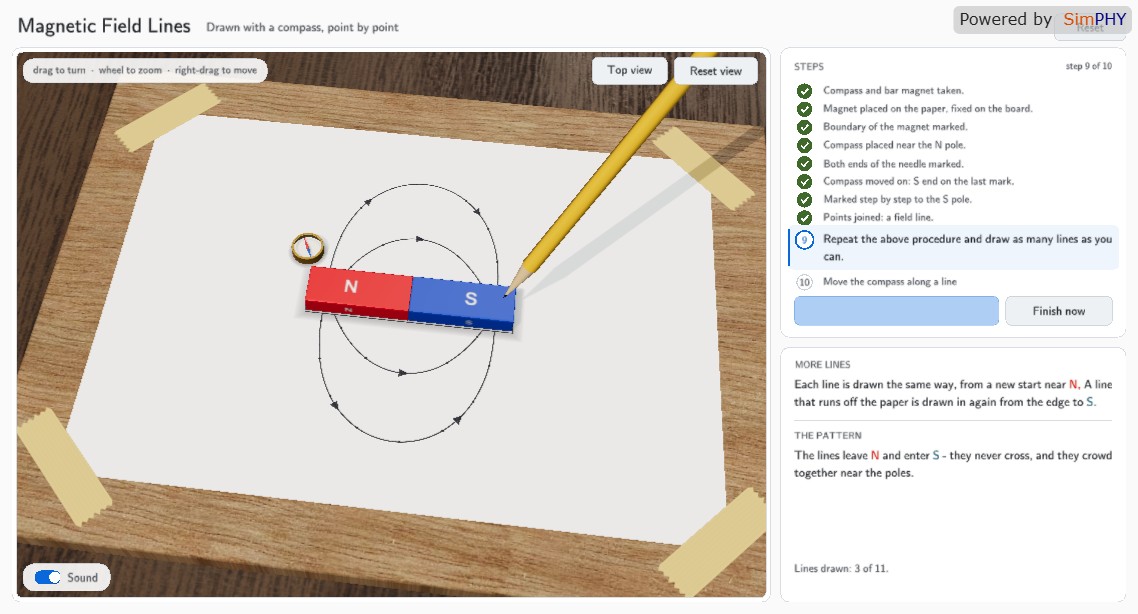
Draw magnetic field lines of a bar magnet with a compass, following NC...
 Free
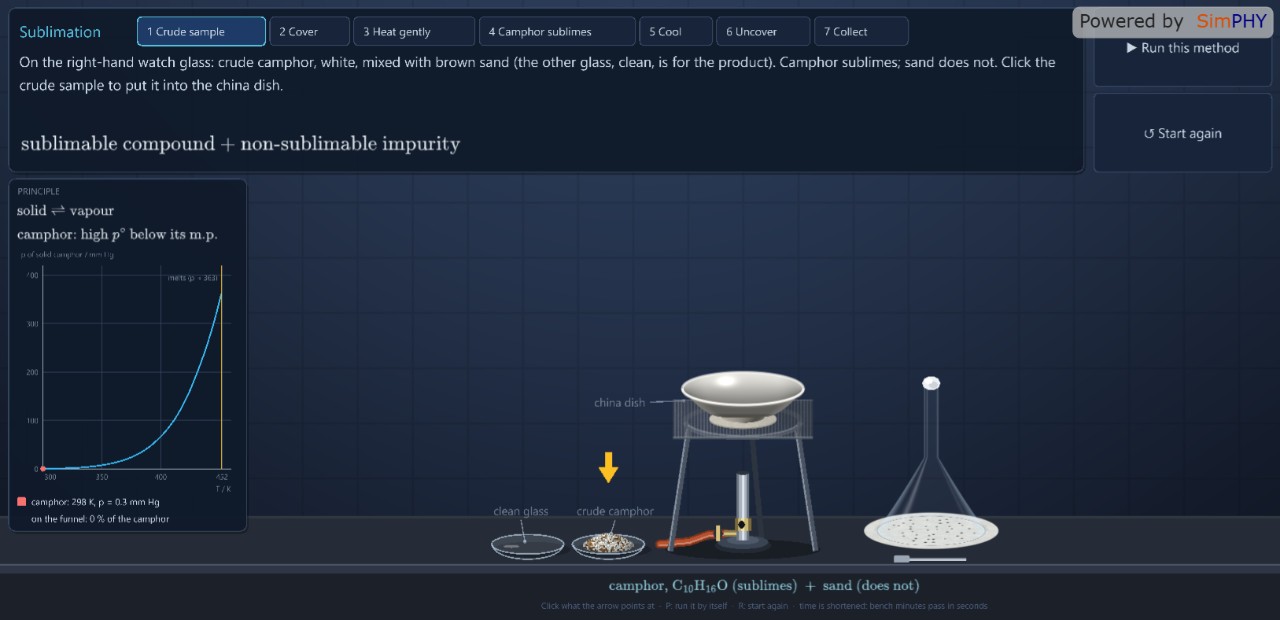
Watch camphor sublimate, condense on a surface, and leave sand behind,...
 Free
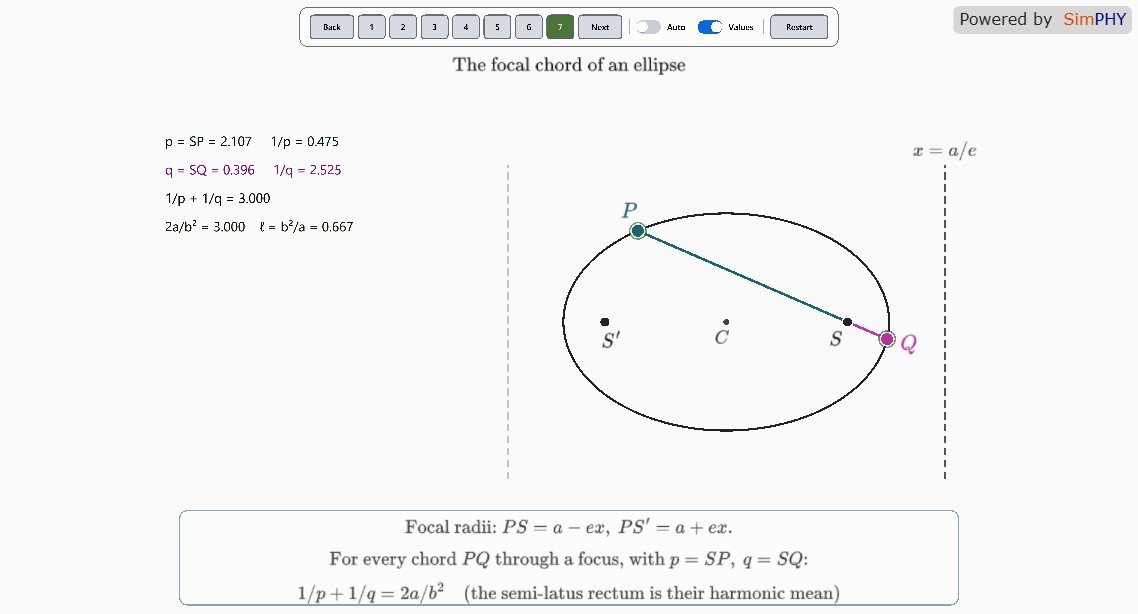
Explore the harmonic‑mean relationship of focal chord endpoints in an...