 Free
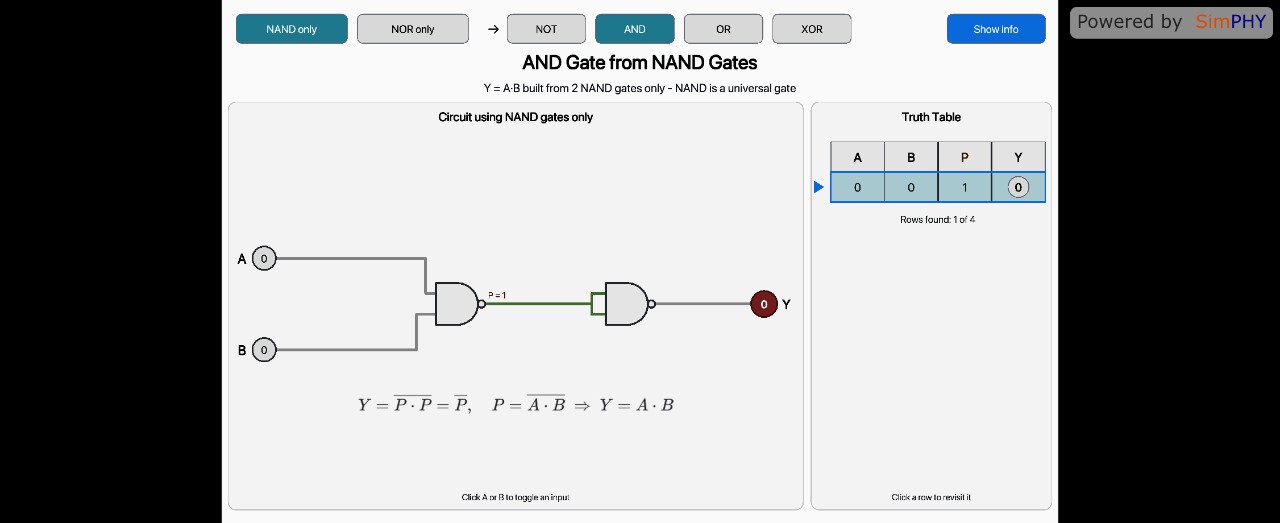
Universal Logic Gates Constructed from NAND or NOR
ElectronicsBuild NOT, AND, OR, XOR gates using only NAND or only NOR and see live...
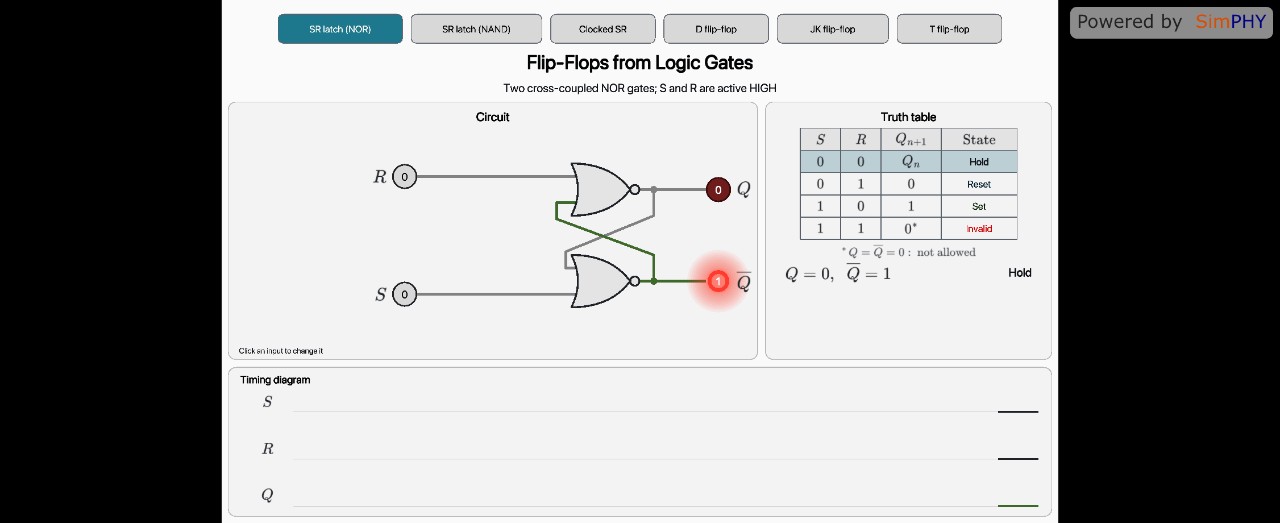
Explore SR, D, JK, and T flip‑flops built from NAND/NOR gates; toggle inputs and watch truth tables update.
Flip‑flops are fundamental memory elements that store a single bit of information using cross‑coupled logic gates. By arranging NAND or NOR gates in specific feedback configurations, sequential circuits such as SR latches, D, JK, and T flip‑flops are created, illustrating how digital devices retain state over time.
The simulation lets students pick a circuit type from the top row, click input terminals to toggle signals, and apply a clock pulse or enable an auto‑clock for the clocked devices. As inputs change, the gates are re‑evaluated and the current truth‑table row is highlighted, showing the immediate effect on Q and Q̅ outputs. Invalid states trigger a race‑condition warning, demonstrating the importance of proper input timing.
Through this interactive model, learners observe edge‑triggered behavior, understand how feedback creates memory, and explore the differences between level‑sensitive and edge‑sensitive designs. The activity reinforces concepts of binary logic, timing, and the practical use of flip‑flops in digital electronics.
Free
Build NOT, AND, OR, XOR gates using only NAND or only NOR and see live...
 Free
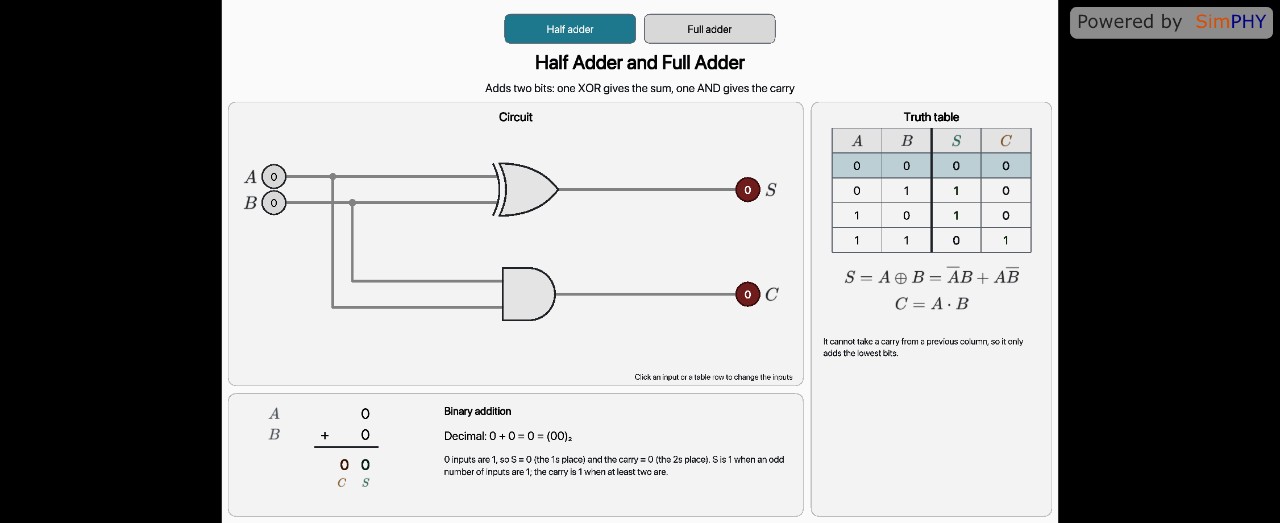
Toggle A, B, and Cin to watch a half‑adder and full‑adder compute bina...
 Free
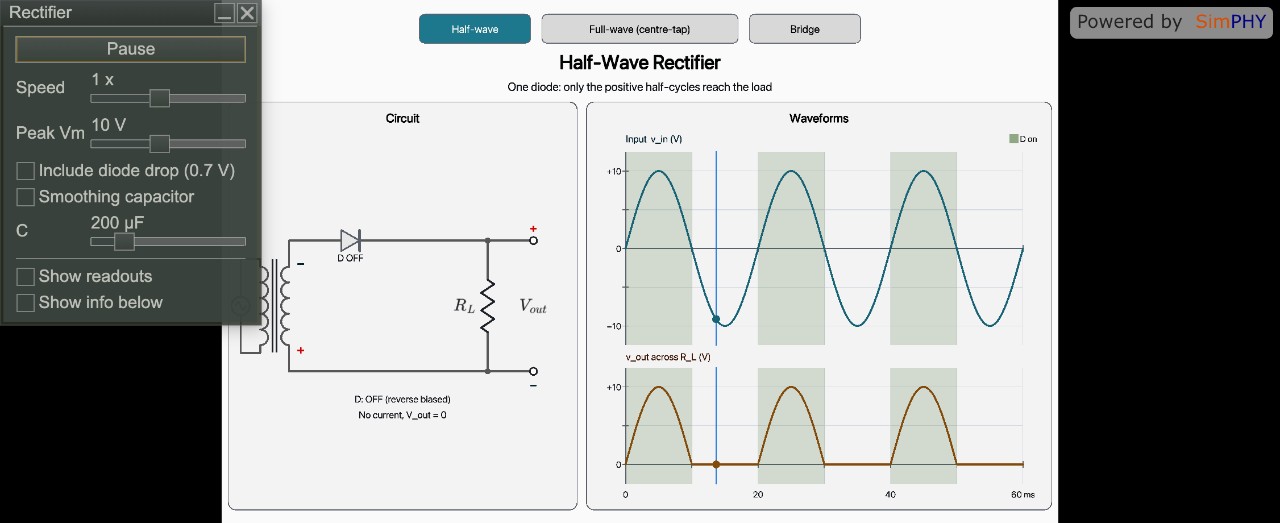
Explore half‑wave, full‑wave, and bridge rectifiers; set diode drop, p...
 Free
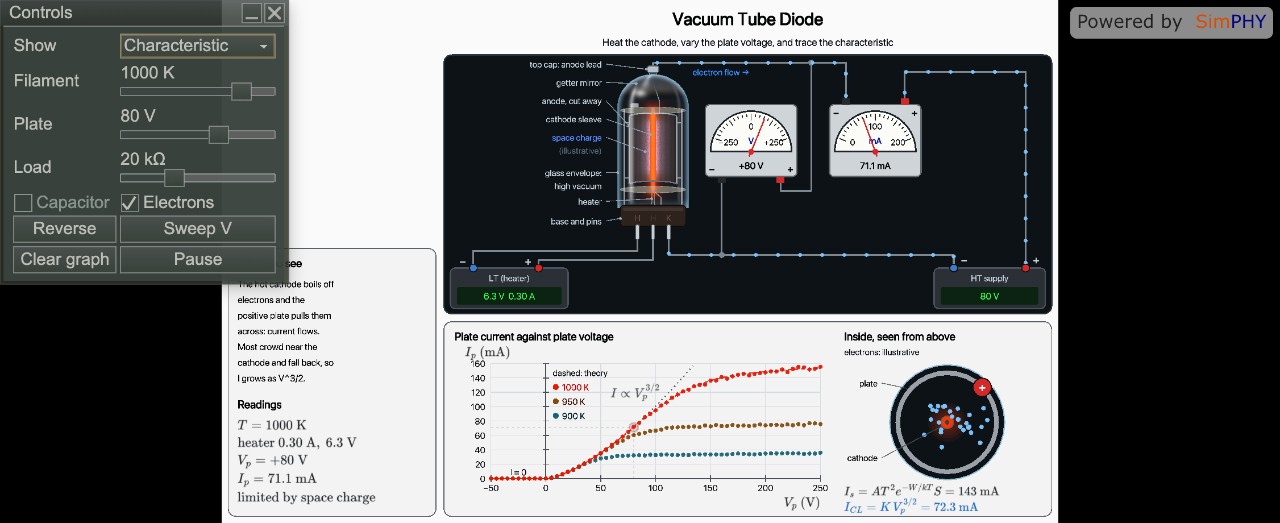
Explore thermionic emission and half‑wave rectification by changing fi...
 Free
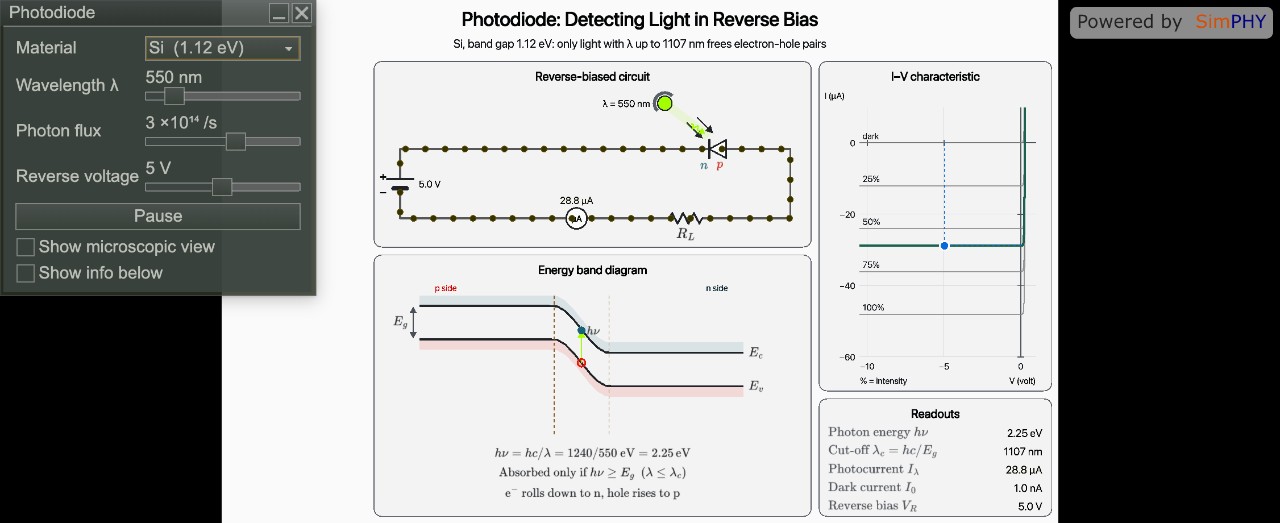
Explore how light of different wavelengths creates current in a revers...
 Free
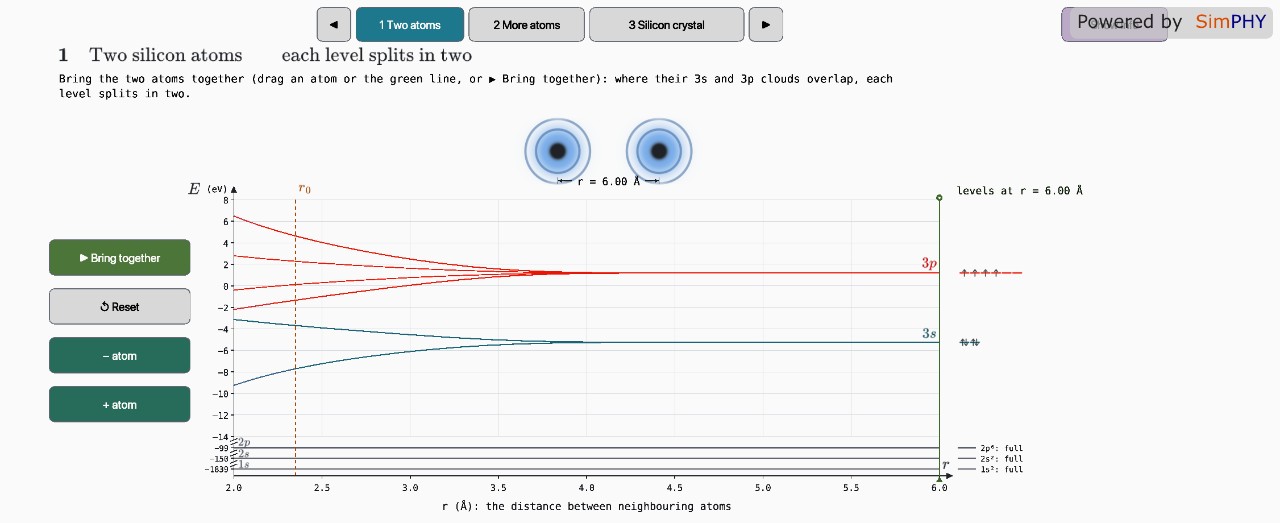
Watch silicon atom orbitals merge into energy bands as inter‑atomic di...