 Free
Focal Length of a Convex Mirror with Optical Bench
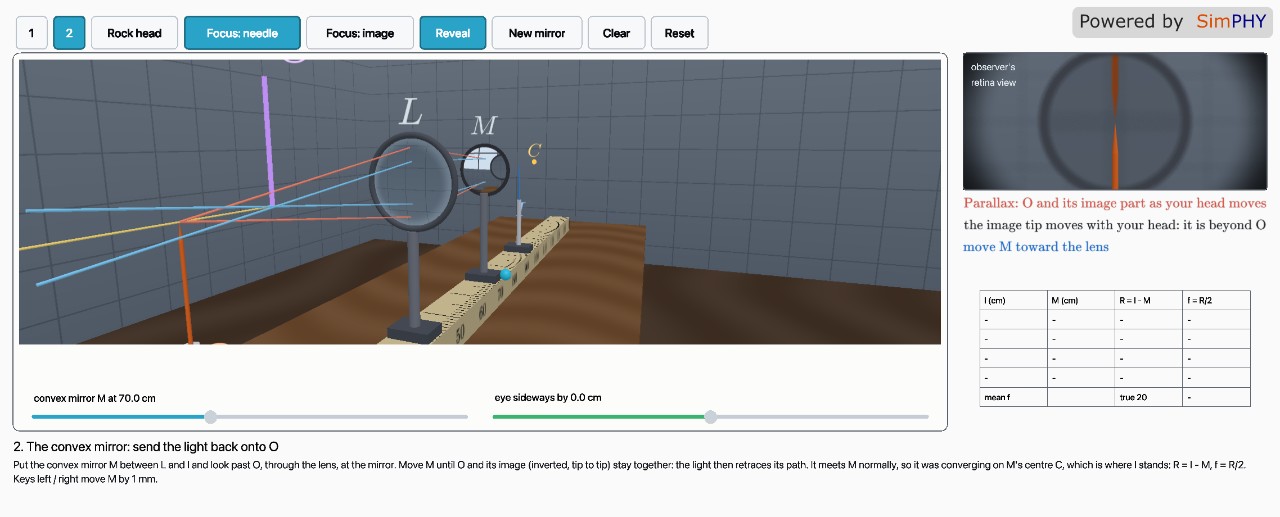
Ray OpticsMeasure a convex mirror’s focal length on an optical bench using a con...
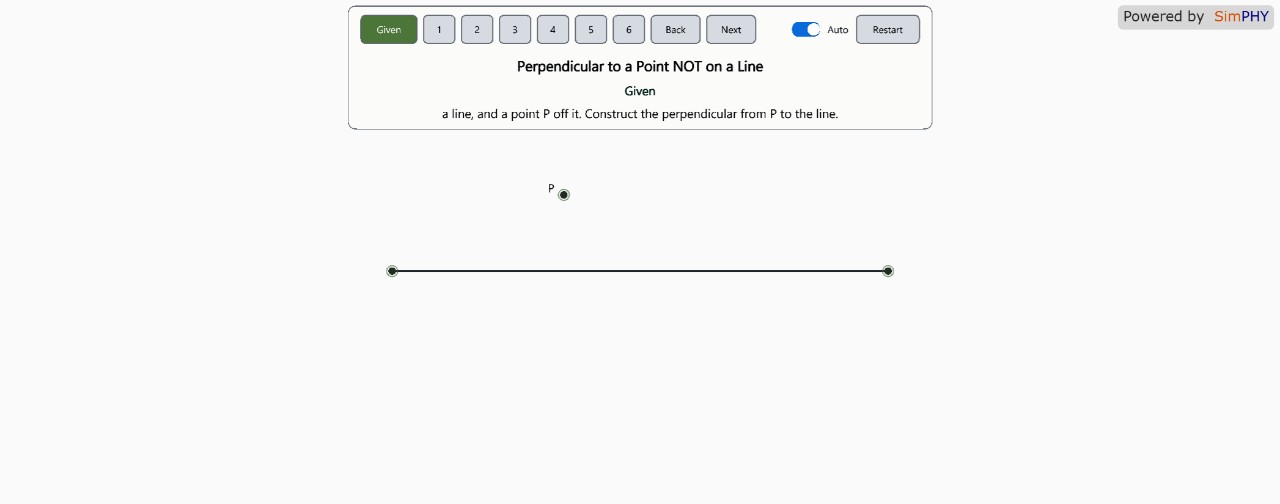
Drag the point and watch arcs intersect the line to automatically build the shortest perpendicular segment.
This simulation demonstrates the classic geometric construction that the perpendicular from a point to a line is the shortest path between them. An arc drawn from the external point cuts the line at two points; equal arcs from those intersections meet at a second point, and the line joining the original point to this new point is the perpendicular.
Students can drag the given point and the line at any time. The construction engine updates each step, showing the arcs, intersection points, and the final perpendicular segment in real time. By observing how the figure changes, learners see why the constructed line is indeed perpendicular and why it represents the minimal distance.
The activity reinforces concepts of straight lines, perpendicularity, and Euclidean distance, linking visual intuition with formal geometric proofs. It is ideal for high‑school geometry lessons on constructions and properties of lines.
Free
Measure a convex mirror’s focal length on an optical bench using a con...
 Free
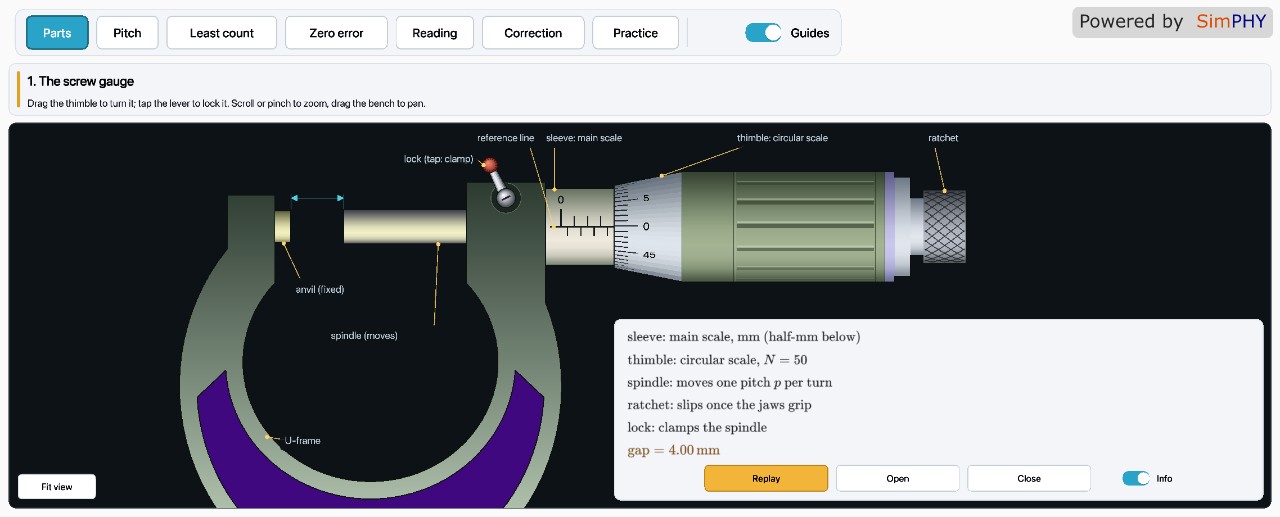
Explore a micrometer’s pitch, least count, zero error and readings thr...
 Free
Fire a cannon by setting angle and speed to hit targets in 11 levels,...
 Free
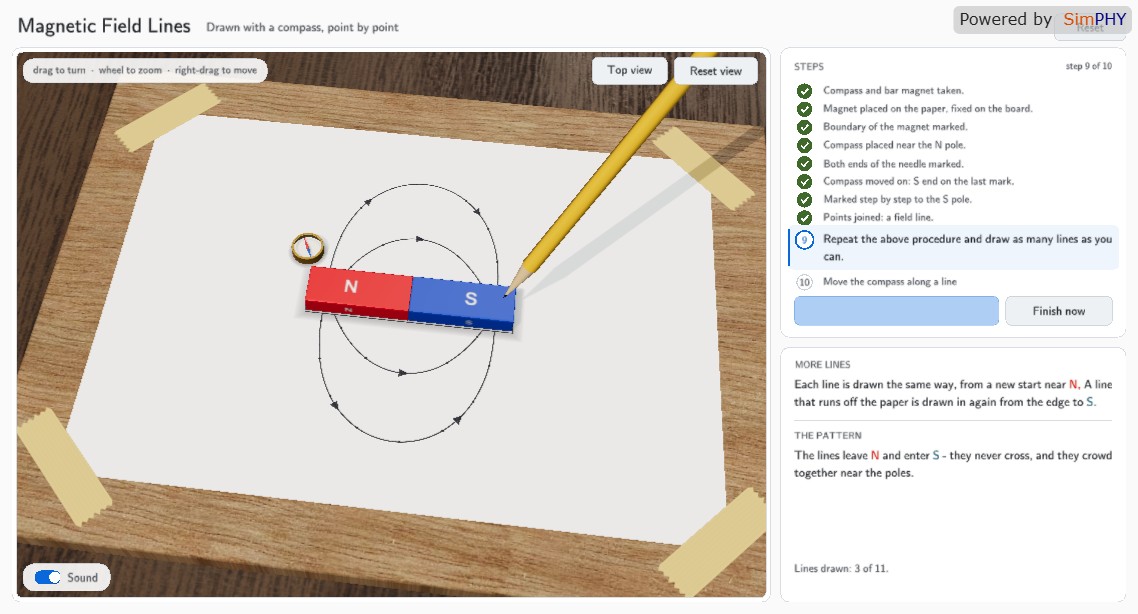
Draw magnetic field lines of a bar magnet with a compass, following NC...
 Free
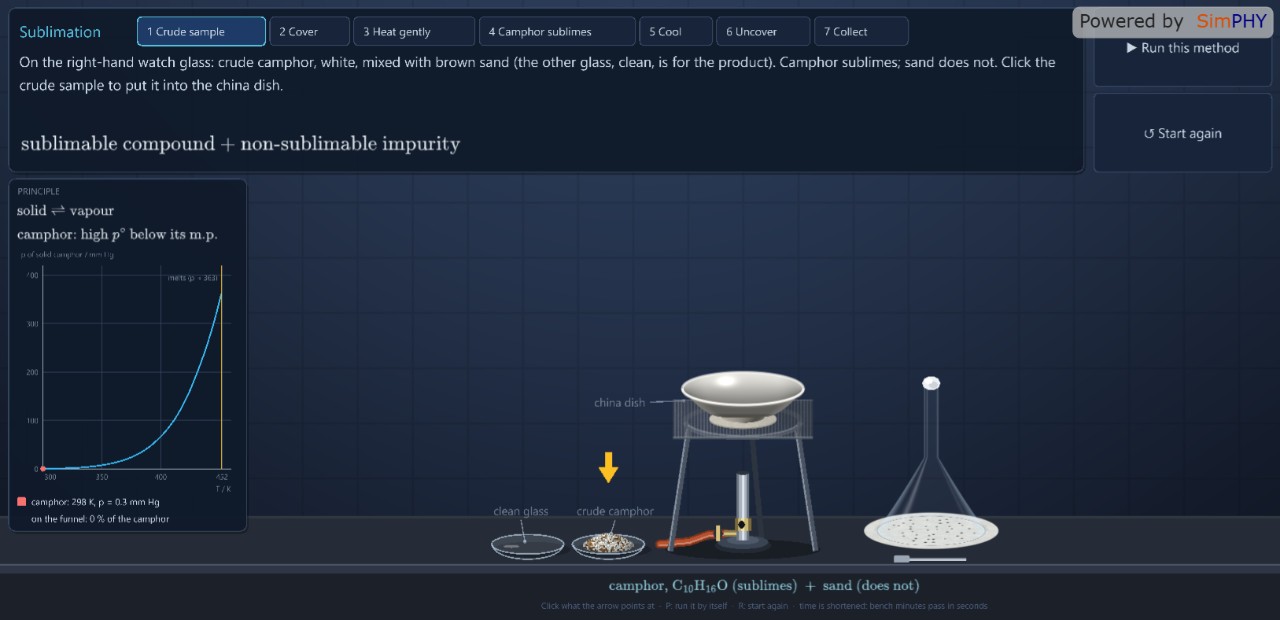
Watch camphor sublimate, condense on a surface, and leave sand behind,...
 Free
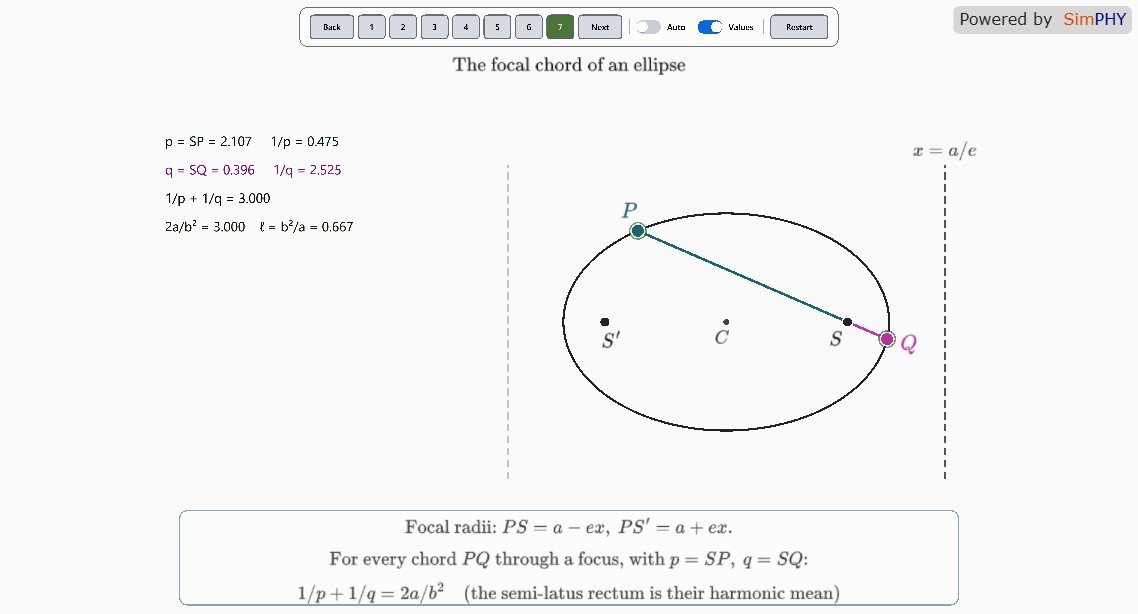
Explore the harmonic‑mean relationship of focal chord endpoints in an...