 Free
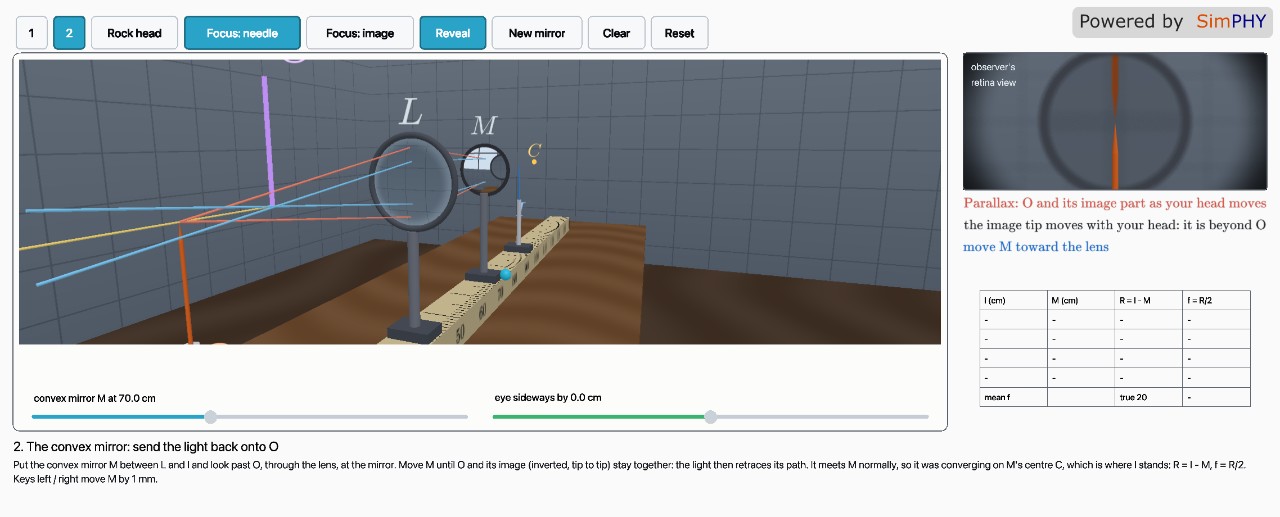
Focal Length of a Convex Mirror with Optical Bench
Ray OpticsMeasure a convex mirror’s focal length on an optical bench using a con...
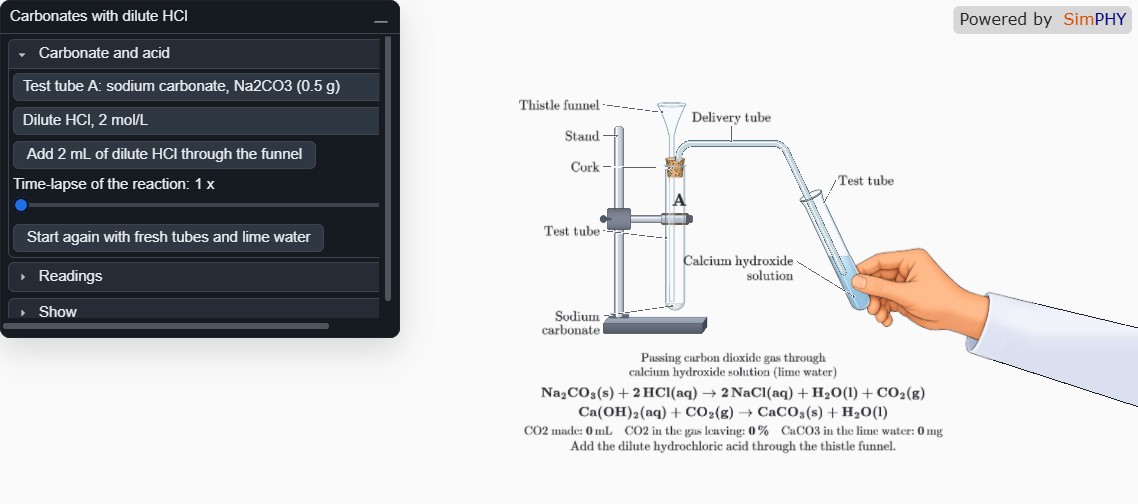
Watch sodium carbonate or bicarbonate react with dilute HCl, releasing CO₂ that makes lime water turn milky.
The simulation shows the classic acid‑base reaction where solid sodium carbonate (Na₂CO₃) or sodium bicarbonate (NaHCO₃) is treated with dilute hydrochloric acid. Carbon dioxide gas is generated and passed into a test tube of lime water, where it forms a temporary milky suspension of calcium carbonate, visually confirming the presence of CO₂.
Students can add more acid to see how the rate of gas evolution changes, compare the larger CO₂ volume from the bicarbonate reaction with that from the carbonate, and observe the reversal of milkiness when excess CO₂ dissolves the precipitate again. The model includes a simple rate law that links acid concentration and the exposed surface area of the solid.
Through this activity learners reinforce stoichiometric calculations, understand acid‑base neutralisation, and explore basic chemical‑kinetics concepts such as dependence on reactant concentration and surface area, all aligned with Class 10 chemistry curricula.
Free
Measure a convex mirror’s focal length on an optical bench using a con...
 Free
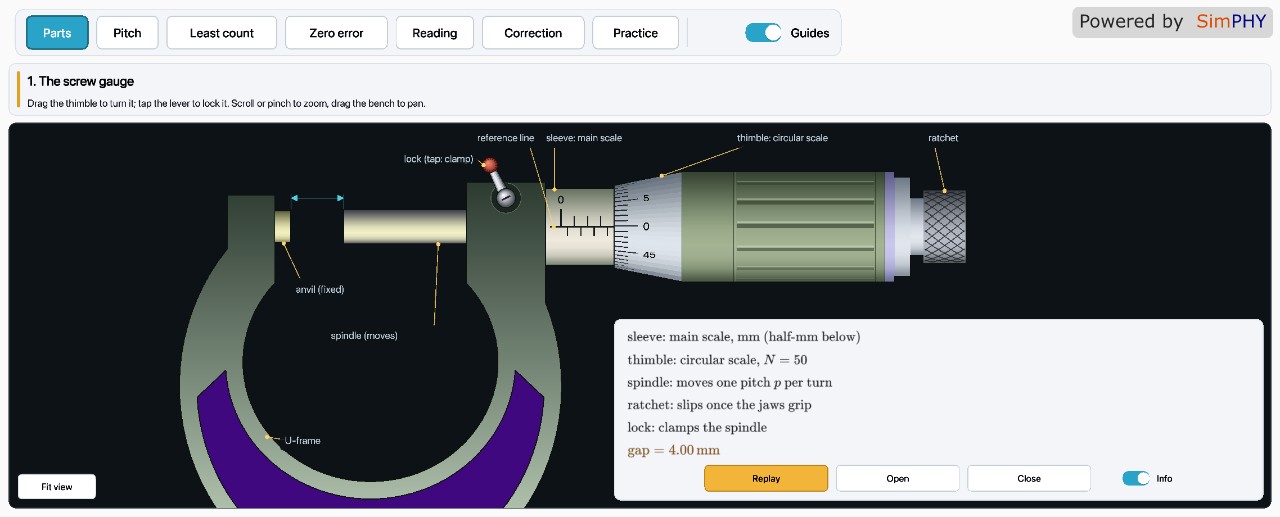
Explore a micrometer’s pitch, least count, zero error and readings thr...
 Free
Fire a cannon by setting angle and speed to hit targets in 11 levels,...
 Free
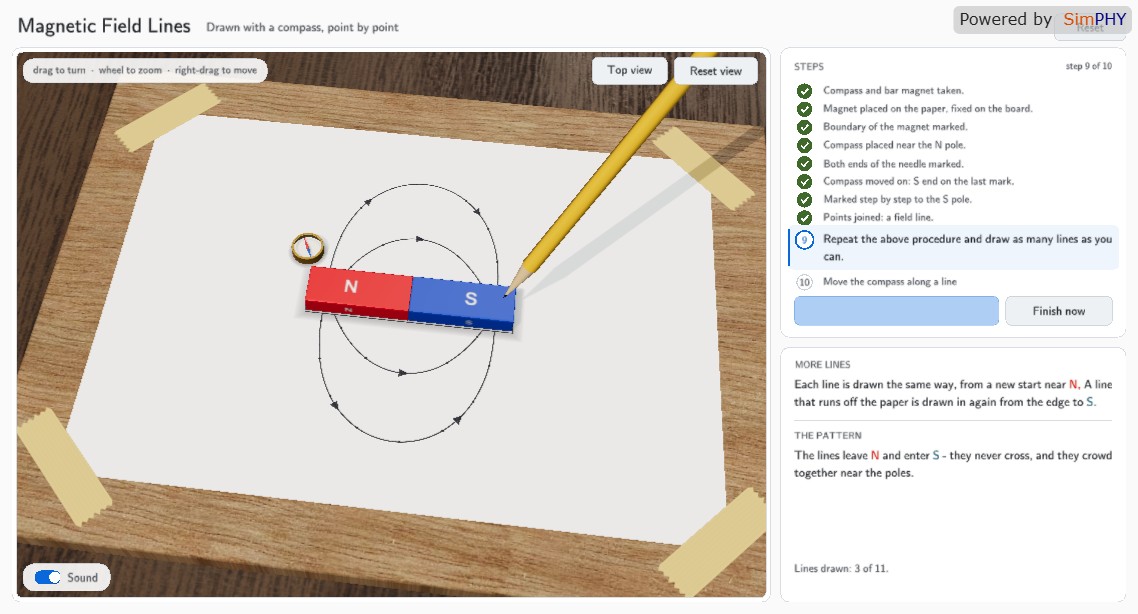
Draw magnetic field lines of a bar magnet with a compass, following NC...
 Free
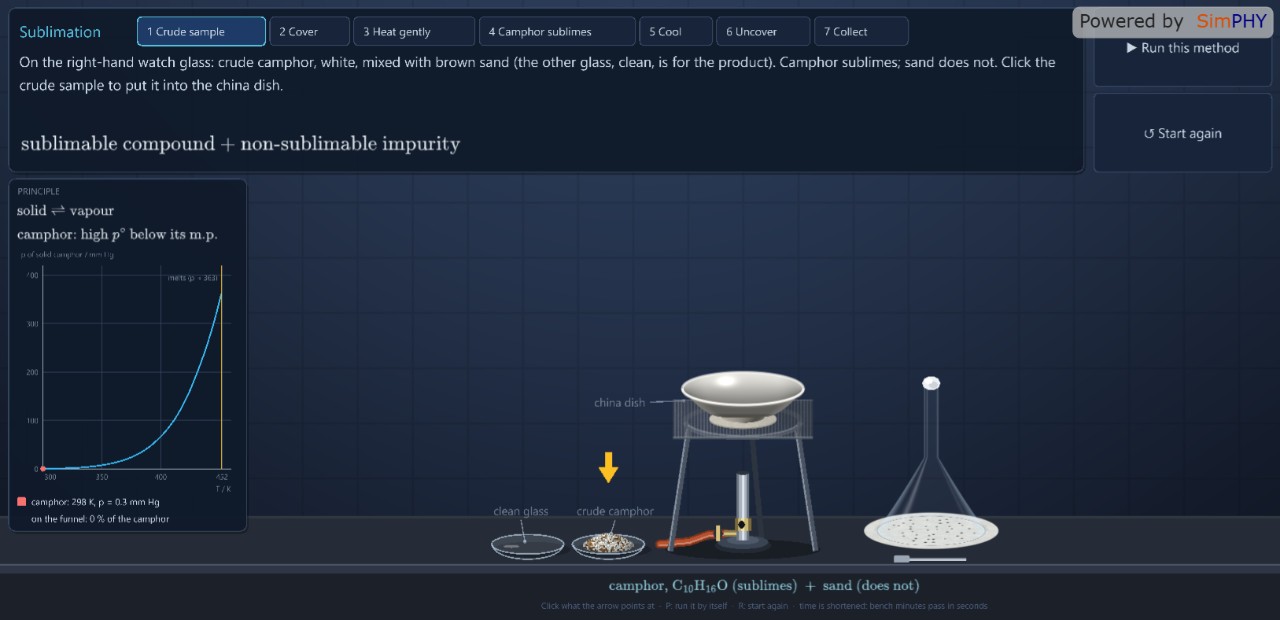
Watch camphor sublimate, condense on a surface, and leave sand behind,...
 Free
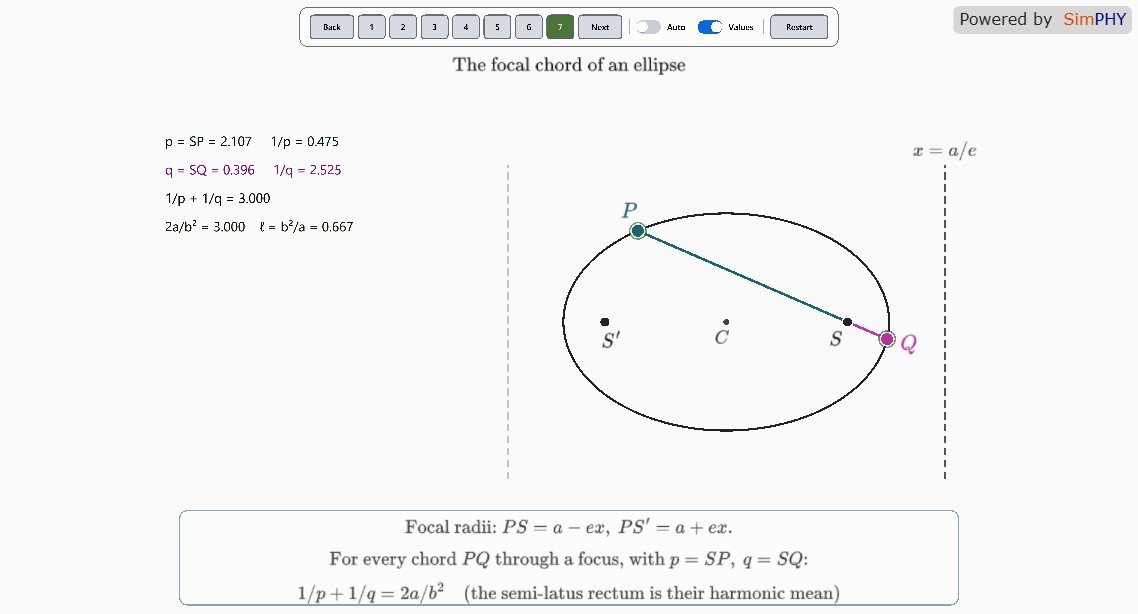
Explore the harmonic‑mean relationship of focal chord endpoints in an...