 Free
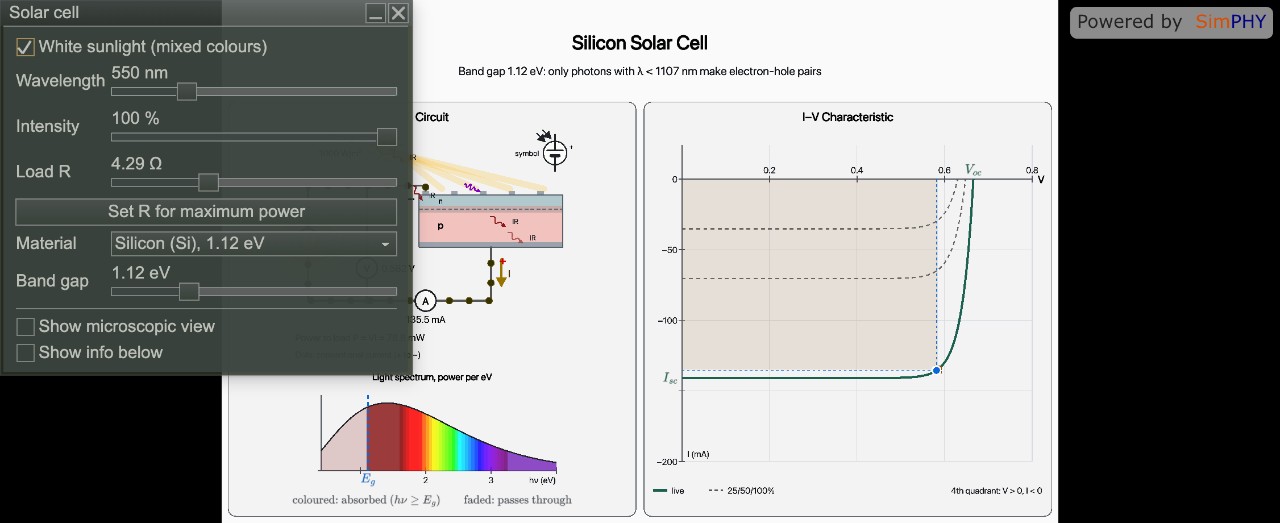
Solar Cell – Photovoltaic p‑n Junction
Semiconductor ElectronicsExplore a p‑n junction solar cell, adjusting light intensity and band...
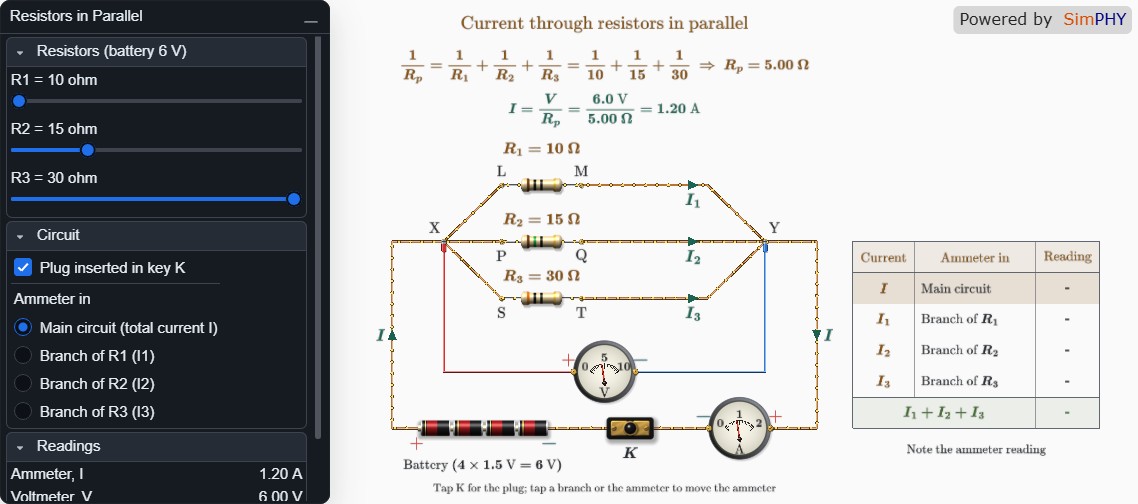
Insert the plug, then move the ammeter into each branch to read the total current and each branch’s current.
In a parallel resistor network each resistor experiences the same potential difference, so the current through each branch is given by I=n V/Rn. The total current supplied by the battery is the algebraic sum of the branch currents, I = I1 + I2 + I3, and the equivalent resistance follows 1/Rp = 1/R1 + 1/R2 + 1/R3.
Students insert the plug to power the circuit and observe the total current on the ammeter. By dragging the ammeter into each individual branch they can record I1, I2 and I3. The simulation shows the ideal battery voltage (6 V) and ideal measuring instruments, allowing direct comparison of measured values with the theoretical predictions.
Through this activity learners verify the current‑division rule, practice calculating equivalent resistance, and develop a quantitative understanding of how resistance values affect current distribution in parallel circuits.
Free
Explore a p‑n junction solar cell, adjusting light intensity and band...
 Free
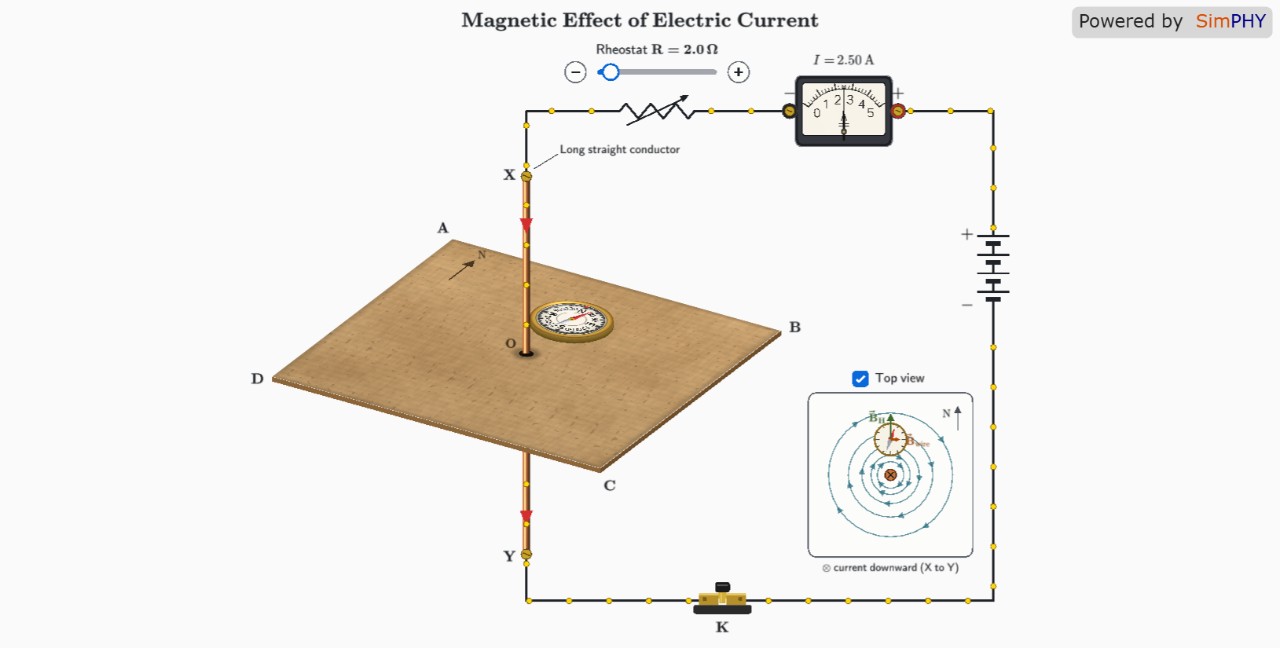
Turn on the current in a straight wire and watch a compass needle defl...
 Free
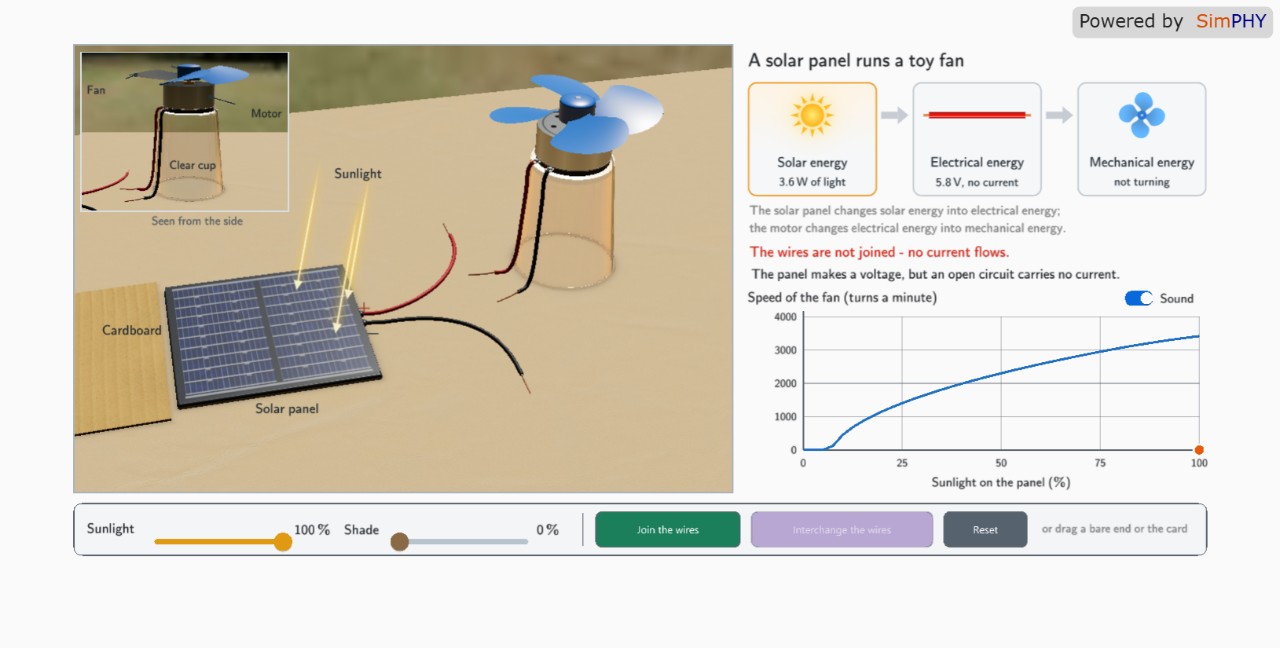
Connect a solar panel to a toy fan and watch sunlight turn light into...
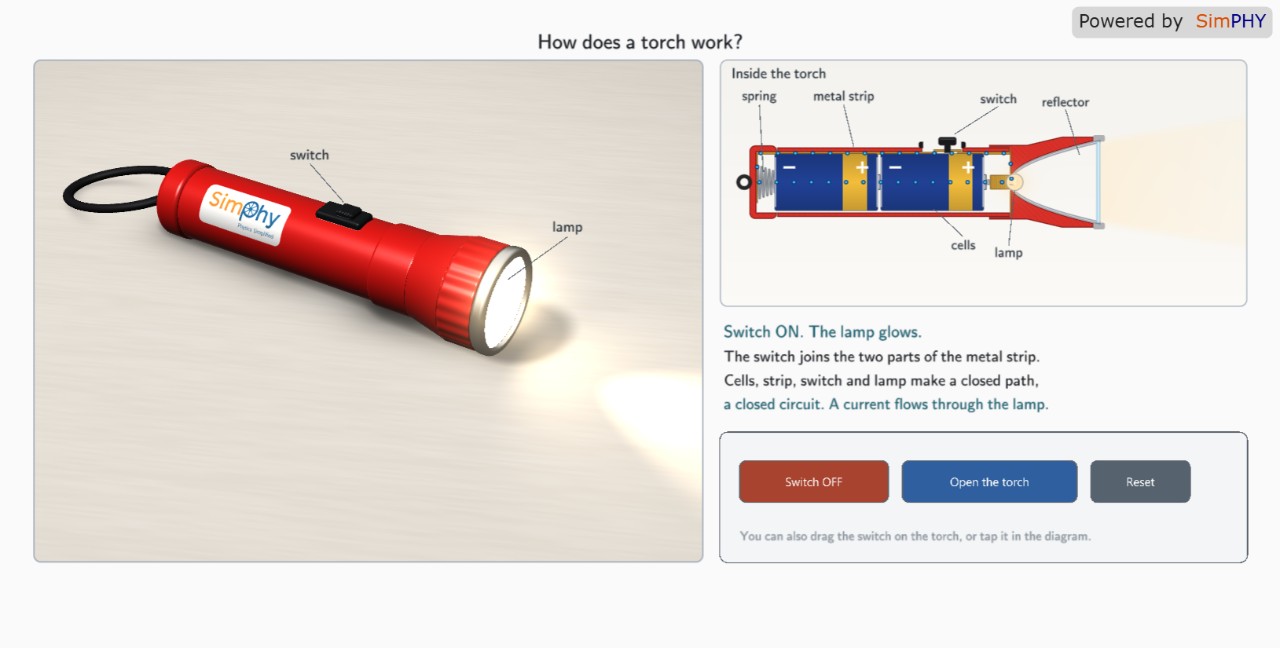 Free
Explore how a torch’s switch completes or breaks a circuit, letting th...
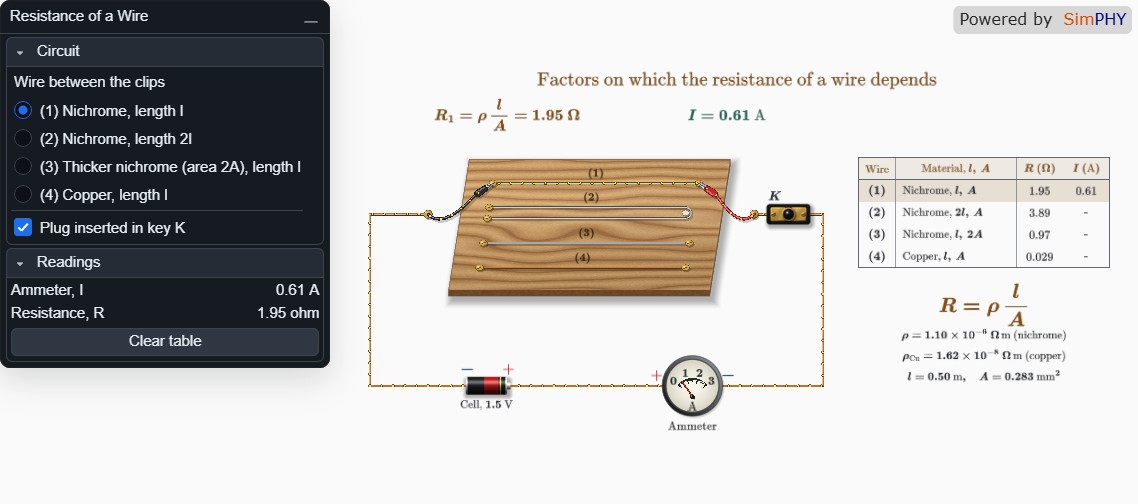 Free
Explore how a wire’s length, cross‑sectional area, and material affect...
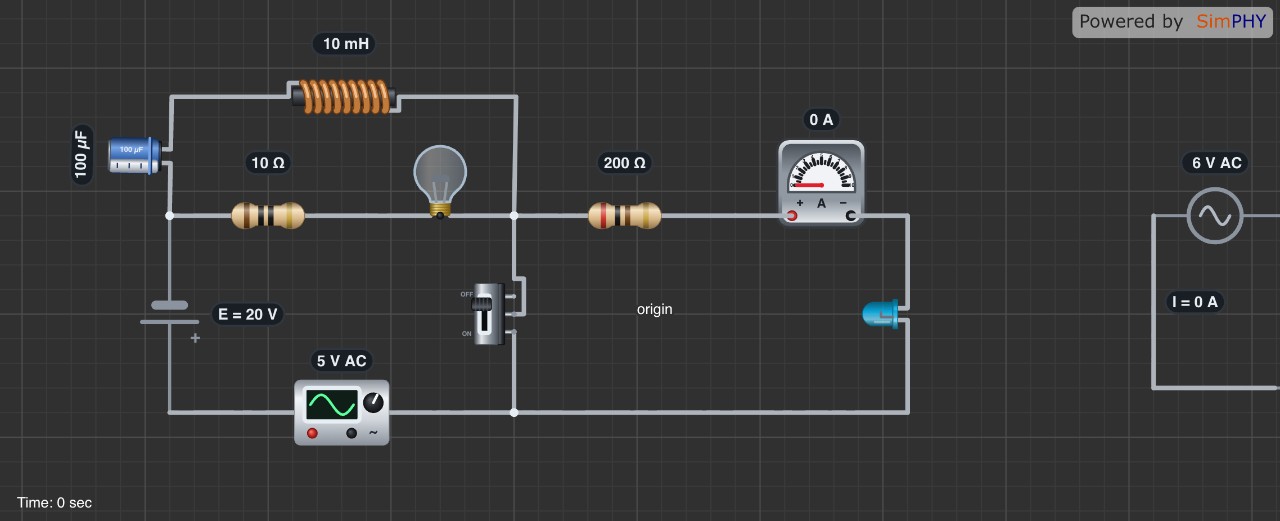 Free
Explore realistic circuit behavior with switchable textbook or realist...